Guests choosing less fat
Someone who usually takes whole milk may want to try semi-skimmed before deciding whether 1% or skimmed milk suits their preference. The NHS identifies all three as lower-fat choices for adults.


If an older guest wants to reduce fat in their tea, semi-skimmed milk is a starting point; 1% or skimmed milk offers a further reduction, while whole milk remains an option when its richer taste is preferred. Check each guest’s needs before buying: lactose-free dairy milk is not suitable for a milk allergy, and the pack’s storage instructions matter if milk will be left after the gathering.
The useful starting point is what each guest wants from their tea, not an assumption that everyone at the table needs the same milk.
Someone who usually takes whole milk may want to try semi-skimmed before deciding whether 1% or skimmed milk suits their preference. The NHS identifies all three as lower-fat choices for adults.
If much of a bottle may remain after tea, its size, use-by date and instructions for use after opening deserve attention. Filtered products can have different stated storage periods, so check the particular pack.
Lactose-free dairy milk may be relevant to a guest avoiding lactose, but it still needs an allergen check. Marks & Spencer states that its lactose-free semi-skimmed milk is not suitable for people with a dairy allergy or galactosaemia.
Choose the type of milk first, then check the particular pack for nutrition, storage and any guest-specific requirements.
| Priority | What to check | Your needs |
|---|---|---|
| Fat level | Compare whole, semi-skimmed, 1% and skimmed milk. Read fat and saturates per 100ml on the pack; the NHS lists the latter three as lower-fat choices for adults. | I would like less fat in my tea, but I want to choose the type of milk that suits the guest rather than assume everyone prefers skimmed. |
| Milk in tea | If richness matters, offer a choice where practical. Check the nutrition panel rather than assuming that all semi-skimmed products have identical values. | A guest prefers the richer taste of whole milk, while someone else would rather have a lower-fat option. |
| Storage | Check the use-by date, refrigeration directions and period stated after opening. Waitrose & Partners lists seven days after opening for its filtered semi-skimmed milk; its listing for Yeo Valley organic fresh semi-skimmed milk says it is best consumed within three days. | I am buying ahead for a small gathering and may need to use the remaining milk afterwards. |
| Guest requirements | Check whether the issue is lactose or milk allergy, then read the ingredients and allergen declaration. Marks & Spencer says its lactose-free semi-skimmed dairy milk contains milk and is unsuitable for dairy allergy or galactosaemia. | Before serving, I need to know whether a guest can have dairy milk at all, not just whether they avoid lactose. |
Whole milk and lower-fat milk answer different preferences. If reducing fat is the aim, buying whole milk does not meet it.
Decide which guests prefer whole milk and which want a lower-fat choice. The NHS names semi-skimmed, 1% and skimmed milk as lower-fat options for adults.
Removing or reducing lactose does not remove milk as an ingredient. Marks & Spencer explicitly says its lactose-free semi-skimmed milk is unsuitable for dairy allergy or galactosaemia.
Ask about the guest’s requirement and check the allergen declaration. Do not serve lactose-free dairy milk as an allergy-safe substitute.
Post-opening instructions differ between products: the Waitrose & Partners listings for Yeo Valley fresh semi-skimmed milk and Waitrose filtered semi-skimmed milk give different periods.
Match the bottle size to likely use, then follow its printed date and storage instructions.
Milk left unused beyond its stated post-opening period may have to be discarded.
The pack is the check to use when a guest’s allergen requirements or the milk’s storage directions affect what you can serve.
Read the actual label before serving, including the milk type, allergen declaration, nutrition panel and date.
These examples show how particular semi-skimmed ranges differ; their storage statements apply to the named products, not every milk sold under the same brand.
A filtered semi-skimmed option for tea when the stated storage period matters.
Own-label standard and filtered semi-skimmed options for shoppers comparing milk type and storage instructions.
A filtered semi-skimmed option with stated unopened and post-opening periods.
Filtered and lactose-free semi-skimmed dairy options serving different requirements.
These Morrisons UHT skimmed milk cartons cover the skimmed route for tea, in a single carton or a six-pack. Choose between the quantities with your likely use in mind; neither is a semi-skimmed or whole-milk option.
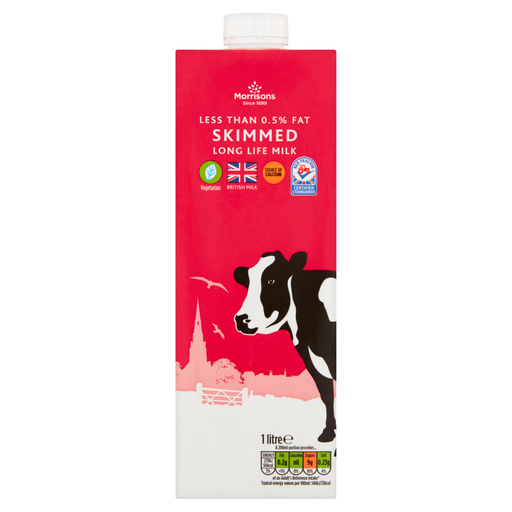 Image unavailable
A single carton for a host choosing skimmed milk for tea rather than the semi-skimmed middle option. Check its date and storage directions when planning the gathering.
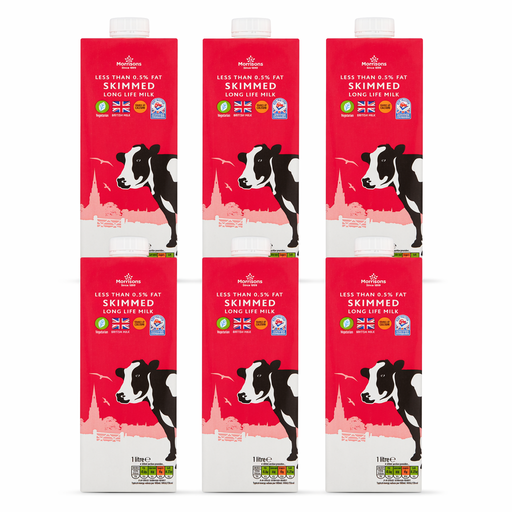 Image unavailable
A six-pack for a household expecting to use several skimmed milk cartons. Consider whether that quantity fits your plans, and check the dates and storage directions on the cartons.
No. If reducing fat is the aim, compare semi-skimmed, 1% and skimmed milk instead. The NHS identifies these as lower-fat choices for adults; whole milk remains an option for a guest who prefers its richer taste.
Yes. The NHS identifies milk as a source of protein and calcium and includes lower-fat milk among its suggested dairy choices. For a product example, Waitrose & Partners lists 3.6g protein and 124mg calcium per 100ml for its filtered semi-skimmed milk; check the label of the milk you choose.
It may suit plans that involve buying ahead or using milk after the gathering, but check the named product’s instructions. Tesco’s Cravendale listing states up to three weeks unopened and seven days after opening; the date and storage directions on your bottle still apply.
No: lactose-free dairy milk is not a substitute for someone with a milk allergy. Marks & Spencer lists milk ingredients in its lactose-free semi-skimmed product and says it is unsuitable for dairy allergy or galactosaemia. Check the guest’s requirement and the pack’s allergen declaration before serving.
Check the milk type, allergen declaration, nutrition panel, date and refrigeration instructions, along with any statement relevant to a guest’s requirements. Use the details on the pack you will serve rather than relying on an earlier product listing.