Brunch hosts who want a simple wholegrain base
For shoppers building bowls with their own fruit, yoghurt or milk and choosing straightforward wholegrain wheat or oats instead of pre-mixed fruit-and-nut ingredients.


Choose plain wheat biscuits or shredded wheat when you want a straightforward cereal base for your own fruit, yoghurt or milk, and choose plain oats when a warm bowl matters most. Muesli suits a slower brunch with fruit, nuts and varied texture, but compare the ingredients, serving information and allergen statement rather than relying on wholegrain or no-added-sugar wording alone.
For shoppers building bowls with their own fruit, yoghurt or milk and choosing straightforward wholegrain wheat or oats instead of pre-mixed fruit-and-nut ingredients.
For people choosing between a warm oat bowl, wheat biscuits, or muesli with fruit, nuts and seeds as part of a longer Sunday brunch.
For shoppers who need to check for gluten, milk, nuts, soya or precautionary allergen information before selecting a brunch cereal.
Start with the format you want to serve, then compare the current pack’s ingredients, stated serving information and allergen details for the specific cereal.
| Priority | What to check | Your needs |
|---|---|---|
| Wholegrain base and fibre | Check whether wholegrain wheat or oats are listed as the main or sole ingredient. Compare fibre figures only alongside the stated serving size. | I want a recognisably wholegrain cereal base and a clear way to compare its fibre contribution. The NHS identifies plain wholewheat biscuits, plain shredded wholegrain cereal and porridge as higher-fibre breakfast choices. |
| Sugars and portions | Read the ingredients for dried fruit, milk ingredients, malt extract or added sugar. Compare sugars using each product’s declared portion as well as the nutrition panel. | I want to know what is in the bowl I am serving, rather than assuming that wholegrain or no-added-sugar wording makes two cereals equivalent. |
| Allergens and gluten claims | Read the highlighted allergens and any may-contain statement on the current pack. Where gluten-free suitability is required, look for an appropriate gluten-free label. | I need to rule out ingredients or cross-contact warnings that matter in my household before choosing a cereal. |
| Preparation and texture | Check whether the cereal is ready to serve or needs cooking. Consider whether you want a plain base for toppings or a mix containing fruit, nuts and seeds. | For a relaxed brunch, I may prefer a warm oat bowl; for a quicker cold bowl, biscuits or muesli can offer a different texture and serving style. |
Wholegrain formats can differ in ingredients, fibre, sugars, allergens and declared serving size. A plain wheat cereal can be a simple base, while muesli can include dried fruit, milk ingredients, seeds and nuts.
Read the ingredients and nutrition table for the exact product, and compare the serving sizes before deciding which bowl suits your brunch.
Ordinary oat products should not be treated as gluten-free by default. Quaker Oat So Simple Original, for example, states that it may contain wheat, barley and soya.
If gluten-free suitability is necessary, choose only a product carrying an appropriate gluten-free label and verify the current ingredients and allergen statement. The Food Standards Agency states that food labelled gluten-free must contain no more than 20mg/kg gluten as sold.
Fruit-and-nut mueslis can contain several nut ingredients and precautionary statements. Alpen No Added Sugar contains hazelnuts and almonds, while Dorset Wonderfully Organic contains Brazil nuts.
For a nut allergy, do not choose a muesli based only on flavour or wholegrain content; check the specific pack and follow relevant allergy advice.
Recipes and nutrition declarations can change, affecting ingredients, allergen information and the figures used to compare cereals.
Before buying, use the current UK pack or current product page to reconfirm ingredients, allergen information, serving size and nutrition.
A wholewheat biscuit cereal route for shoppers who want a quick, topping-friendly brunch base.
A simple wholewheat cereal option through W. K. Kellogg Organic Wheats Classic for shoppers seeking a short ingredient list.
A plain shredded-wheat route for shoppers prioritising a single wholegrain-wheat ingredient and a substantial biscuit portion.
A warm porridge route for brunch shoppers who want wholegrain oats and the freedom to add their own toppings.
A wholegrain muesli route for shoppers wanting oats, wheat flakes, raisins and nuts in one ready-to-serve cereal.
An ingredient-led muesli route for shoppers who want fruit, seeds, nuts and wholegrain flakes in a leisurely brunch bowl.
These Joybuy options focus on warm wholegrain oat porridge and plain cereal bases that can be adapted with your chosen Sunday-brunch toppings.
 No image available
A plain oat base for a warm brunch bowl with milk, fruit or yoghurt chosen separately.
The listing states 100% oatmeal, with 3.6g dietary fibre and 0.4g sugars per 40g serving.
May contain wheat and barley; check the current allergen statement where gluten-free suitability is needed.
 No image available
A plain oat option for shoppers planning a warm bowl with their own toppings.
The listing gives 100% organic wholegrain oat flakes, 3.3g fibre and 0.4g sugars per 40g serving.
Do not treat this product as gluten-free; check the current pack for preparation and allergen guidance.
 No image available
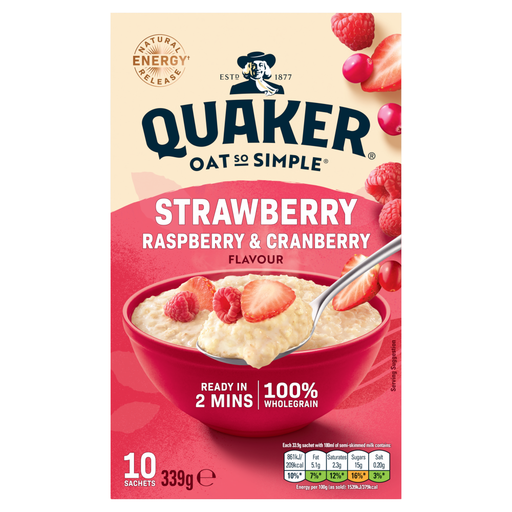
A flavoured, portioned oat option for a quick warm Sunday brunch.
The listing gives a two-minute 900W microwave method and states 6.4g sugars per 36g sachet.
Contains gluten from oats and may contain barley, wheat and soya.
 No image available
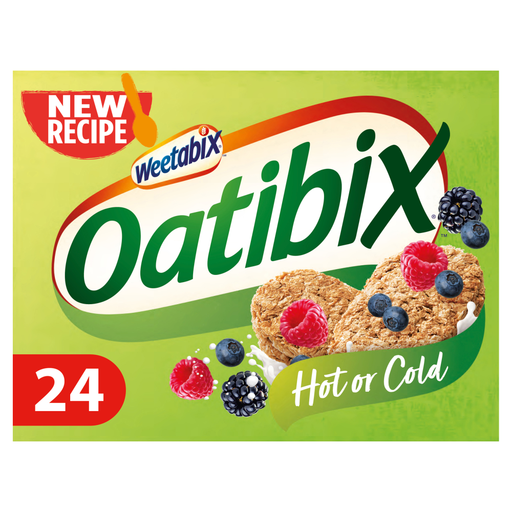
A cold oat-biscuit option that can be served with milk or yoghurt and customised with fruit.
The listing states 96% wholegrain oats, 7.3g fibre and 3.2g sugars per 100g.
Contains barley and oats; check the current pack if portion-level nutrition is important to your comparison.
 No image available
A plain wheat-biscuit base for a quick cold brunch bowl with strawberries, yoghurt or other toppings.
The listing states 95% wholegrain wheat and 1.7g sugars per two-biscuit serving.
Contains barley and wheat, so it is not a gluten-free cereal. Check the current nutrition panel if fibre per serving is a deciding factor.
A plain wholewheat biscuit, plain shredded wheat or plain porridge oats is a clear starting point when you want to control the toppings yourself. The NHS specifically names plain wholewheat biscuits, plain shredded wholegrain cereal and porridge as higher-fibre breakfast choices.
No. No-added-sugar wording does not remove naturally occurring sugars from ingredients such as raisins and other dried fruit. Alpen No Added Sugar, for example, lists 8.1g sugars per 45g serving, so compare the nutrition table and stated portion for the actual product.
Not automatically. Check the current ingredients and allergen statement, and rely on a specifically labelled gluten-free product where that is necessary. The Food Standards Agency states that food labelled gluten-free must contain no more than 20mg/kg gluten as sold.
Check the highlighted ingredients and any precautionary may-contain statement. For prepacked food, UK guidance requires the ingredients list to identify any of the 14 specified allergens present; this is particularly relevant for mueslis containing nuts, milk, wheat, barley, oats or soya.