Parents of toddlers under 2
NHS guidance advises introducing wholegrain foods without making every starchy food wholegrain, as high-fibre choices can fill a young child before they have eaten enough calories and nutrients.


For toddlers under 2, do not make every starchy food wholegrain, as high-fibre foods can fill them up before they have eaten enough energy and nutrients. From age 2, introduce more wholegrain foods gradually and compare the current pack’s ingredients, sugars, fibre, allergens and texture; NHS guidance and product information support simple wheat biscuits or plain oats where the child can manage them safely.
NHS guidance advises introducing wholegrain foods without making every starchy food wholegrain, as high-fibre choices can fill a young child before they have eaten enough calories and nutrients.
A gradual move towards wholegrain cereal can work where the child manages the texture, with the current pack checked for sugars, fibre and allergens.
Check the exact product allergen declaration and the setting’s own policy before sending cereal. The Department for Education says schools in England must publish an allergy safety policy.
Consider this route: for a child aged 2 or over who can manage softened cereal and is moving gradually towards wholegrain choices.
Key consideration: wheat cereals contain gluten, and wholegrain cereal should not become the only starchy food for under-2s.
Consider this route: when a warm, soft breakfast is easier for the child to manage and you want to choose the toppings yourself.
Key consideration: prepare hot porridge with adult care, cool it before serving and check the exact pack for allergen statements.
Consider this route: for an under-2 or a child who fills up quickly before eating the rest of a varied meal.
Key consideration: a mixed approach is not a reason to overlook sugars, salt or fibre on the current cereal label.
| Priority | What to check | Your needs and relevant evidence |
|---|---|---|
| Age and fibre | Check whether the child is under 2 or aged 2 and over; compare fibre and portion information; avoid making wholegrain cereal the only starchy choice for an under-2. | My toddler needs enough room for a varied meal, not just a filling cereal. NHS guidance recommends gradually introducing more wholegrain foods after age 2. |
| Sugars and salt | Compare sugars and salt on the same basis, such as per 100g or per stated serving; use the current nutrition declaration; read traffic-light labels where supplied. | I want to compare the actual pack rather than rely on a wholegrain claim or child-focused packaging. A 2023 UK product sample reported by Cambridge University Press found that 81% of 133 child-appealing cereals exceeded the sugar-reduction guideline used in that study. |
| Allergens | Read ingredients, highlighted allergens and any may-contain statement; check gluten-free suitability where medically required; confirm the current pack before packing cereal for a setting. | Where my child has coeliac disease or a diagnosed allergy, I need a cereal that fits their individual dietary advice rather than assuming wheat or oats are suitable. |
| Texture and serving | Consider biscuit size and hardness, whether cereal can be softened, the temperature of prepared porridge and the child’s eating skills; supervise while seated. | I need breakfast in a texture my child can chew and swallow comfortably. NHS advice is to consider size, shape and texture when preparing food for young children. |
High-fibre wholegrain foods can fill small tummies before a child has eaten enough calories and nutrients from a varied diet.
Use a mix of starchy foods for under-2s. From age 2, increase wholegrain foods gradually rather than changing every cereal and starch at once.
A wholegrain claim does not show the full nutrition profile. A 2023 UK sample of child-appealing cereals reported by Cambridge University Press found substantial variation between products.
Compare the exact current pack’s sugars, salt and fibre instead of choosing by packaging style, brand name or a wholegrain claim alone.
Wheat cereals contain gluten, while an oat product may also carry may-contain statements for wheat, barley or soya.
For coeliac disease or a diagnosed allergy, use the exact-pack allergen declaration and the child’s clinical dietary advice. Do not treat a standard oat cereal as a substitute for a suitable gluten-free product.
Food size, shape and texture can affect choking risk for young children.
Serve a manageable texture, cool hot porridge, seat and supervise the child, and adapt the food to their developmental eating skills.
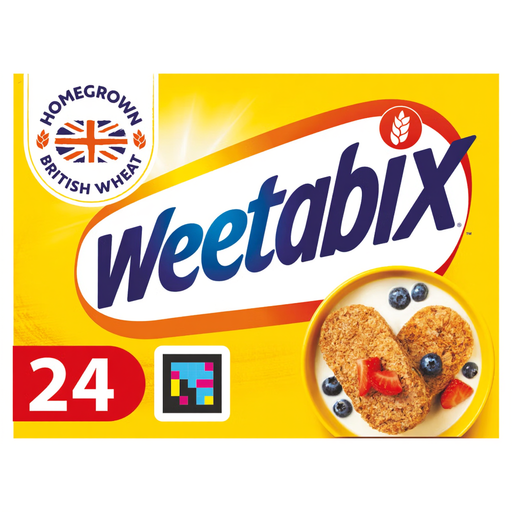
A wholegrain-wheat biscuit route. Weetabix Original is described by the brand as 95% wholegrain wheat with added vitamins and iron.
A simple wheat-biscuit route through Shredded Wheat Original and Bitesize products.
A wholegrain oat porridge route for families who prefer a warm, soft breakfast format.
A whole-wheat cereal route through Original Wheats and other wheat-based ranges.
Joybuy cereal options for toddler breakfasts, including plain oat porridge and wholegrain biscuit cereals. Match the format, ingredients and texture to the child’s age and needs.
 No image available
A warm, soft porridge option for a toddler aged 2 or over who manages this texture.
The product record lists wholegrain rolled oats, 0.4g sugars and 3.5g fibre per 38.5g sachet. Prepare, cool and serve under supervision; check the current allergen declaration where needed.
 No image available
A whole-wheat biscuit option for a toddler aged 2 or over when the biscuits can be served in a manageable texture.
The product record states 95% wholegrain wheat and 1.7g sugars per two-biscuit serving. It contains wheat and barley, so check the exact pack for a child with coeliac disease or a diagnosed allergy.
 No image available
A plain porridge base for a toddler aged 2 or over who accepts cooked oat texture.
The product record lists 100% organic wholegrain oat flakes, with 0.4g sugars and less than 0.01g salt per 40g serving. Follow the pack directions, cool before serving and check suitability for any diagnosed allergy.
 No image available
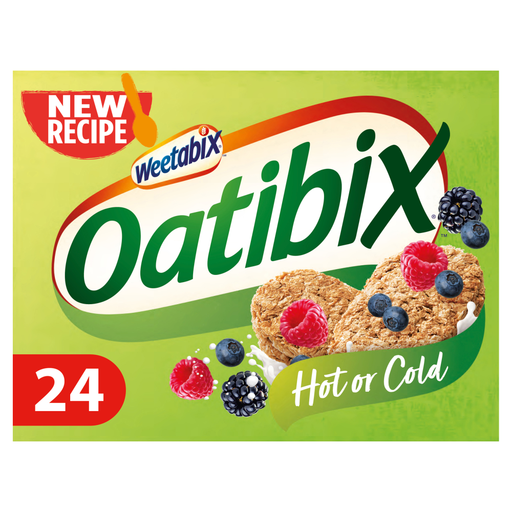
A wholegrain oat-biscuit option for toddlers aged 2 or over who can manage the texture, softened if needed.
The product record states 96% wholegrain oats and 3.2g sugars per 100g. It contains oats and barley; use the exact pack and clinical advice where coeliac disease or another diagnosed condition applies.
 No image available
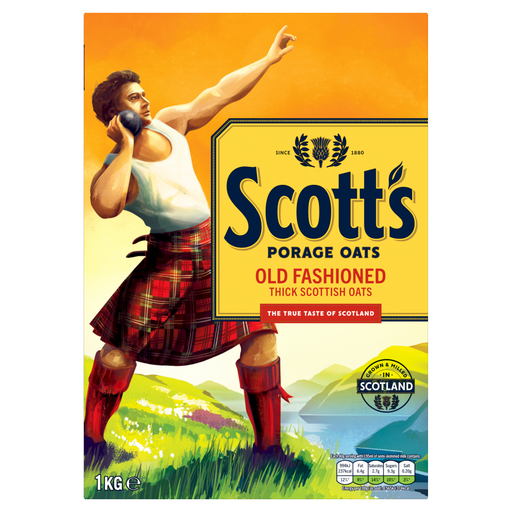
A cooked porridge option for a toddler aged 2 or over who manages a soft texture.
The product record lists 100% rolled oats, 1.1g sugars and 0g salt per 100g before toppings. Check the current pack if wholegrain status is important and note its may-contain wheat and barley statement.
No. NHS guidance says not to give only wholegrain starchy foods to under-2s because they can be high in fibre and may fill a child before they have eaten the calories and nutrients they need. Offer variety, then introduce more wholegrain foods gradually after age 2.
Check the current pack’s ingredients and nutrition declaration, then compare sugars, salt and fibre on the same basis. Where present, traffic-light labels show whether a nutrient is low, medium or high: green means low and red means high. Do not use a wholegrain claim alone as a shortcut for suitability.
Not unless the exact product is specifically suitable for the prescribed gluten-free diet. Nestlé states that Shredded Wheat contains gluten and is not suitable for coeliacs. Check every pack and follow the child’s clinician or dietitian advice for a diagnosed condition.
For England, check the individual setting’s allergy policy and the product’s current allergen statement. The Department for Education says schools must publish an allergy safety policy, and a setting may have its own arrangements for food brought from home.
Match the cereal’s size, shape and texture to the child’s eating ability, soften it if needed, supervise eating and ensure hot porridge has cooled appropriately. NHS advice is to consider size, shape and texture when preparing food to reduce choking risk.