Buying priorities
Start with the format that fits your weekday routine, then compare labels on a common per-100g basis before checking the stated serving, ingredients and pack size.
| Priority |
What to check |
Your needs |
| Wholegrain and fibre |
Identify the grain base in the ingredients list. Compare fibre per 100g and per serving. Match preparation time to the breakfast routine. |
I want a cereal I can keep using on busy mornings, whether that means ready-to-eat biscuits or cereal, or oats for porridge and overnight oats. |
| Sugars and salt |
Compare sugars and salt per 100g before comparing serving values. Check the manufacturer’s stated portion. Use traffic-light information, where present, as a quick comparison alongside the full panel. |
I want to see how products differ before adding milk, yoghurt, fruit or sweet toppings. Food Standards Agency guidance explains that traffic-light labels compare fat, saturates, sugars and salt. |
| Allergens and gluten |
Read the full ingredients list, highlighted allergens and any precautionary statement. Where a gluten-free product is required, look for a specific gluten-free claim and check the current pack. |
A shared cupboard needs options that fit wheat, barley, oat, milk and nut requirements without assumptions based on names such as wholegrain or organic. |
| Pack use and storage |
Choose a pack size that fits how often it will be eaten. Follow storage instructions and keep cereal dry after opening. Consider whether a large pack will be finished before its best-before date. |
I want a weekly-shop pack that will stay usable for the household rather than becoming an awkward leftover. |
Joybuy product options
Joybuy product options for wholegrain breakfast routines, including plain oats, ready-to-eat wheat cereal, muesli and wheat biscuits for a weekly cupboard restock.
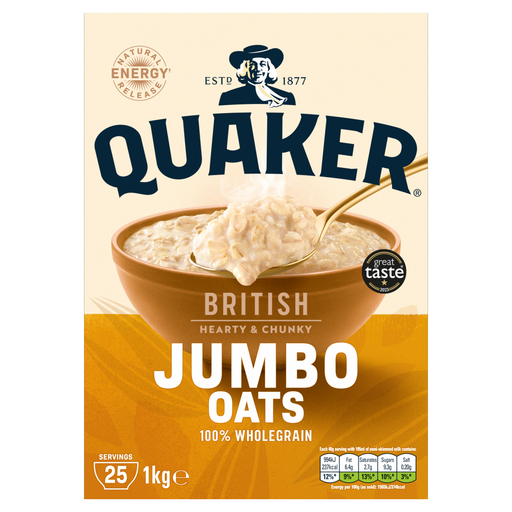 Image unavailable
Quaker Jumbo Rolled Oats 1kg
For households using porridge, overnight oats or oats in baking regularly. The listing states 100% wholegrain oat flakes in a 1kg pack, with 9g fibre, 1g sugars and 0.01g salt per 100g. Preparation is required, and the product may contain traces of wheat; check for a specific gluten-free claim where needed.
Joybuy
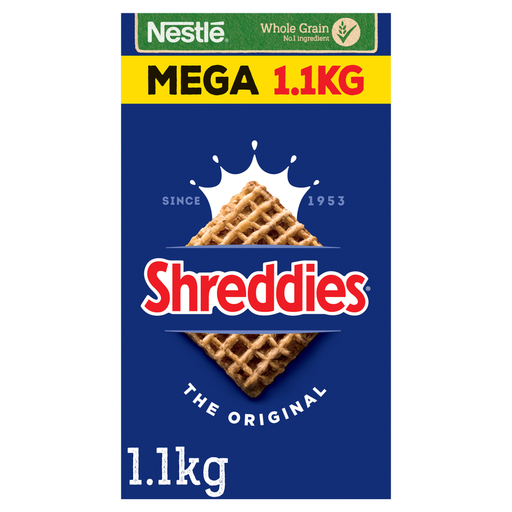 Image unavailable
Nestlé Shreddies Original Malted Wheats 1.1kg
For rapid cold breakfasts when a crunchy ready-to-eat cereal suits the household. The listing states 96.1% wholegrain wheat and 4.8g fibre per 40g serving; it also lists 5g sugars per serving and 12.5g per 100g. It contains wheat and barley malt extract and may contain peanuts and nuts.
Joybuy
 Image unavailable
Scotts Porage Oats Original 1kg
For repeat porridge use where preparation time is acceptable. The listing states 100% oatmeal, 25 suggested portions in the 1kg pack, and 1g sugars, 9g dietary fibre and 0g salt per 100g. It may contain wheat and barley; store it cool and dry and consider the suggested two-month period after opening.
Joybuy
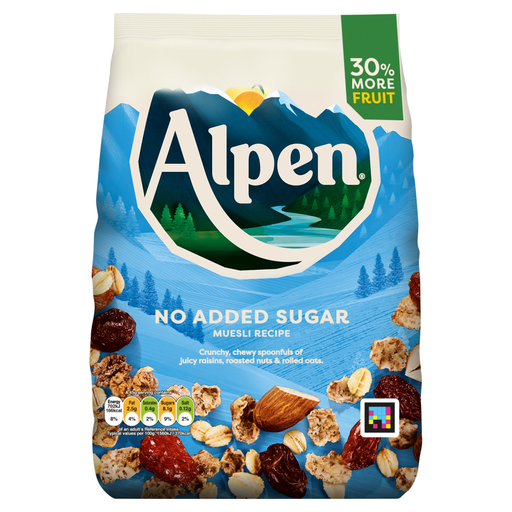 Image unavailable
Alpen No Added Sugar Muesli 950g
For households that want a fruit-and-nut muesli with wholegrain wheat, wholegrain rolled oats, raisins and roasted nuts. The listing gives 8g fibre, 18g sugars and 0.28g salt per 100g. It contains milk, wheat, oats, almonds and hazelnuts, and may contain other nuts.
Joybuy
 Image unavailable
Weetabix Super Size 72 Pack 1.52kg
For frequent cold breakfasts using a portion-defined wholegrain wheat biscuit. The listing states 95% wholegrain wheat, with 1.7g sugars and 0.10g salt per two-biscuit serving. It contains wheat and barley, and the large pack suits households able to keep it cool, dry and odour-free after opening.
Joybuy
Frequently asked questions
Does wholegrain mean a breakfast cereal is automatically the right choice for my household?
No. Wholegrain is a useful starting point, but compare fibre, sugars, salt, ingredients, allergens and serving size. Where present, front-of-pack traffic-light labels help compare fat, saturates, sugars and salt, while the full nutrition panel provides the detailed values.
Should I compare cereal nutrition per serving or per 100g?
Use both. Per 100g gives a common basis across formats, while per serving shows the manufacturer’s suggested bowl amount. Serving sizes vary: Weetabix Original specifies two biscuits at 37.5g, Shreddies Original uses 40g and Alpen No Added Sugar uses 45g.
Are oats suitable for a gluten-free diet?
Choose oats specifically labelled gluten-free when a gluten-free product is needed. Coeliac UK says that “100% oats”, “pure oats” and “organic” do not confirm gluten-free status; Food Standards Agency guidance states that food labelled gluten-free must contain no more than 20mg/kg gluten.
Which cereal allergens should I check before buying a family-size pack?
Check the current pack for wheat, barley, oats, milk, peanuts, tree nuts and precautionary statements. Alpen No Added Sugar contains milk and nuts, Dorset Wonderfully Organic contains oats, barley, wheat and Brazil nuts, and Shreddies Original lists wheat and barley malt extract and may contain peanuts and nuts.
How should I store cereal bought for the week?
Follow the pack’s storage instructions and best-before date. Joybuy’s Quaker Jumbo Rolled Oats listing says to store oats in a cool, dry place and reseal tightly after opening; choose a larger pack only when your household can finish it in good condition.


