Commuters with access to boiling water
A porridge pot can travel in a bag and be prepared at work or another destination with boiling water. It is not a breakfast to eat directly from the pack.


For the most portable cereal breakfast, a single-serve porridge pot suits mornings when boiling water is reliably available at your destination; it is not ready to eat straight from the pack and may contain milk. If you can make a bowl with milk, yoghurt or an alternative, compare the ingredient list, fibre, sugars, salt, serving size and allergen statement rather than relying on a wholegrain claim alone.
A porridge pot can travel in a bag and be prepared at work or another destination with boiling water. It is not a breakfast to eat directly from the pack.
If milk, yoghurt or a dairy alternative is available, plain Shredded Wheat and Weetabix provide clearly stated wholegrain and fibre information for a bowl breakfast.
Compare fibre alongside sugars, salt, ingredients, allergens and serving sizes rather than treating a wholegrain or fibre claim as the whole decision.
Start with the preparation format, then compare the label on a like-for-like basis and check whether the allergen information works for the people eating it.
| Priority | What to check | Your needs |
|---|---|---|
| Wholegrain and fibre | Check the grain ingredients, any stated wholegrain proportion, fibre per serving and fibre per 100g. Compare serving sizes before treating two per-serving figures as equivalent. | I want to know what grain the cereal contains and how its stated fibre fits the portion I am likely to eat. |
| Preparation format | Check whether it needs boiling water, a bowl, milk, yoghurt or waiting time. A pot can be self-contained without being ready to eat immediately. | I need breakfast to work with the facilities I will actually have at home, at my desk or while travelling. |
| Sugars and salt | Compare sugars and salt per 100g, then look at the stated serving. NHS food-label guidance explains that pre-packed labels provide values per 100g and may also show a portion. | I do not want words such as wholegrain, fruit or no added sugar to replace a check of the nutrition panel. |
| Allergens | Read the current ingredient list and allergen statement, including may-contain wording where relevant. Check for cereals containing gluten, milk, peanuts, tree nuts and soya. | I need the exact pack to fit the allergy, coeliac or dietary requirements in my household. |
Wholegrain describes the grain component, not the full nutrition profile. Alpen No Added Sugar, for example, declares 8.1g sugars per 45g serving, while All-Bran Fibre Plus declares 5.9g sugars and 0.36g salt per 40g serving.
Check ingredient order, sugars, salt, fibre and serving size instead of deciding from a wholegrain, natural or no-added-sugar description alone.
A breakfast pot still needs boiling water and standing time, while biscuits, flakes and muesli usually need a bowl plus milk, yoghurt or a suitable alternative.
Choose a hot-water pot only where boiling water is dependable; otherwise plan a separately packed bowl breakfast or consider another breakfast category.
Wholegrain does not mean gluten-free or nut-free. The products considered here include wheat, barley, oats, milk, soya, peanuts and tree nuts in ingredients or may-contain statements.
Read the latest pack every time a formulation changes or when buying for an allergy or coeliac requirement; do not rely on a previous box or a general brand reputation.
Declared fibre figures can use different portions: All-Bran Fibre Plus lists 10g per 40g serving, Shredded Wheat Original lists 6.3g per 45g portion, and Weetabix Original lists 3.8g per 37.5g serving.
Compare both the stated serving and the per-100g panel, then choose a portion that suits your usual breakfast routine.
Wholegrain wheat biscuit cereal for shoppers who want a familiar bowl-based breakfast with a compact two-biscuit serving.
Plain wholegrain wheat biscuit cereal for shoppers prioritising a short ingredient list and low declared sugars and salt.
Oat-led porridge options for shoppers who have boiling-water access away from home.
Wheat-bran and wholewheat cereal options for shoppers who can prepare a conventional bowl and want to compare declared fibre.
Wholegrain wheat-and-oat muesli for shoppers who prefer a fruit, nut and dairy-style bowl breakfast.
Fruit, nut, seed and wholegrain-flake muesli for shoppers who can accommodate a more complex ingredient and allergen profile.
These Joybuy options cover bowl-based muesli and porridge choices, plus one ready-to-eat oat cereal for rushed breakfasts. Check the current pack where wholegrain status, preparation method or sugar information is important to your choice.
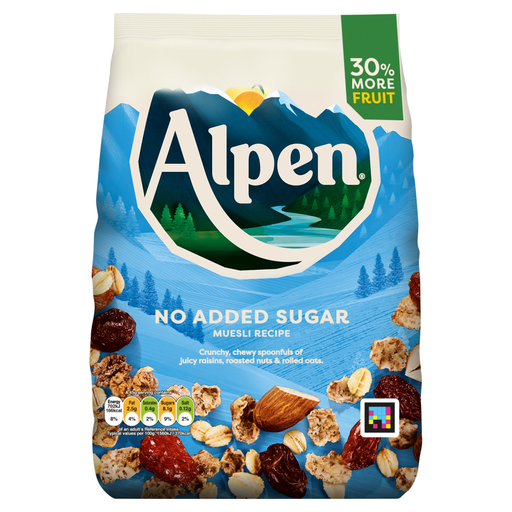 Image unavailable
For a desk or home bowl breakfast when you can add milk or yoghurt.
The listing states wholegrain wheat (42%) and wholegrain rolled oats (33%), with raisins, almonds and hazelnuts. It declares 8.0g fibre, 18g sugars and 0.28g salt per 100g.
Contains milk, wheat, oats, almonds and hazelnuts, and may contain other nuts.
 Image unavailable
For a simple oat breakfast when you can prepare a bowl at home or at a desk with suitable facilities.
The listing states 100% oatmeal, with 9.0g fibre, 1.0g sugars and 0g salt per 100g; it also lists 3.6g fibre per 40g serving.
May contain wheat and barley. Check the current pack directions if you need a quick hot-water or travel option.
 Image unavailable
For a minimal-ingredient wholegrain oat breakfast when you can make a warm bowl.
The listing specifies 100% organic whole grain oat flakes and declares 3.3g fibre, 0.4g sugars and less than 0.01g salt per 40g serving.
Contains oats (gluten). Check the pack directions if preparation speed or hot-water-only use matters for your morning.
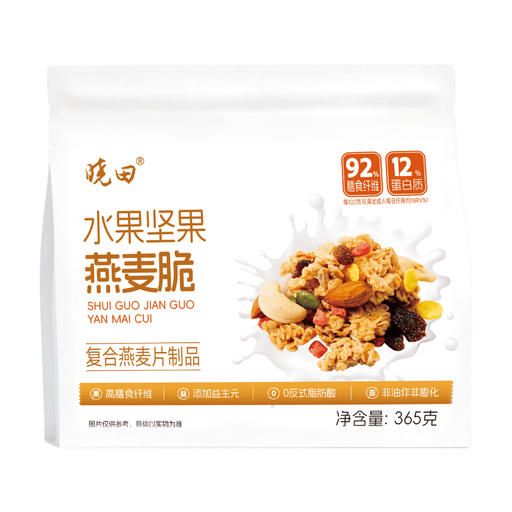 Image unavailable
For a rushed breakfast or snack when you need a cereal that the listing describes as ready to eat, with milk or yoghurt optional.
The listing declares 22.9g dietary fibre per 100g and states that oat flakes make up at least 47% of the oat cereal component.
Contains oats, almonds and cashews. Check the current pack if wholegrain content or sugars are essential to your comparison.
No. Wholegrain describes the grain component, not the full nutrition profile. Compare sugars and salt per 100g as well as the stated serving; NHS food-label guidance identifies more than 22.5g sugars per 100g as high and 5g or less as low for foods. Alpen No Added Sugar, for example, declares 8.1g sugars per 45g serving.
A porridge pot is the most directly evidenced portable format when boiling water is available at the destination. Quaker Oat So Simple Original Pot uses its own pot but needs boiling water, stirring and a standing period; it is not suitable for microwaving and may be hot to hold. Dry cereal biscuits may travel easily, but still need an accompaniment for a bowl breakfast.
Do not assume so. Nestlé states that Shredded Wheat contains gluten and is not suitable for coeliacs. UK government allergen guidance lists wheat, rye, barley and oats as cereals containing gluten, so use the current pack's allergen and gluten-free information for the exact product.
Check the current ingredient and allergen statement before purchase, including may-contain wording where relevant. GOV.UK allergen guidance lists cereals containing gluten, milk, peanuts, tree nuts and soya among the allergens food businesses must declare when present as ingredients. Alpen No Added Sugar includes milk, hazelnuts and almonds, while Shredded Wheat may contain peanuts and nuts.
Start with the ingredient list and nutrition panel per 100g, then check the stated serving size. NHS guidance notes that labels provide energy, fat, saturates, carbohydrate, sugars, protein and salt per 100g, and sometimes per portion; fibre may also be shown. This avoids treating a 30g bran-flake serving and a 45g muesli serving as equivalent.