Who this is for

People who carbohydrate-count breakfast

Use the total carbohydrate value for the weighed amount you actually eat, rather than relying only on the sugars line or a suggested serving. University Hospitals Coventry and Warwickshire NHS Trust advises weighing breakfast cereal portions and calculating from the per-100g value.

Shoppers reducing sugar without giving up crunch

Compare sugars, fibre, total carbohydrate and energy per 100g. Diabetes UK and the product labels show that low-sugar and no-added-sugar granolas can still differ substantially in carbohydrate and fibre.

People with nut or gluten-related dietary restrictions

Check the current ingredients and allergen statement on every pack. Wholegrain granolas may contain oats, wheat, barley, rye or tree nuts, and may also carry precautionary allergen information.

What to check before buying

Start with the label per 100g, then work out what your own bowl contains. The back-of-pack panel is the useful place to compare carbohydrate between similar products.

Priority What to check Your needs
Carbohydrate and portion size Total carbohydrate per 100g; your weighed dry portion; milk, yoghurt, fruit and toppings added to the meal. I want to calculate breakfast from the amount I actually serve. University Hospitals Coventry and Warwickshire NHS Trust advises using total carbohydrate rather than only the sugars sub-line.
Sugars and sweet ingredients Sugars per 100g; ingredient order; sugar, honey, syrup, treacle and dried fruit where relevant. I want a wholegrain cereal without assuming that wholegrain or natural means it has little sugar. Diabetes UK advises checking labels and ingredients for granola and cereal clusters.
Fibre and wholegrain grains Wholegrain oats or other grains in the ingredients; fibre per 100g; carbohydrate and sugars alongside fibre. I am looking for a wholegrain cereal with fibre, while still comparing the complete nutrition panel rather than treating fibre as a substitute for carbohydrate counting.
Allergens and dietary compatibility Bold allergen declaration; gluten-containing grains; nuts and any precautionary ‘may contain’ statement. I need a product that fits my dietary restrictions, not simply one with a suitable-looking nutrition panel. Check the physical pack each time, as recipes and allergen statements can change.

Common buying pitfalls

  • Choosing by a ‘diabetic’, wholegrain or no-added-sugar claim alone

    These descriptions do not establish total carbohydrate, portion suitability or how a product fits an individual eating plan. Diabetes UK advises against relying on ‘diabetic foods’ terminology and notes that granola can contain free sugars and fat despite a health-focused pack.

    Compare the current label per 100g, then calculate total carbohydrate and sugars in your weighed serving. Check the ingredients for sweeteners such as sugar, honey, syrup, treacle and dried fruit.

  • Reading only ‘of which sugars’ when carbohydrate-counting

    A lower-sugars granola can still contain substantial carbohydrate from oats, other grains and other ingredients. This can make a carbohydrate count inaccurate for the portion eaten.

    Use total carbohydrate, not only the sugars sub-line, and weigh your own bowl. If you use insulin dosing, discuss changes to your usual approach with your diabetes care team.

  • Using the manufacturer’s serving size without checking your actual bowl

    Breakfast-cereal serving sizes on packs can be smaller than the portion actually eaten, so carbohydrate and energy can be underestimated.

    Weigh dry granola at least initially and calculate from the per-100g value. Include milk, yoghurt, fruit and toppings in the meal total where relevant.

  • Overlooking nuts, gluten-containing grains and cross-contact statements

    Wholegrain granola commonly includes oats, wheat, barley or rye and may contain tree nuts or precautionary allergen statements. A nutrition profile that suits one shopper may still be unsuitable for someone with an allergy or a medically required gluten-free diet.

    Check the physical pack’s bold allergens and ‘may contain’ statement every time you buy. Do not infer suitability from a brand, product family or previous recipe.

Relevant brand references

Eat Natural

A reference point for a labelled low-sugar wholegrain oat granola option.

  • Tesco lists 33.0g carbohydrate, 4.4g sugars and 12.8g fibre per 100g for Low Sugar Wholegrain Granola.
  • The same label lists 495kcal and 31.4g fat per 100g, and the product carries several allergen warnings.

Lizi’s

A reference point for wholegrain oat granola with nuts and seeds and a low labelled sugars figure.

  • Tesco lists wholegrain oat flakes at 65%, with 3.3g sugars and 8.0g fibre per 100g.
  • It also lists 48.5g carbohydrate per 100g and contains almonds and hazelnuts; the factory handles milk, peanuts and other nuts.

Jordans

A reference point for no-added-sugar wholegrain oat granola, including Triple Nut.

  • Waitrose lists 18g fibre per 100g for Triple Nut, which is labelled no added sugar and high in fibre.
  • It still lists 47g carbohydrate and 9.5g sugars per 100g, and includes sultanas, cashews, almonds and hazelnuts.

Rude Health

A brand reference for Nutty Low Sugar Granola with oats and nuts.

  • Rude Health describes Nutty Low Sugar Granola as a wholegrain product and lists oats as 55% of ingredients.
  • Its ingredients include raw cane sugar, almonds and hazelnuts; check the physical pack’s carbohydrate, sugars and allergen information before comparing products.

Dorset Cereals

A reference for wholegrain oat-and-rye granola where flavour and texture may be the main priority.

  • Dorset Cereals lists wholegrain oat flakes and wholegrain rye flakes in Nutty Granola.
  • The product lists golden syrup at 17% of ingredients, plus 61.9g carbohydrate and 13.1g sugars per 100g, and contains several tree nuts.

Nature’s Path

A reference for shoppers who need gluten-free granola availability alongside organic choices.

  • Nature’s Path labels Nice and Nobbly gluten free and lists wholegrain rolled oats among its ingredients.
  • The ingredients also include raw cane sugar and yoghurt chunks containing sugar, milk and soya lecithin; check the pack before making a nutrition comparison.

Joybuy product options

These Joybuy options are crunchy oat breakfast alternatives. Neither is explicitly described as wholegrain granola, so check the current pack if wholegrain status is essential.
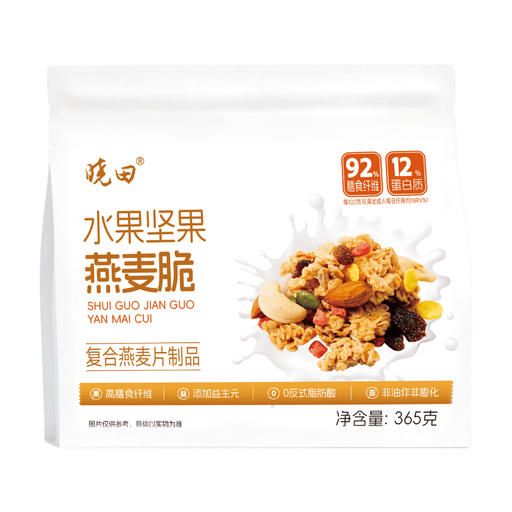
Xiao Tian Fruit and Nut Oat Crunch multi-grain oat cereal, 365g

Xiao Tian Fruit & Nut Oat Crunch, 365g

A crunchy oat cereal option for a weighed breakfast portion with milk or yoghurt.

The catalogue lists 42.5g carbohydrate and 22.9g dietary fibre per 100g, with oat flakes at at least 47%.

Check the current pack for sugars and wholegrain status. Contains oats, almonds and cashews.

Joybuy
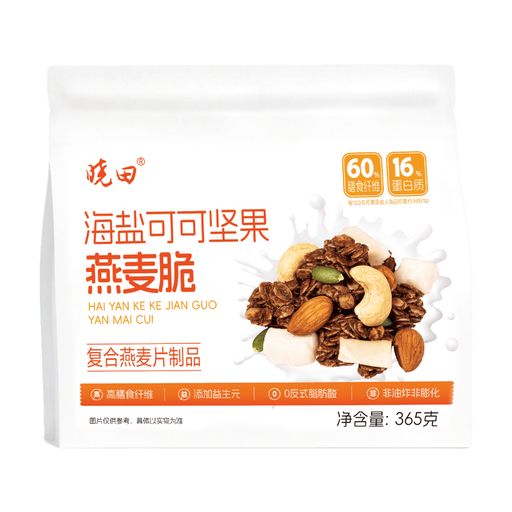
Xiao Tian Sea Salt Cocoa Nut Oat Crunch, 365g

Xiao Tian Sea Salt Cocoa Nut Oat Crunch, 365g

A ready-to-eat oat-and-nut breakfast alternative for shoppers who calculate carbohydrate from a weighed portion.

The catalogue lists 43.6g carbohydrate and 0g sugars per 100g, with oat flakes at at least 43%.

Check the current panel for fibre and wholegrain status. Contains almonds and cashews, and the catalogue lists 28g fat per 100g.

Joybuy

Frequently asked questions

Is there a granola that is officially ‘diabetic friendly’?

Do not rely on ‘diabetic’ or ‘suitable for diabetics’ wording as proof that a granola fits your needs. Diabetes UK says there is no role or benefit from ‘diabetic foods’; assess the current nutrition label, ingredients, portion and your own diabetes-management plan instead.

Should I count sugars or total carbohydrate for granola?

If you carbohydrate-count, use total carbohydrate for the amount you eat, not only ‘of which sugars’. University Hospitals Coventry and Warwickshire NHS Trust advises weighing the actual cereal portion because packet servings can be smaller than the bowl eaten.

What is the quickest way to compare two granolas in a UK shop?

Compare carbohydrate, sugars and fibre per 100g first, then calculate your actual bowl size. If a front-of-pack traffic-light label is provided, it gives a quick indication of fat, saturates, sugars and salt; use the back-of-pack table for carbohydrate because carbohydrate is not part of the traffic-light criteria.

Does ‘no added sugar’ mean granola is carbohydrate-free?

No. ‘No added sugar’ does not mean carbohydrate-free or sugar-free. Waitrose lists 47g carbohydrate and 9.5g sugars per 100g for Jordans Triple Nut, despite its no-added-sugar label.

What allergy checks should I make before buying granola?

Read the current pack every time you buy, especially the bold allergens and any ‘may contain’ statement. Granolas can contain or may contain combinations of gluten-containing cereals, tree nuts, peanuts, milk, soya and sesame, depending on the product.