What to check before buying
Compare products per 100g first, then use the stated serving as a check against the amount you usually pour.
| Priority |
What to check |
Your needs |
| Wholegrain and fibre |
Look for named wholegrain oats or other wholegrain cereals in the ingredients. Compare fibre per 100g and, where shown, per serving. Check the recipe rather than relying on front-of-pack wording. |
I want a cereal base with clearly identifiable wholegrain ingredients and fibre information for my usual breakfast bowl. |
| Sugars |
Compare total sugars per 100g before comparing portions. Read the ingredients for sugar, honey, syrups, dried fruit and other sweet ingredients. NHS food-label guidance describes more than 22.5g sugars per 100g as high and 5g or less per 100g as low for foods. |
I want to see how sweet different wholegrain recipes are, rather than assuming fruit, honey or oats make them similar. |
| Dietary compatibility |
Check the exact product for gluten-free and vegan wording where needed. Read highlighted allergens and all “may contain” statements. Oats alone do not establish gluten-free suitability. |
I need a recipe that fits my dietary requirements and avoids ingredients or cross-contact warnings that matter to me. |
| Portion size |
Use per-100g figures for like-for-like comparisons. Then check the manufacturer’s serving size and consider what you add, such as milk, yoghurt or fruit. Different brands may define a bowl differently. |
I want the nutrition information to reflect the amount I actually eat on a weekday morning. |
Wholegrain granola options on Joybuy
Joybuy product options for weekday breakfast, covering everyday wholegrain bases, protein-oriented recipes and fruit-and-nut granolas. Compare the current pack label against your own sugar, portion and allergen requirements.
 No image available
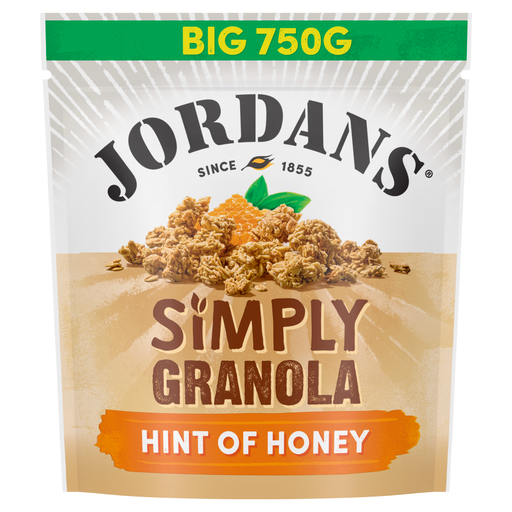
Jordans Simply Granola 750g
An everyday wholegrain-oat option for shoppers who want per-100g and portion information for a repeat weekday bowl.
81% wholegrain oat flakes; 17g sugars and 6.3g fibre per 100g. Contains oats and may contain nuts and other gluten-containing cereals.
Joybuy
 No image available
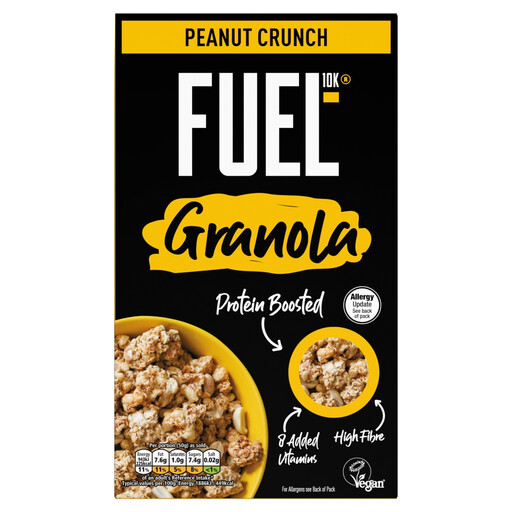
Fuel10K Peanut Granola 400g
A protein-oriented vegan granola route for busy mornings where additional protein is a specific priority.
Wholegrain oat and wheat flakes; 17.2g protein, 6.1g fibre and 14.9g sugars per 100g. Contains oats, wheat and peanuts, and may contain milk, nuts, sesame and soya.
Joybuy
 No image available
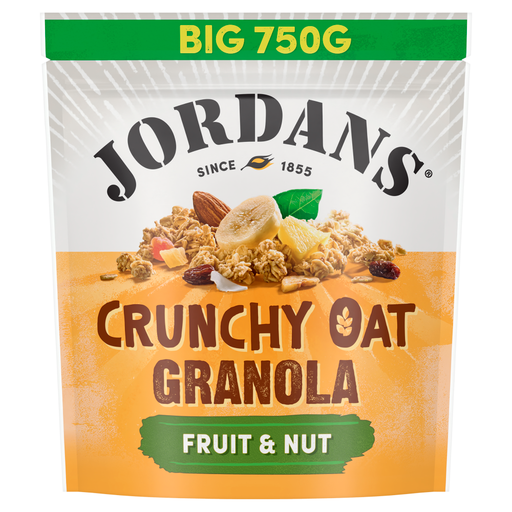
Jordans Crunchy Oat Granola Fruit & Nut 750g
A fruit-and-nut option for shoppers who prioritise a crunchy mixed-inclusion weekday bowl.
66% wholegrain oat flakes; 24g sugars and 6.1g fibre per 100g, with a 45g stated serving. Contains almonds and oats, and may contain other nuts, peanuts and gluten-containing cereals.
Joybuy
 No image available
Kellogg's Crunchy Nut Oat Granola Hazelnuts & Chocolate 600g
A chocolate-and-hazelnut granola for shoppers choosing flavour and whole-oat content over a lower-sugar route.
55% whole oats; 22g sugars and 6g fibre per 100g. Contains oats, hazelnuts and milk, and may contain other nuts.
Joybuy
 No image available
Xiao Tian Acai Berry Chia Seed Oat Crunch 365g
An oat, fruit and chia option for a quick breakfast or yoghurt topping where fibre and texture are priorities.
States at least 47% oat flakes, 13.1g dietary fibre and 9.4g protein per 100g. Check the current pack for sugars, serving information and gluten suitability; the supplied allergen information includes oats and milk and may include nuts.
Joybuy
Frequently asked questions
Does “wholegrain” mean a granola is automatically low in sugar?
No. Wholegrain and sugar are separate checks, so compare sugars per 100g and per serving, then read the ingredients for sugar, honey, syrups and dried fruit. NHS food-label guidance defines more than 22.5g total sugars per 100g as high and 5g or less per 100g as low for foods; Jordans Simply Granola, for example, lists 81% wholegrain oat flakes and 17g sugars per 100g.
Should I compare granola nutrition per portion or per 100g?
Use both, starting with per 100g for a consistent comparison when brands use different bowl sizes. The per-portion line then shows what the manufacturer considers one serving, but NHS guidance notes that this may differ from the amount you actually eat.
Can I assume oat granola is gluten free?
No. If you need gluten-free status, choose a product specifically labelled gluten free. Some granolas combine oats with spelt, barley, rye or wheat, and individual recipes can also carry cross-contact warnings; Nature’s Path presents specific gluten-free products in its UK granola range, while Rude Health Nutty Low Sugar Granola lists oats, spelt and barley.
How should I manage nut or other food-allergy risks when choosing granola?
Read the exact current pack’s highlighted allergen ingredients and precautionary statements before every purchase, particularly after a recipe or pack redesign. The Food Standards Agency states that food businesses must provide allergen information, and granolas can contain nuts or carry “may contain” warnings.
Is granola enough for a balanced weekday breakfast?
Granola can provide a cereal component, but NHS guidance recommends getting fibre from a variety of sources. Base your choice on the serving you actually eat and consider additions such as milk, yoghurt or fruit according to your dietary needs, remembering that they also change the finished meal’s nutrients and allergens.


