Older shoppers wanting a quick wholegrain breakfast
For people deciding whether controlled preparation at home or a just-add-water pot is easier. NHS guidance identifies porridge and oats as fibre-containing breakfast choices.


Choose a plain wholegrain oat sachet or quick oats when controlling the milk, toppings and sweetness matters; choose a just-add-water pot when simpler preparation is the priority. Wholegrain wording is only one part of the decision: compare ingredients, fibre and sugars on the same basis, check allergen information, and choose a specifically labelled gluten-free product where required. For poor appetite, unintentional weight loss, swallowing difficulties or a prescribed diet, seek advice from a clinician or dietitian before relying on instant oats.
For people deciding whether controlled preparation at home or a just-add-water pot is easier. NHS guidance identifies porridge and oats as fibre-containing breakfast choices.
For people comparing plain wholegrain oats with flavoured or prepared formats, including those who need to consider fibre, fluid intake and gradual dietary change.
For people who need a specifically labelled gluten-free oat product, or whose low appetite, unintended weight loss or specialist diet calls for professional dietary advice.
Start with the format you can prepare safely, then compare the exact ingredient list, nutrition panel and allergen statement for the variant in front of you.
| Priority | What to check | Your needs |
|---|---|---|
| Wholegrain and fibre | Look for wholegrain oats in the ingredient list. Compare declared fibre only on like-for-like bases, such as per 100g, per sachet or per prepared serving. | I want to see what the oat base actually is, rather than relying on a general porridge description. |
| Preparation and handling | Check whether the product needs boiling water, a microwave, a hob, a bowl or measured liquid. Follow the pack instructions for standing and cooling. | A breakfast is easier for me when the available equipment and safe handling of hot food match the method. |
| Recipe and serving basis | Read the ingredients for added sugar, milk or other additions. Check whether nutrition figures refer to the dry product, a pot or a serving made with milk. | I may prefer plain oats so I can choose the liquid and toppings, or a prepared recipe when fewer steps matter more. |
| Gluten and allergens | Use the exact pack's gluten-free label and allergen statement. Wholegrain, organic or 100% oats wording does not establish gluten-free suitability. | If I require gluten-free oats or need to avoid particular allergens, I need the specific variant to match those requirements. |
Wholegrain products can still have different recipes, fibre amounts and prepared-serving nutrition. Tesco Instant Oats Original includes oat flakes, dried skimmed milk and sugar, while Quaker Oat So Simple Original lists wholegrain rolled oats as its ingredient.
Check ingredients and compare fibre, sugars and protein on the same label basis before choosing between formats.
Standard oats may be produced alongside wheat, barley or rye. Wholegrain, pure-oat and organic descriptions do not replace a gluten-free label.
Where gluten-free suitability is necessary, choose the exact product labelled gluten free and recheck the allergen statement when packaging or recipes change.
A rapid increase in fibre can cause bloating or abdominal discomfort. North Tees and Hartlepool NHS Foundation Trust advises increasing fibre gradually over three to five days.
Introduce higher-fibre oat choices gradually and maintain suitable fluid intake unless you have been told to restrict fluids.
A higher-protein sachet can be one label option, but poor appetite and unintentional weight loss can require assessment. NHS guidance identifies unintentional weight loss as a possible sign of malnutrition.
Seek GP or dietitian advice for unintentional weight loss, persistent poor appetite or a prescribed diet rather than treating a protein claim as a complete answer.
A broad UK oat range including plain microwaveable wholegrain sachets, gluten-free sachets, protein sachets and porridge pots.
Own-label instant porridge pots for shoppers prioritising a just-add-water format.
Scottish porridge oats for shoppers who prefer a basic oat base and can cook with milk, water or both.
Convenience porridge pots, including wholegrain options prepared with hot water.
A wholegrain oat specialist with quick oats, organic oats and other porridge formats for home preparation.
These Joybuy product options cover wholegrain microwave oat sachets, including plain, flavoured and higher-protein formats for shoppers who can prepare hot porridge with a bowl and microwave or hob.
 No image available
A plain wholegrain sachet for shoppers who want to choose water or milk and adjust toppings.
Each 38.5g sachet declares 3.5g fibre and has a stated 2½-minute microwave method with a marked liquid measure.
It requires a microwaveable bowl and measured liquid. If allergen or gluten-free suitability matters, check the current pack.
 No image available
A flavoured wholegrain microwave sachet for a quick breakfast where a bowl, milk and microwave are practical.
Wholegrain rolled oats make up 81% of the recipe; each dry 36g sachet declares 2.6g fibre and 6.4g sugars.
It contains added sugar and may contain barley, wheat and soy, so it is not a specifically labelled gluten-free option.
 No image available
A higher-protein wholegrain oat sachet for shoppers whose diet suits soy protein and who can cook porridge safely.
The mix lists 66% wholegrain rolled oats and 16% soy protein, with 9g protein per serving. It can be prepared with water or milk in a microwave or on the hob.
It contains soy and oats and may contain milk, peanuts and nuts. Check the current pack if fibre comparison is important.
 No image available
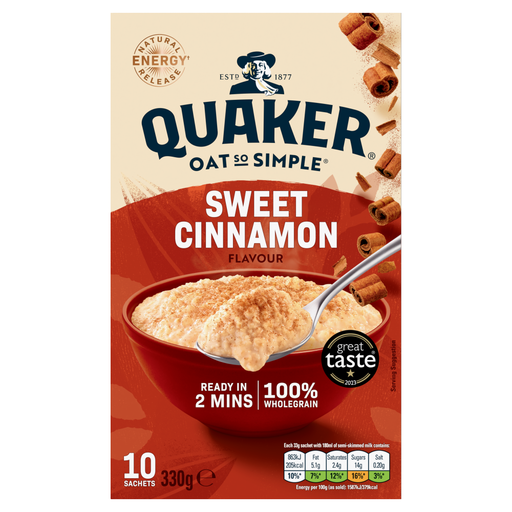
A cinnamon-flavoured wholegrain oat option for shoppers able to prepare and stand hot porridge in a microwave.
Wholegrain oat flakes make up 77% of the product, which declares 6g fibre and 22g sugars per 100g.
It contains added sugar and is produced in a facility processing wheat; it is not presented as gluten-free.
 No image available
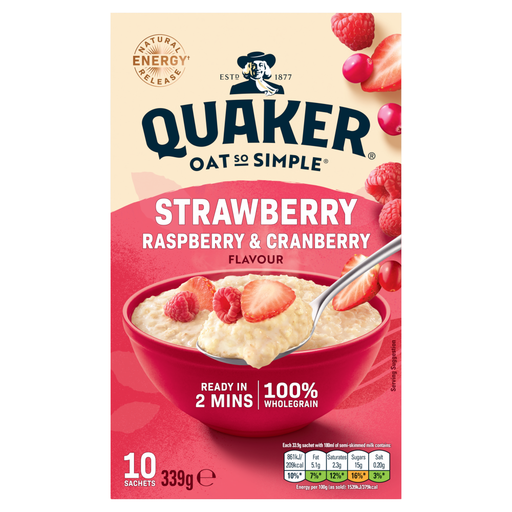
A flavoured wholegrain sachet for a microwave breakfast when measuring milk and handling hot porridge are manageable.
Wholegrain rolled oats are listed at 79%, with 7.2g fibre and 19g sugars declared per 100g.
It contains cereals containing gluten and oats and may contain barley, soya and wheat. Check the current pack if fruit content matters.
No. Wholegrain wording identifies the grain basis, but the fibre declaration and serving basis still need comparing. M&S describes its Traditional Porridge Pot as high in fibre, while Tesco's prepared pot provides 2.9g fibre and Sainsbury's Scottish Porridge Oats provide 3.8g fibre per 40g dry serving.
Choose plain sachets or quick oats when you want control over the milk, water, sweetness and toppings. A pot can be more practical when reducing preparation steps matters and boiling water can be handled safely; follow the pack instructions, as Tesco's pot is not for microwave cooking while Quaker Original sachets can be cooked on the hob or in a microwave.
No. The Food Standards Agency states that food labelled gluten free must contain no more than 20mg/kg gluten as sold. Coeliac UK notes that 100% oats, pure oats and organic wording do not establish gluten-free suitability, so choose a specifically labelled product where required.
Increase fibre gradually rather than making a sudden large change, and drink enough fluid unless a clinician has given you a fluid restriction. North Tees and Hartlepool NHS Foundation Trust advises increasing fibre over three to five days to help avoid bloating and discomfort.
Not necessarily. NHS guidance identifies unintentional loss of 5% to 10% or more of body weight over three to six months as a possible sign of malnutrition; seek GP or dietitian advice rather than relying on a standard instant oat product as the complete answer.