Buying priorities
Start with the person’s appetite and dietary requirements, then compare preparation method, ingredients and the nutrition basis shown on the pack. NHS guidance supports gradual fibre increases with adequate fluids, while BAPEN advises an energy- and protein-focused approach when appetite is poor or weight is falling.
| Priority |
What to check |
Your needs |
| Fibre and fluids |
Check whether the oats are wholegrain; compare fibre on the same dry or prepared basis; increase fibre gradually and include drinks. |
I want porridge to be one fibre-containing part of a balanced diet, without treating it as a stand-alone answer to constipation. |
| Energy and protein |
Compare protein using the same preparation basis; check whether milk or other additions are included; consider manageable portions. |
If appetite is reduced or weight has recently fallen, I need a breakfast that fits an energy- and protein-focused Food First plan rather than simply the highest-fibre option. |
| Preparation |
Check microwave time and power; confirm whether a bowl, milk or measuring is needed; consider a hot-water pot where this is easier. |
I need a method that can be prepared safely and reliably with the equipment, dexterity and confidence available at breakfast time. |
| Gluten and allergens |
Look for explicit gluten-free labelling where required; read ingredients and may-contain statements; check the current pack for each variant. |
I need a product that matches a diagnosed condition or allergy, not one assumed suitable because it contains oats or is described as wholegrain. |
Joybuy instant-oat options
These Joybuy instant-oat options include plain, protein-labelled and flavoured sachets for different breakfast preferences and preparation routines.
 No image available
Quaker Oat So Simple Big Bowl Original, 6 Pack 231g
A portioned plain-oat option for an adaptable breakfast; preparation requires a microwave and suitable bowl, and the current pack label should be checked for gluten-free suitability.
Joybuy
 No image available
Quaker Oat So Simple Peanut Butter Protein Sachets, 8 Pack 344g
A protein-enriched sachet route for someone who can eat its ingredients; it contains soya and may contain milk, peanuts and nuts, while extra protein alone does not replace Food First or clinical advice for poor appetite.
Joybuy
 No image available
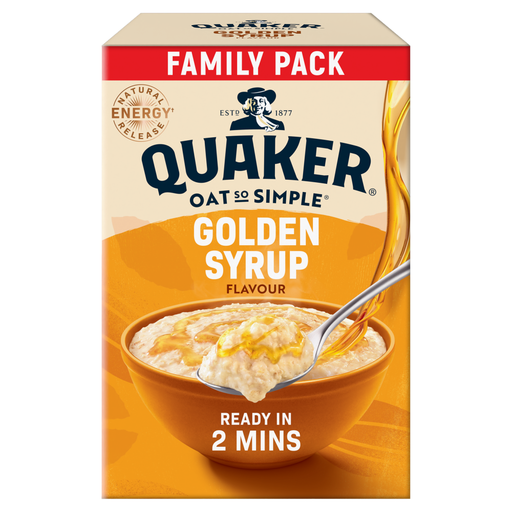
Quaker Oat So Simple Golden Syrup, 20 Sachets 720g
A flavoured, portioned option rather than a plain-oat route; it contains sugar and salt, and may contain barley, wheat and soya.
Joybuy
 No image available
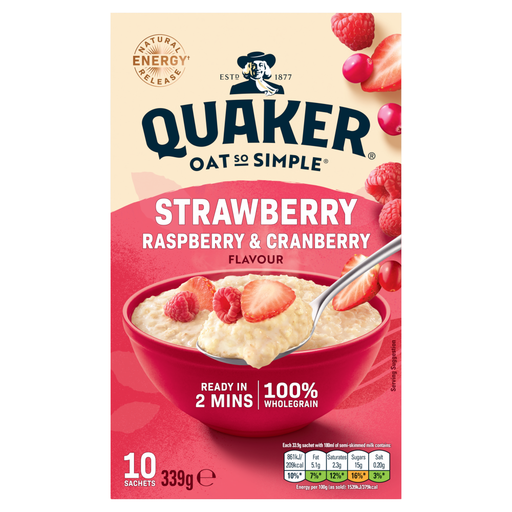
Quaker Oat So Simple Strawberry, Raspberry & Cranberry, 10 Sachets 339g
A quick flavoured sachet with fruit pieces; it contains sugar and cereals containing gluten, and may contain barley, soya and wheat.
Joybuy
 No image available
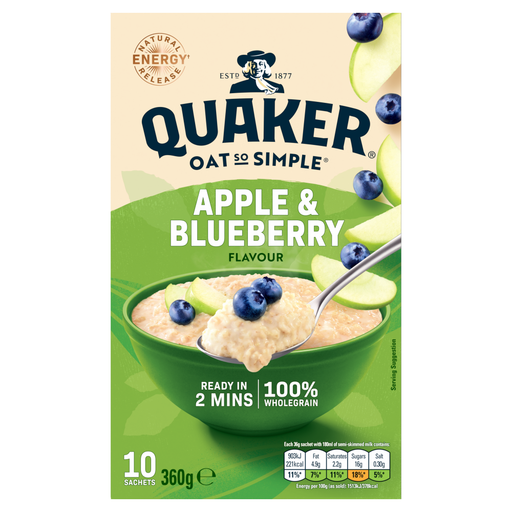
Quaker Oat So Simple Apple & Blueberry, 10 Pack 360g
A portioned fruit-flavoured breakfast option; the ingredient list includes sugar and the product may contain wheat, barley and soya, so gluten-free and allergen suitability should not be assumed.
Joybuy
Frequently asked questions
Are wholegrain instant oats a good choice for constipation in older age?
They can contribute fibre because NHS guidance identifies porridge and oats as a fibre source. Increase fibre gradually, drink plenty of fluids and keep the wider diet balanced; constipation has several possible causes, so persistent or concerning symptoms need pharmacy or medical advice.
Should an older adult with poor appetite choose the highest-fibre instant oats?
Not necessarily. BAPEN advises prioritising food and drink with enough energy and protein where there are eating problems, poor appetite or recent weight loss. Porridge can be enriched with suitable full-fat milk, milk powder or other Food First additions, but individual advice is important for medically prescribed diets.
Can a person with coeliac disease buy any product labelled “100% oats” or “wholegrain oats”?
No. Coeliac UK states that standard oats can be contaminated with wheat, barley or rye, and that “100% oats”, “pure oats” and “organic” do not establish gluten-free status. Choose a product explicitly labelled gluten free, read the current pack label and seek professional advice if oats are not tolerated.
Do instant-oat nutrition values include the milk used to make porridge?
Check the basis on every label. Quaker’s Original product information gives values for the dry sachet and for porridge made with 180ml semi-skimmed milk, so the prepared serving is higher in several nutrients because milk has been added. Compare products using the same preparation basis.


