Who this suits

Weekly-shop households choosing a breakfast staple

Useful for shoppers comparing pack size, fibre and sugars per 100g, alongside allergens that matter at home. Alpen Muesli, Jordans Cereal and Tesco Groceries provide the relevant product information.

Shoppers comparing added sugar and total sugars

Useful when choosing between no-added-sugar recipes and conventional fruit mueslis, as dried fruit can still contribute to the total sugars shown on the nutrition panel. Alpen Muesli, Dorset Cereals, Jordans Cereal and Tesco Groceries provide the relevant labels.

Households checking gluten, milk or nuts

Useful where each pack needs an allergen check rather than relying on terms such as wholegrain, organic or plant-based. The listed mueslis contain or may contain one or more relevant allergens.

What to compare before adding muesli to the trolley

Start with the nutrition panel and ingredient list, then confirm allergens and pack practicality for the way your household uses muesli.

Priority What to check Your needs
Wholegrain and fibre Check which wholegrain cereals appear in the ingredients. Compare fibre per 100g on a like-for-like basis and consider your usual serving size. I want a cereal with clearly listed wholegrain ingredients and a meaningful fibre contribution within a varied diet. NHS guidance recommends choosing wholegrain varieties where possible.
Total sugars Compare the “of which sugars” figure per 100g. Read the ingredients too, to distinguish added sugar from sugars contributed by dried fruit. I want to compare the full sugars figure rather than assume a no-added-sugar claim means the bowl contains no sugars.
Allergens Read the current ingredients, highlighted allergens and any may-contain statement. Check cereals containing gluten, milk, nuts, peanuts and soya where relevant. Someone at home needs a product that does not conflict with their allergy, coeliac requirement or dietary exclusion.
Pack practicality Compare pack sizes and unit prices within the same retailer on the day. Follow the pack storage instructions after opening. I want a pack size the household can store properly and use regularly, without treating a single retailer listing as a market-wide value comparison.

Common buying pitfalls

  • Treating wholegrain as a complete nutrition verdict

    Wholegrain mueslis can differ in their listed fibre and sugars. Among the compared products, fibre ranges from 7.6g to 9.2g per 100g and sugars from 10.4g to 21g per 100g.

    Compare fibre, sugars and ingredients per 100g before choosing by flavour or front-of-pack wording.

  • Assuming “no added sugar” means dried-fruit muesli is sugar-free

    No-added-sugar recipes can still list total sugars from ingredients such as raisins and sultanas.

    Use the “of which sugars” line together with the ingredient list, then choose according to your own dietary needs.

  • Buying fruit-and-nut muesli without checking the current allergen statement

    The compared products commonly contain or may contain nuts, gluten-containing cereals, milk or soya. Formulations and retailer information can change.

    For an allergy or coeliac requirement, read the physical pack on every purchase and do not treat organic, natural, wholegrain or plant-based wording as an allergen-safety claim.

  • Using one supermarket listing as a permanent value ranking

    A larger pack may suit regular use, but it is only practical when the household can store it appropriately and use it consistently.

    Compare pack size and unit price within the retailer on the day, then confirm the current label and storage instructions.

Relevant muesli brand references

Alpen

A classic fruit-and-nut muesli option combining wholegrain wheat and rolled oats with raisins, almonds and hazelnuts.

  • Alpen Muesli lists 7.7g fibre per 100g for Original and labels it wholegrain.
  • Original lists 21g sugars per 100g and contains wheat, oats, milk and nuts; it may contain other nuts.

Dorset Cereals

A wholegrain muesli range with fruit, nuts and seeds, including the organic Wonderfully Organic variety.

  • Wonderfully Organic is labelled no added sugar, high in fibre and certified organic.
  • It contains gluten-containing cereals and nuts, with 18g sugars and 7.6g fibre per 100g listed on the panel.

Lizi's

Its UK site currently focuses on granola rather than a directly comparable current muesli range.

  • The brand directs shoppers to its granola range at several UK supermarkets.
  • Granola should not be treated as a like-for-like substitute when you are specifically comparing current muesli labels.

Jordans

A wholegrain cereal brand with Natural Muesli for shoppers looking for no added salt or sugar.

  • Natural Muesli lists 9.2g fibre and 10.4g sugars per 100g, with 67% wholegrain cereals.
  • It contains gluten-containing cereals and nuts; the manufacturer advises people with a nut allergy not to eat it.

Rude Health

An organic and plant-based-positioned range that includes The Ultimate Muesli and Soft & Fruity Bircher Muesli.

  • The Ultimate Muesli is labelled high fibre, organic, plant based and whole grain.
  • Its products can contain several gluten-containing grains and nuts, and may contain milk or soya.

Tesco

An own-label route with Swiss-style muesli in a larger pack and a current product-panel listing.

  • Tesco Swiss Style No Added Sugar Muesli lists 8.5g fibre and 13.3g sugars per 100g.
  • It includes oats, wheat, barley, milk and nuts, and may contain peanuts and other nuts; check the physical pack for the current information.

Joybuy product options

Joybuy product options for a repeat-use wholegrain fruit-and-nut muesli, with label details relevant to fibre, total sugars and household allergens.
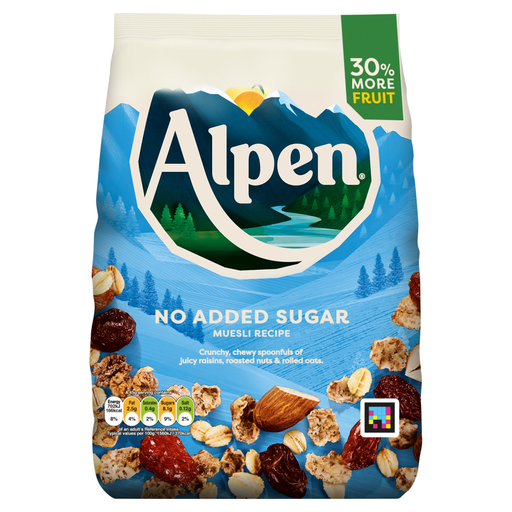
Alpen No Added Sugar Muesli 950g

Alpen No Added Sugar Muesli 950g

A 950g wholegrain wheat-and-oat muesli for regular household breakfasts, with raisins and roasted nuts.

The label lists 8.0g fibre and 18g sugars per 100g. It contains wheat, oats, milk, almonds and hazelnuts, and may contain other nuts.

Joybuy

Frequently asked questions

Does wholegrain automatically mean a muesli is high in fibre or low in sugar?

No. Wholegrain describes the grain ingredient, so the nutrition panel still needs checking. In the compared products, fibre ranges from 7.6g to 9.2g per 100g and sugars from 10.4g to 21g per 100g; compare on a per-100g basis before considering your usual serving size.

Does no added sugar mean the muesli contains no sugar?

No. A no-added-sugar claim does not mean the nutrition panel will show zero total sugars. Tesco Swiss Style No Added Sugar lists 13.3g sugars per 100g and Dorset Wonderfully Organic lists 18g per 100g; check the “of which sugars” line and the ingredient list.

Can wholegrain muesli be assumed to be gluten-free?

No. Wholegrain is not a gluten-free claim. The compared Alpen, Dorset, Jordans and Tesco products contain cereals such as wheat, barley or oats, while Rude Health The Ultimate Muesli includes oats, barley and rye. Choose only a product specifically labelled for your individual requirement.

How should I check allergens when buying muesli in the UK?

Read the current pack’s full ingredients list, highlighted allergen declaration and any precautionary may-contain statement every time you buy. The Food Standards Agency says businesses must provide allergen information for prepacked and non-prepacked food and drink, while product formulations can change.

How should a household switch to a higher-fibre breakfast cereal?

Include fibre from a variety of sources as part of a balanced diet. NHS guidance advises increasing fibre gradually if your usual diet is low in fibre and drinking enough fluid; University Hospitals Dorset notes that sudden increases can cause wind, bloating or cramps.