Weekend breakfast bowl builders
Choose between a simpler oat-led blend and a richer fruit, seed and nut mixture for the texture you want. Check the ingredient list and allergens as well as the wholegrain wording.


Choose by the actual grain base, nutrition panel and allergen statement rather than a general wholesome impression. Compare sugars and fibre on the same per-100g basis, and choose a fruit-and-nut, organic or simpler oat-led blend according to the texture and ingredients that suit your breakfast.
Choose between a simpler oat-led blend and a richer fruit, seed and nut mixture for the texture you want. Check the ingredient list and allergens as well as the wholegrain wording.
Compare fibre figures on a consistent per-100g basis. NHS guidance recommends getting fibre from a variety of foods across the diet, rather than relying on one cereal.
Read total sugars alongside any no-added-sugar claim, and check the current pack for cereals containing gluten, milk, nuts and other relevant allergens.
Start with the cereal base and nutrition panel, then check whether the recipe and allergen statement fit the bowl you want to serve.
| Priority | What to check | Your needs |
|---|---|---|
| Wholegrain and fibre | Look for named wholegrain cereals in the ingredients. Compare fibre per 100g before comparing serving sizes. | I want breakfast to contribute fibre while still keeping fibre varied across the rest of my meals. |
| Total sugars | Compare sugars per 100g. Read the ingredients for raisins, sultanas and other dried fruit. | I want to distinguish a no-added-sugar claim from the total sugars in the finished cereal. |
| Allergen suitability | Check the current ingredients and precautionary statement. Cereals containing gluten, milk, nuts and soya can all be relevant in muesli. | I need a product whose labelled ingredients and possible cross-contact statement are suitable for me or someone in my household. |
| Texture and recipe style | Compare the fruit, nut and seed content with a simpler oat-led recipe. Check serving suggestions if you plan to add milk or yoghurt. | I am choosing between a crunchier, more varied weekend bowl and a plainer, softer Bircher-style option. |
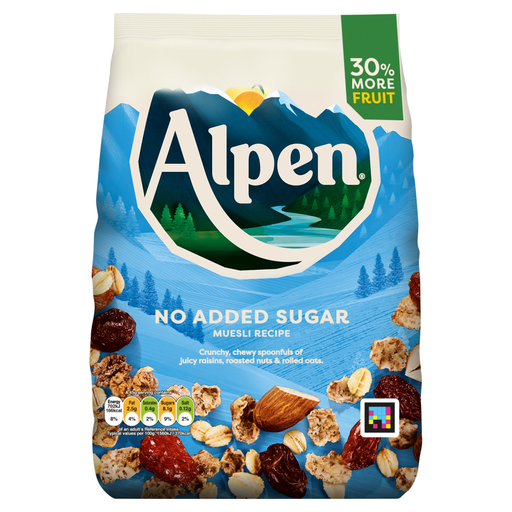
Dried fruit can contribute substantial total sugars even where no sugar has been added. Alpen No Added Sugar Muesli, for example, lists 18g sugars per 100g and includes raisins.
Compare total sugars per 100g and read the dried-fruit ingredients before deciding from a front-of-pack claim.
Many wholegrain mueslis contain wheat, oats, barley, rye, milk or nuts, and some packs also include precautionary statements about possible cross-contact.
Check the exact pack every time you buy. Choose a specifically suitable free-from product only when the pack supports that conclusion.
Serving suggestions and bowl portions can differ between products, making direct comparisons harder.
Use per-100g values first for fibre, sugars and salt, then consider the stated portion you expect to serve.
NHS guidance says fibre should come from a variety of sources, so a muesli choice is only one part of the overall diet.
Build variety across meals with suitable fibre-containing foods, alongside the breakfast cereal you choose.
A mainstream wholegrain muesli route with Original and No Added Sugar variants.
A fruit, nut and seed muesli route built around toasted wholegrain flakes.
A fruit-and-nut muesli option with a comparatively simple wholegrain-cereal base.
An organic, plant-based-positioned route spanning ingredient-rich and simpler oat-and-fruit mueslis.
A cereal brand whose range includes muesli as well as granola.
An own-label route with several muesli formats, including Swiss Style, Fruit, Fruit & Nut, Nuts & Seeds and No Added Sugar options.
Joybuy product options for a wholegrain weekend muesli bowl, with listed fibre, sugars and allergen information to compare.
 No image available
A fruit-and-nut wholegrain option for a more textured weekend bowl.
Listed with 42% wholegrain wheat, 33% wholegrain rolled oats, 8.0g fibre and 18g sugars per 100g.
Contains wheat, oats, milk, almonds and hazelnuts, and may contain other nuts. No-added-sugar wording does not mean sugar-free.
No. UK allergen guidance lists wheat, rye, barley and oats as cereals containing gluten. Wholegrain mueslis commonly contain one or more of these cereals, so check the exact pack rather than treating wholegrain as gluten-free.
No. The claim concerns added sugar, not total sugars from ingredients such as raisins, sultanas or dates. Alpen No Added Sugar Muesli lists 18g sugars per 100g and includes raisins, so compare nutrition panels on the same per-100g basis.
Check the current ingredient list and any precautionary statement on the exact pack. UK prepacked-food rules require allergens used as ingredients to be clearly labelled, but a product may also state possible cross-contact.
Compare fibre figures on the same basis, use the stated serving size as a practical starting point, and include fibre from varied foods across the day. NHS guidance says adults should aim for 30g of dietary fibre daily as part of a healthy balanced diet.
Use an online listing to shortlist products, then check the current pack or retailer product page before buying. This is particularly important where an allergy, intolerance or precise dietary requirement affects the choice.