Hosts serving a separate cereal course
For anyone who wants to offer wholegrain muesli separately with milk or yoghurt alongside a Full English breakfast, and is choosing between classic fruit-and-nut, organic or simpler fruit-led recipes.


Choose by the pack label rather than the word “muesli”: check that wholegrain cereals lead the ingredients list, then compare fibre and sugars on the same per-100g or serving basis. A no-added-sugar recipe can still contain sugars from dried fruit, while ingredient choices such as nuts, milk and gluten-containing cereals can determine whether a particular pack suits the breakfast table.
For anyone who wants to offer wholegrain muesli separately with milk or yoghurt alongside a Full English breakfast, and is choosing between classic fruit-and-nut, organic or simpler fruit-led recipes.
For readers comparing a no-added-sugar claim with the total sugars shown on the nutrition panel, as dried fruit can still contribute to the total sugars figure.
For people who need to check for cereals containing gluten, milk, nuts, soya and precautionary statements instead of assuming that wholegrain or plant-based muesli is suitable.
For a cereal bowl served alongside a cooked breakfast, compare the grain base, nutrition panel, ingredient style and allergen declaration on the exact pack.
| Priority | What to check | Your needs |
|---|---|---|
| Wholegrain and fibre | Look for wholegrain cereals near the start of the ingredients list. Compare fibre on the same per-100g or serving basis. | I want to see the grain base clearly and compare the stated fibre figure between packs. |
| Added sugar and total sugars | Read both the no-added-sugar claim and the “of which sugars” line. Check whether raisins or other dried fruit are included. | I want to avoid added sugar without mistaking this for an absence of total sugars. |
| Allergen suitability | Check the full ingredients, emphasised allergens and any may-contain statement. Do not rely on a similar recipe or pack size. | I need a pack that fits the dietary exclusions required at the breakfast table. |
| Texture and ingredient mix | Choose between toasted flakes with seeds or nuts, and an oat-and-fruit Bircher-style mix. Check whether nuts are deliberate ingredients. | I am choosing between a crunchier bowl and a softer, simpler cereal option. |
Wholegrain describes the grain base, not the total sugars in the recipe. Alpen Original and Alpen No Added Sugar both use wholegrain wheat and oats, while their labels list 21g and 18g sugars per 100g respectively.
Compare “of which sugars” on a consistent basis and read the ingredients for raisins, dates and other dried fruit. Treat a no-added-sugar claim as one part of the choice, not the complete nutrition picture.
Wholegrain muesli can include wheat, barley or rye as well as oats, and several recipes contain or may contain tree nuts, milk or soya. Suitability depends on the exact recipe and pack declaration.
For an allergy, coeliac disease or a medically necessary exclusion, check the exact pack label and do not substitute a similar product or different pack size without reading its ingredient and allergen statement.
Fruit-and-nut recipes can bring several textures and allergens to the bowl. Dorset Gloriously Nutty includes almonds, cashews and hazelnuts, whereas Rude Health Soft & Fruity Bircher lists oats and dried fruit as its stated ingredients.
Choose the ingredient style deliberately: toasted flakes and nuts for a more textured bowl, or an oat-and-fruit Bircher-style mix for a softer option. Check precautionary allergen statements even where nuts are not deliberate ingredients.
Traditional wholegrain wheat-and-oat muesli available in Original and No Added Sugar variants.
Wholegrain muesli options with toasted flakes and varying fruit, seed and nut profiles, including organic choices.
A manufacturer-described range of wholegrain cereals with muesli and functional-style options, including lower-sugar and high-protein lines.
A mainstream muesli option represented in the UK Tesco muesli range by Jordans Natural Muesli 1Kg.
Organic and plant-based muesli routes, including a mixed-grain Ultimate recipe and a simpler fruit-led Bircher-style option.
A UK own-label muesli range with Swiss Style, no-added-sugar, fruit, fruit-and-nut, nuts-and-seeds and Free From variants listed alongside branded alternatives.
Joybuy product options for serving a wholegrain muesli bowl alongside a Full English breakfast.
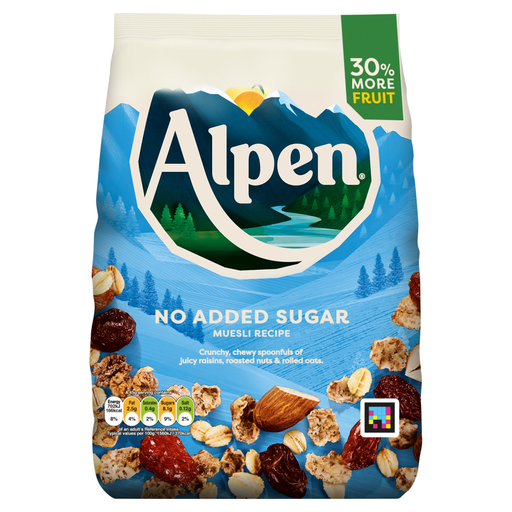 No image available
A familiar wheat-and-oat muesli route for a separate cereal bowl with cold milk or yoghurt.
Stated nutrition: 8.0g fibre and 18g sugars per 100g. Contains wheat, oats, milk, almonds and hazelnuts, and may contain other nuts; check the current pack label for ingredient proportions and allergen information.
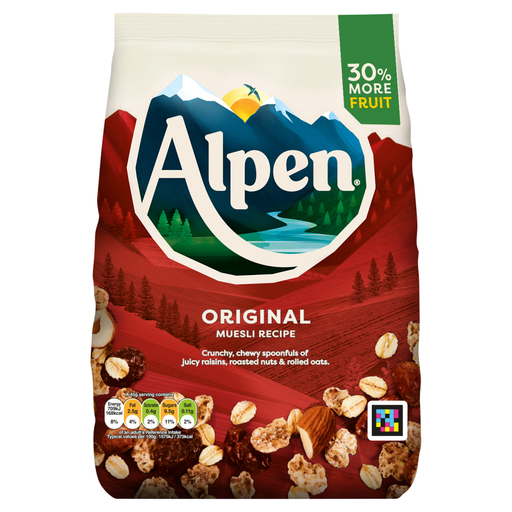 No image available
A classic fruit-and-nut wholegrain muesli for a cereal bowl served with cold milk alongside a cooked breakfast.
Stated nutrition: 7.7g fibre and 21g sugars per 100g. Contains wheat, oats, milk, almonds and hazelnuts, and may contain other nuts; it also contains added sugar.
No. A no-added-sugar recipe can still contain sugars naturally present in dried fruit. Alpen No Added Sugar lists 8.1g sugars per 45g serving and includes raisins, so compare the “of which sugars” line on the same serving or per-100g basis rather than treating the front-of-pack claim as a total-sugar figure.
No. The reviewed wholegrain products include cereals containing gluten and several include tree nuts. UK food-safety authorities state that cereals containing gluten and tree nuts are among the 14 allergens that must be declared where used as ingredients, so check the exact pack’s emphasised allergen declaration and any may-contain statement.
Serve it as a separate cereal bowl or breakfast alternative rather than as a cooked Full English ingredient. Choose a toasted-flake recipe when you prefer more texture, or a Bircher-style oat-and-fruit recipe when a softer bowl with milk suits the occasion.
Yes. UK food-safety authorities state that food businesses must provide allergen information for prepacked and non-prepacked food. For prepacked muesli, use the full ingredient list and emphasised allergens on the label; for loose or food-service cereal, request allergen information before purchase.