What to check before buying
Start with a like-for-like per-100g comparison, then use the serving information to assess the bowl you are likely to eat.
| Priority |
What to check |
Your needs |
| Carbohydrate and portion |
Compare carbohydrate per 100g before comparing packs with different serving sizes. Check the stated serving, then measure the portion you normally pour. |
I want to know the carbohydrate in my actual bowl, not only whether the pack says wholegrain. Diabetes UK advises that portion size can have a bigger effect on blood glucose than GI alone. |
| Sugars and dried fruit |
Read sugars per 100g and per serving. Check where raisins, dates or other dried fruit appear in the ingredient list. |
I do not want a no-added-sugar claim to obscure the total sugars or carbohydrate in the blend. |
| Wholegrain and fibre |
Look for wholegrain oats, wheat, barley or rye in the ingredients. Compare fibre using the same unit, preferably per 100g. |
I want a wholegrain cereal base and fibre information, while treating GI as one part of the meal decision rather than the only measure. |
| Allergens and recipe changes |
Read the current ingredient list and allergen statement for gluten-containing cereals, milk, peanuts and tree nuts. Check any “may contain” wording where relevant. |
I need the exact pack to work with my allergy or intolerance requirements, rather than relying on a previous purchase or brand name. |
Joybuy product options
Joybuy product options for shoppers comparing a wholegrain, no-added-sugar muesli while accounting for carbohydrate, sugars, fibre, dried fruit and allergens.
 No image available
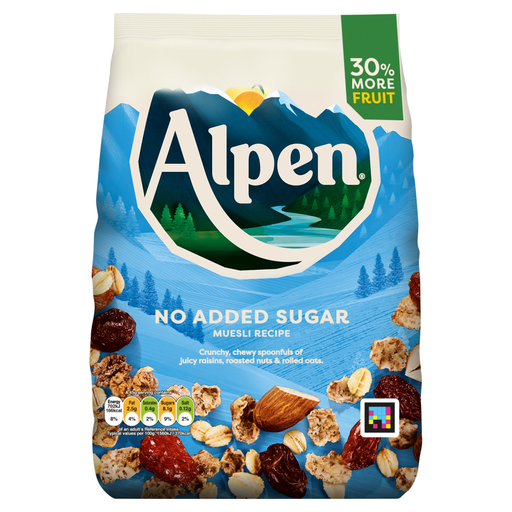
Alpen No Added Sugar Muesli 950g
A wholegrain muesli option for shoppers who can account for its portion within an established carbohydrate plan.
Wholegrain wheat 42% and wholegrain rolled oats 33%; 65g carbohydrate, 18g sugars and 8.0g fibre per 100g. Raisins make up 19.5% of the recipe. Contains wheat, oats, milk, almonds and hazelnuts; check the current allergen statement.
Joybuy
Frequently asked questions
Is no-added-sugar muesli automatically suitable when managing diabetes?
No. A no-added-sugar claim does not mean that a muesli is low in total sugars or carbohydrate. The compared products list 10.4g to 18g sugars per 100g, so compare both per-100g and per-serving values before deciding how a portion fits your meal plan.
Should I choose muesli solely because it is wholegrain or has a low-GI ingredient?
No. Wholegrain, unsweetened oat-based muesli can be a useful alternative to sugar-sweetened cereal, but Diabetes UK explains that GI does not account for portion size. Use the nutrition panel and the amount you eat alongside any GI information.
How can I portion packaged muesli more easily?
Use the pack serving as a starting point, then weigh or measure your usual bowl at first. Apply the nutrition-panel values to the amount you actually eat, as a larger bowl will contain more carbohydrate than the stated 45g or 50g serving.
What allergens should I check in UK muesli?
Check the current pack for cereals containing gluten, milk and tree nuts in particular. Compared mueslis include combinations of wheat, oats, barley, milk, almonds and hazelnuts, and formulations can change between purchases.
How should muesli be stored after opening?
Follow the instructions on the pack. Tesco advises storing its Swiss Style No Added Sugar Muesli in a cool, dry place and using an airtight container after opening; check the exact product pack for its own storage guidance and best-before date.


