Large households buying a daily breakfast staple
For shoppers who need a repeatable muesli choice for several people. Compare pack size, stated servings and current availability before treating a larger box as better value.


Start with the ingredients list and nutrition panel: choose muesli that clearly names wholegrain cereals, then compare fibre, sugars, allergens and pack size on the same basis. No-added-sugar, organic and nut-heavy options may suit particular preferences, but they are not automatically lower in total sugars or suitable for every household.
For shoppers who need a repeatable muesli choice for several people. Compare pack size, stated servings and current availability before treating a larger box as better value.
For households choosing muesli partly to increase fibre intake. Look for clearly identified wholegrain cereals and compare fibre per 100g and per stated serving, while keeping fibre varied across the overall diet.
For households avoiding particular allergens or gluten. Ingredients and highlighted allergen information are essential checks because many mueslis contain cereals containing gluten, milk and/or nuts.
Compare the exact packs side by side, beginning with ingredients and allergens, then use the nutrition panel and pack size to decide whether the recipe works for regular household use.
| Priority | What to check | Your needs |
|---|---|---|
| Wholegrain and fibre | Look for specifically named wholegrain oats, wheat flakes or barley flakes. Compare fibre per 100g, then check the stated serving context. | I want clearly identified wholegrain cereals and enough fibre to make a useful contribution at breakfast. NHS guidance says adult fibre intake should increase to 30g a day as part of a healthy balanced diet; children need different amounts according to age. |
| Total sugars | Compare the “of which sugars” figure per 100g. Read no-added-sugar wording alongside ingredients such as raisins or other dried fruit. | I may prefer no added sugar, but I still want to compare the total sugars shown on the nutrition panel rather than relying on a front-of-pack claim. |
| Allergens and gluten | Read declared allergens and any precautionary “may contain” statement on the exact pack. Where required, look for a specific gluten-free claim. | Someone in my household may need to avoid gluten, milk or nuts, so oat-based or natural-looking packaging is not enough to establish suitability. |
| Pack size and availability | Compare pack weight with the stated serving size and check current availability. Confirm that the household can use the pack while it remains fresh. | I need enough muesli for regular breakfasts without choosing a large pack solely because its headline size looks more economical. |
Wholegrain mueslis can differ materially in fibre, sugars, milk ingredients, nuts and dried-fruit content. The named wholegrain cereals alone do not show whether two recipes have the same nutrition profile.
Compare the ingredient list, fibre, “of which sugars” and allergens per 100g for the exact packs you are considering.
A larger box may reduce shopping frequency, but it may not be in stock when you need it or suit the household’s rate of use.
Use current availability as an early filter, then check whether the pack size and storage period fit your usual breakfast routine.
The evidenced recipes include cereals containing gluten, milk and several tree nuts, and some packs carry precautionary allergen statements. Gluten-free is a specific claim, not something inferred from the presence of oats.
For a strict dietary exclusion, check the actual pack’s declared allergens and rely only on a gluten-free claim shown for that exact product.
Ingredients, nutrition information and allergen declarations can change after reformulation, while the pack is the relevant current product record.
Before serving an unfamiliar pack, read its ingredients, allergy advice, storage instructions and best-before date.
An own-label supermarket route illustrated by Swiss Style No Added Sugar Muesli in a 1kg pack for family grocery shopping.
A classic wheat-and-oat muesli brand with original and no-added-sugar product routes.
A premium-style muesli range using wholegrain flakes with fruit, nuts and seeds, including organic and no-added-sugar variants.
A wholegrain cereal brand with Natural Muesli built around wholegrain oats, wheat flakes and barley.
A cereal brand offering muesli alongside granola, with recipes described by the brand as using wholegrain ingredients.
Joybuy product options for a larger branded wholegrain muesli pack, suitable for comparing ingredient proportions, sugars, allergens and pack size for regular family breakfasts.
 No image available
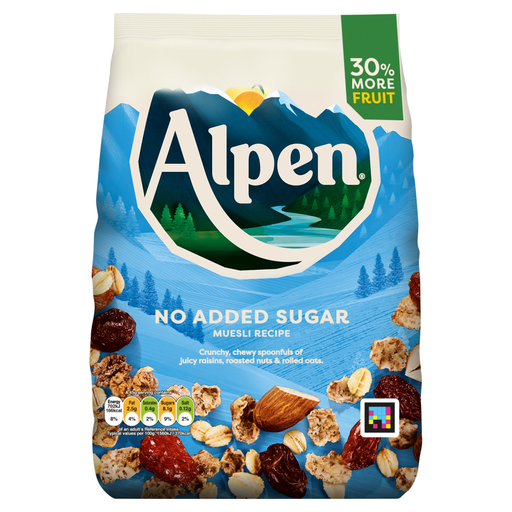
A near-1kg option for regular family breakfasts where a branded wholegrain recipe is suitable for the household.
Stated wholegrain wheat 42% and wholegrain rolled oats 33%; 8.0g fibre and 18g sugars per 100g. Contains milk, wheat, oats, almonds and hazelnuts, and may contain other nuts.
 No image available
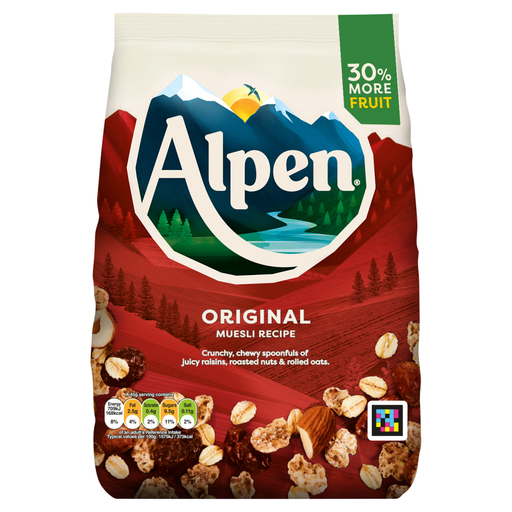
A near-1kg original recipe for households that can use a muesli containing gluten, milk and nuts.
Stated wholegrain wheat 39% and wholegrain rolled oats 35%; 21g sugars per 100g. Contains wheat, oats, milk, almonds and hazelnuts, and may contain other nuts.
Check the exact pack’s ingredients list for specifically named wholegrain cereals, such as wholegrain oats, wholegrain wheat flakes or wholegrain barley. Then compare fibre per 100g and per stated serving, because wholegrain wording alone does not mean two products provide the same amount of fibre.
No. A no-added-sugar claim does not mean that a muesli contains no sugars, because ingredients such as raisins and other dried fruit contribute naturally occurring sugars. Compare the “of which sugars” figure per 100g as well as the ingredients list.
Do not assume so. Prepacked food must identify listed allergens in its ingredients list, and the evidenced mueslis contain or may contain cereals containing gluten and/or nuts. Where gluten-free suitability is required, choose only a product carrying an appropriate gluten-free claim and check the exact pack; the Food Standards Agency states that foods labelled gluten-free must contain no more than 20mg/kg gluten.
Follow the pack instructions. The Tesco Swiss Style listing advises storing the product in a cool, dry place and, once opened, in an airtight container. If you decant it, use a clean, dry container and retain the product name and best-before information for future allergen checks.
No. Use online information to shortlist products, then check the actual pack every time where an allergy, intolerance or strict dietary requirement is involved. The pack label is the relevant record for the product you are about to serve.