Wholegrain muesli can be part of a toddler breakfast, but it is not automatically the right everyday choice, particularly for children under 2 who should not have only wholegrain starchy foods. For toddlers who manage mixed textures, choose a recipe with low salt and no added sugar where suitable, manage any nuts or hard fragments, soften the cereal if needed, and check the current allergen label.
Who this is for
Parents of toddlers aged 2 to 4
If your child already manages mixed cereal textures, consider softening the muesli, avoiding whole nuts, checking allergens and choosing a recipe with low salt and no added sugar where possible. NHS and Department for Education guidance supports these age-appropriate checks.
Parents of children under 2
Wholegrain foods can be offered, but NHS guidance says under-2s should not receive only wholegrain starchy foods because fibre can fill them before they obtain sufficient calories and nutrients.
Parents packing breakfast for school or childcare
Check the exact pack label and the setting’s allergy safety policy before sending muesli. Many varieties contain gluten and nuts or carry precautionary allergen statements; the Department for Education says English schools must publish an allergy safety policy.
Buying priorities
Start with the child’s age and ability to manage the texture, then compare the ingredient list, nutrition panel and allergen information on the exact pack.
| Priority |
What to check |
Your needs |
| Wholegrain and fibre |
For children under 2, keep wholegrain foods within a varied breakfast rotation rather than making them the only starchy-food choice. Check whether the cereal’s texture suits the child. |
I want to include wholegrain foods without relying on one high-fibre breakfast every day. |
| Nuts and texture |
Look for whole nuts, sliced nuts, seeds and manufacturer warnings about hard shells, stones, husks or pits. Soften flakes where appropriate, seat the child upright and supervise eating. |
I need a serving that my child can manage safely. NHS guidance says whole nuts should not be given to children under 5. |
| Sugars and salt |
Read the sugars and salt lines per 100g alongside the ingredients. A no-added-sugar claim does not mean the product contains no sugars, as dried fruit can contribute sugars. |
I want to compare the full label rather than assume that wholegrain, natural or organic describes the sugars or salt in the pack. |
| Allergens and packed food |
Check for gluten-containing cereals, milk, nuts and any precautionary statement on the current pack. For school or childcare, also read the setting’s published allergy policy. |
I need to know whether the exact product fits my child’s dietary needs and the rules of the place where it will be eaten. |
Common pitfalls
-
Treating wholegrain as a universal toddler choice
For children under 2, an all-wholegrain starchy-food pattern can be so high in fibre that it reduces appetite for needed calories and nutrients.
Use wholegrain muesli within a varied breakfast rotation instead of replacing every other cereal or starchy breakfast food.
-
Ignoring nuts because they are mixed into cereal
Whole nuts are a choking risk for children under 5, and some mueslis also carry warnings about hard shell, stone, husk or pit fragments.
Choose a recipe without listed whole nuts where possible. Otherwise, remove or appropriately chop or flake nut pieces, and supervise the child; milk does not make whole nuts safe.
-
Assuming no added sugar means low total sugars
Dried fruit contributes sugars even where sugar has not been added, so total sugars can differ substantially between recipes.
Compare both the ingredients and the sugars-per-100g line, then serve an age-appropriate amount as part of a varied breakfast.
-
Packing muesli without checking allergens and policy
Muesli commonly contains gluten-containing cereals and nuts, while products can also include milk or precautionary allergen statements.
Before packing it, check the current label, the child’s dietary needs and the school or childcare setting’s published allergy safety policy.
Relevant brand references
Rude Health
Soft & Fruity Bircher Muesli is an oat-led wholegrain option with dried apple, raisins and dried banana.
- The listed ingredients do not include whole nuts, which can make it a more practical starting point for a modified toddler serving.
- It may contain traces of milk, soya and nuts, and the manufacturer warns that occasional husks or pits may occur.
Alpen
Alpen offers wholegrain wheat-and-oat muesli in Original and No Added Sugar varieties.
- The No Added Sugar recipe lists wholegrain wheat and wholegrain rolled oats, with 8.0g fibre and 0.28g salt per 100g.
- It contains raisins, milk ingredients, hazelnuts and almonds; its 18g sugars per 100g means no added sugar is not the same as sugar-free.
Jordans
Natural Muesli is a wholegrain fruit-and-nut option based on wheat, oat and barley flakes.
- The manufacturer lists no added salt or sugar, with 10.4g sugars, 9.2g fibre and 0.03g salt per 100g.
- Whole almonds and hazelnuts are included, with a warning that hard nut shell or fruit stone fragments can occur; do not serve it unmodified to a toddler.
Dorset Cereals
The range includes wholegrain mueslis with fruit, seeds and nuts, including Wonderfully Organic.
- Wonderfully Organic contains wholegrain oat, barley and wheat flakes and is labelled no added sugar and high in fibre.
- It contains Brazil nuts, seeds and gluten-containing cereals, while dried fruit contributes 18g sugars per 100g.
Tesco
Tesco offers several own-label muesli styles, including Swiss Style, Fruit, Fruit & Nut, Nuts & Seeds and Free From Fruit & Seed varieties.
- The range provides several format options for comparing ingredients and texture.
- Compare the exact pack’s ingredients, allergens, sugars and salt rather than relying on the category name.
Lizi’s
Lizi’s UK range focuses on granola and specialist nutritional options rather than a directly comparable muesli product.
- Its granola range includes toasted oats, seeds and nuts.
- Check sugar, nut and texture details for each product rather than treating granola as interchangeable with muesli for a toddler breakfast.
Joybuy product options
Joybuy wholegrain muesli options for a softened, supervised toddler breakfast where the current pack label and nut texture are suitable.
 No image available
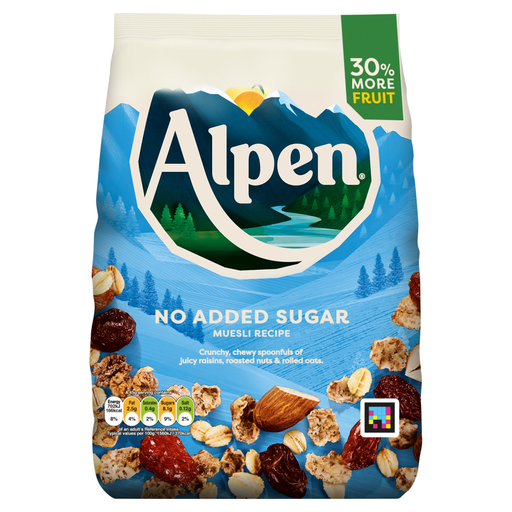
Alpen No Added Sugar Muesli 950g
A wholegrain muesli option for a toddler already managing mixed cereal textures, served softened and supervised.
- Lists wholegrain wheat and wholegrain rolled oats, with 18g sugars and 0.28g salt per 100g.
- Contains almonds, hazelnuts, milk and wheat, and may contain other nuts.
- For children under 2, keep wholegrain foods as part of a varied breakfast rotation.
Joybuy
 No image available
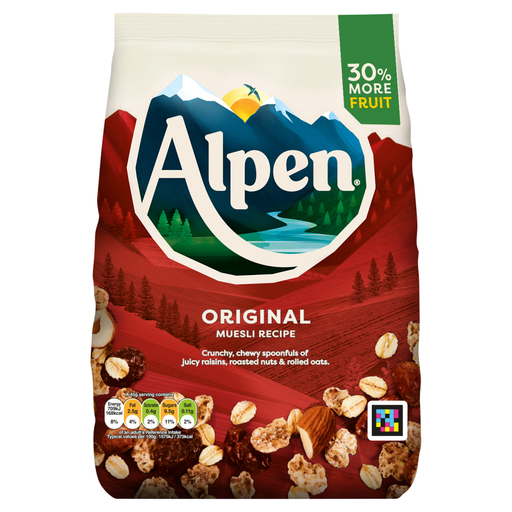
Alpen Original Muesli 950g
A conditional option for a toddler who manages mixed textures, with an adult checking the sliced nuts before serving.
- Lists wholegrain wheat and wholegrain rolled oats, with 21g sugars and 0.25g salt per 100g.
- Contains added sugar, wheat, oats, milk, almonds and hazelnuts, with a may-contain-nuts statement.
- Serve with age-appropriate texture management, seated upright and supervised.
Joybuy
Frequently asked questions
Can a toddler eat wholegrain muesli every day?
A toddler can have wholegrain foods, but an under-2 should not receive only wholegrain starchy foods. NHS guidance explains that high-fibre foods can fill a young child before they get sufficient calories and nutrients, so rotate muesli with other suitable breakfasts.
Should fruit-and-nut muesli be served straight from the packet?
No. NHS guidance says whole nuts should not be given to children under 5; chop or flake them, assess the texture and supervise eating. Products carrying warnings about shells, stones, husks or pits need extra caution and may not suit an unmodified toddler serving.
Does no added sugar mean a muesli is low in sugar?
No. It means sugar has not been added as an ingredient, but dried fruit can still contribute naturally occurring sugars. Alpen No Added Sugar lists 18g sugars per 100g, Jordans Natural lists 10.4g, and Dorset Cereals Wonderfully Organic lists 18g; compare the current nutrition panel and ingredients rather than relying on the front-of-pack claim.
Can gluten- or nut-containing muesli be packed for school?
Check the individual school’s current allergy safety policy and the exact pack label first. The Department for Education says English schools must publish an allergy safety policy, and many mueslis contain gluten-containing cereals, milk, nuts or precautionary allergen statements.


