Who this suits

Parents of toddlers who reject new foods or textures

For households keeping breakfast or simple meals familiar while gradually broadening accepted foods. NHS guidance advises offering variety without force and notes that changing how food is served can help.

Families needing a plain wholegrain oat base

For fussy eaters who do better with short ingredient lists and controllable toppings. Plain rolled or quick-cook oats allow water, milk or familiar additions to be chosen separately.

Families managing coeliac disease or food allergies

For households where texture is not the only consideration. Check gluten-free labelling, oat tolerance and the manufacturer’s current allergen statement before purchase.

What to check before buying

Smooth quick-cook oats

Choose when: A creamy, low-lump bowl and short preparation time make breakfast more predictable.

Consider: Check the exact pack’s allergy statement; a smoother porridge is not a substitute for swallowing assessment where warning signs are present.

Plain rolled oats

Choose when: You want a flexible base for familiar sweet or savoury additions.

Consider: Standard oats are not automatically suitable for a gluten-free diet, and current pack details matter for allergies.

Jumbo oats

Choose when: The eater already enjoys distinct flakes and a thicker porridge.

Consider: Larger flakes can be unwelcome for someone who rejects lumps or visible pieces.

Gluten-free oats

Choose when: Gluten-free oats are specifically required and oats have not been individually ruled out by a healthcare professional.

Consider: “Organic”, “pure” and “100% oats” do not establish gluten-free status, and gluten-free oats may still be unsuitable for wheat allergy.

Priority What to check Your needs
Texture and mouthfeel Check flake size and the stated finished texture. Quick-cook oats can make a smoother porridge; jumbo oats are intended for a thicker bowl with more texture. Start with a small serving of a familiar style. A smooth, predictable bowl may be easier to accept than visible flakes or lumps. NHS guidance recommends continuing to offer foods without forcing a child to eat them.
Plain wholegrain base Look for a short ingredient list where you want control over additions. Choose whether water, milk and familiar toppings are added separately rather than already mixed into the oats. I may need porridge that can stay simple, with familiar additions introduced at my own pace rather than fruit, nuts, seeds or flavourings already included.
Allergy and gluten checks Read the current pack’s ingredients and allergen declaration. For a gluten-free requirement, select oats specifically labelled gluten free; oats remain an allergen in their own right. A texture preference cannot make an oat product suitable for coeliac disease, allergy or swallowing difficulty. Coughing, choking or food sticking needs urgent GP or NHS 111 advice.

Common buying mistakes

  • Treating “wholegrain”, “organic” or “100% oats” as proof of gluten-free status

    Standard oats can be contaminated with wheat, barley or rye. Coeliac UK explains that these descriptions alone do not establish whether oats are gluten free.

    For a gluten-free requirement, choose a product specifically labelled gluten free, check the current pack and follow healthcare-professional advice on individual tolerance.

  • Buying jumbo oats for a child who rejects lumps or visible flakes

    Jumbo oats are intended to make a thick porridge with substantial texture, which can lead to rejection where a smooth and predictable mouthfeel is preferred.

    Begin with quick-cook or standard rolled oats if smooth porridge is accepted, then introduce more texture gradually only when it is tolerated.

  • Assuming a plain-looking oat product is suitable for every allergy

    Manufacturing and cross-contact statements differ by product. A plain oat product may still be unsuitable for particular wheat, barley, milk, peanut, tree-nut or nut allergy requirements.

    Read the exact product’s ingredients and allergy advice each time you buy it. Do not transfer one product’s suitability to another size, flavour or brand.

  • Trying to solve coughing or choking by changing to smoother oats

    Coughing or choking while eating can be a sign of swallowing difficulty and may occur alongside dehydration, weight loss or chest infections.

    Seek urgent GP or NHS 111 advice for swallowing-warning signs instead of experimenting with food texture without clinical guidance.

Relevant oat brands and product lines

Mornflake

Relevant for choosing between quick-cook wholegrain oats and jumbo oats according to the eater’s preferred texture.

  • Its Quick Cook Whole Grain Oats are described by Mornflake as smaller flakes for a smooth, creamy porridge.
  • The cited quick-cook and jumbo products have different manufacturing-related allergy limitations, so check the individual pack.

Quaker

Relevant for mainstream wholegrain oats, including a separately labelled gluten-free traditional oat line.

  • Quaker states that its oats are 100% wholegrain, and its Gluten Free Traditional Wholegrain Oats contain 100% wholegrain rolled oats.
  • Quaker states that its gluten-free traditional oats may not be suitable for wheat allergy and may contain wheat.

Flahavan's

Relevant for plain organic wholegrain rolled oats, including organic and jumbo variants.

  • Flahavan’s Organic Oats list 100% organic wholegrain rolled porridge oats, providing a plain-oat option.
  • Organic status does not establish gluten-free suitability; check for a gluten-free label where required.

Waitrose

Relevant for a plainly specified own-label rolled-oat option and a separate wheatbran-added oat option.

  • Essential Waitrose Porridge Oats list wholegrain oat flakes and include hob and microwave instructions.
  • Waitrose advises checking pack labels because recipes can change; its oat products are not automatically suitable for gluten-free or individual allergy needs.

Jordan's

Relevant for organic wholegrain rolled porridge oats and as a reminder to check allergen details in plain-oat products.

  • Jordan’s Organic Porridge lists organically produced wholegrain rolled oats.
  • Its product page states that it may contain other gluten sources and nuts, and that people with nut allergy should not eat it.

Dorset Cereals

Relevant mainly as an oat-based cereal alternative rather than a plain porridge-oat option.

  • Its researched granola products use wholegrain oats alongside ingredients such as rye flakes, seeds, golden syrup or honey.
  • That ingredient and texture complexity may not suit a fussy eater who needs a predictable plain porridge.

Joybuy porridge oat options

These Joybuy options cover plain rolled, gluten-free and jumbo oat routes for households choosing a wholegrain porridge base around a fussy eater’s accepted texture.

Quaker Oat So Simple Big Bowl Original 6 Pack 231g

Quaker Oat So Simple Big Bowl Original 6 Pack 231g

A plain wholegrain oat option with individually portioned sachets for a repeatable breakfast routine.

The listed ingredient is Quaker Wholegrain Rolled Oats; each sachet is 38.5g and is prepared with water or milk in 2½ minutes. Contains oats; check the current pack label for allergy, intolerance and gluten-free requirements. The Big Bowl portion may not suit a child who benefits from a smaller starting serving.

Joybuy

Flahavan's Organic Porridge Oats 2kg, 2 x 1kg

Flahavan's Organic Porridge Oats 2kg (2 x 1kg)

A plain oat base for households that prefer to add familiar toppings separately.

The listing states 100% organic whole grain oat flakes and a 2 x 1kg pack. Contains oats; check the current pack label for coeliac disease or allergy needs. This larger multipack may be more suitable once the eater already accepts this rolled-oat style.

Joybuy

Flahavan's Organic Porridge Oats 1kg

Flahavan's Organic Porridge Oats 1kg

A plain organic oat option for flexible recipes with separately chosen additions.

The listing identifies 100% organic whole grain oat flakes in a 1kg pack. Contains oats; confirm the current pack’s gluten-free and allergen information where relevant. Choose it when a plain rolled-oat texture is already likely to be accepted.

Joybuy
Morrisons Free From Gluten Free Oats 1kg

Morrisons Free From Gluten Free Oats 1kg

A plain gluten-free oat route for households that specifically require gluten-free oats.

The listing describes 100% gluten-free oat flakes and states that they are wheat free. Wholegrain status is not stated in the listing, so check the pack if wholegrain oats are essential. Contains oats, which remain an allergen even when labelled gluten free.

Joybuy
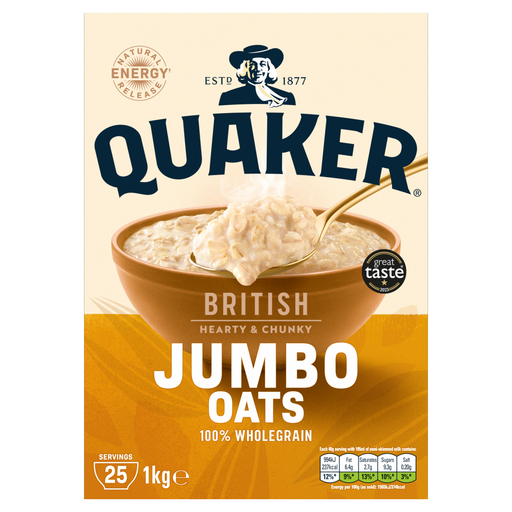
Quaker Jumbo Rolled Oats 1kg

Quaker Jumbo Rolled Oats 1kg

A plain wholegrain option for an eater who already accepts substantial flakes.

The listing states 100% whole grain oat flakes and suggests porridge, overnight oats and baking with water or milk. It may contain traces of wheat and is not presented as gluten free. Try a small serving first if a consistently smooth bowl is important.

Joybuy

Frequently asked questions

Should I buy jumbo oats or quick-cook oats for a fussy eater?

Choose the texture the eater already accepts. Mornflake describes its quick-cook oats as smaller flakes for a smooth, creamy porridge, while its jumbo oats make a thicker porridge with more texture. Start with a familiar style and a small portion; NHS guidance advises continuing to offer foods without forcing a child to eat them.

Can I choose organic oats if my child needs gluten-free oats?

Not on the basis of “organic” alone. Coeliac UK states that “100% oats”, “pure oats” and “organic” do not show whether a product is gluten free. Choose oats specifically labelled gluten free where appropriate for the individual and follow healthcare-professional advice if there are concerns about oat tolerance.

Are gluten-free oats suitable for a wheat allergy?

Not necessarily. Quaker’s Gluten Free Traditional Wholegrain Oats state that they meet the gluten-free standard but may not be suitable for people with wheat allergy and may contain wheat. Check the current pack’s allergen statement and follow the individual allergy plan.

When should I stop trying different oat textures and seek help?

Seek urgent GP or NHS 111 advice if a child has difficulty swallowing, coughs or chokes while eating or drinking, feels food is stuck, has a wet voice after eating or drinking, becomes short of breath after meals or has repeated chest infections. NHS guidance also identifies weight loss and dehydration as warning signs; smoother porridge is not a substitute for swallowing assessment.

Do I need to check the pack every time I buy the same oats?

Yes, especially where allergy or intolerance needs apply. Waitrose notes that recipes can change and advises checking product labels rather than relying only on online information. Use the current pack for ingredients, allergen declarations and preparation instructions.