Parents making quick warm lunches at home
Wholegrain traditional and instant oats suit different lunch routines. Consider preparation time, the texture a child accepts and whether you want to choose toppings separately.


For most school-holiday lunches, plain wholegrain rolled oats with oats as the ingredient give you a flexible base for chosen fruit, yoghurt, milk or savoury toppings. Choose quick or instant wholegrain oats when time matters most, but check the current pack for gluten, wheat, nut and milk warnings where they are relevant.
Wholegrain traditional and instant oats suit different lunch routines. Consider preparation time, the texture a child accepts and whether you want to choose toppings separately.
Plain oats can provide a starting point for adding your own fruit or other toppings. Quaker and Flahavan's plain examples list wholegrain oats as their ingredient base, whereas Dorset Oaty Granola includes golden syrup.
Check every current pack for oats, gluten-containing cereals, wheat, barley, nuts and milk. Coeliac UK notes that standard oats can be contaminated with gluten-containing grains, so gluten-free oats need specific labelling.
Choose this when: You want a versatile oat base and prefer to decide the toppings and sweetness yourself.
Consider: Traditional oats take longer to cook than instant oats and are not automatically suitable for gluten-free, wheat- or barley-allergy requirements.
Choose this when: A warm lunch needs to be ready quickly and an adult can prepare and serve it safely.
Consider: Individual portions can still carry product-specific allergen warnings, and hot porridge needs care before serving.
Choose this when: A declared fibre amount is important and wheat is suitable for the child.
Consider: Wheat bran changes the cereal mix, and wholegrain foods can be especially filling for younger children.
| Priority | What to check | Your needs |
|---|---|---|
| Wholegrain and fibre | Look for wholegrain oats or wholegrain oat flakes. Compare declared fibre on the same serving basis where it matters, and note whether another cereal such as wheat bran is included. | I want oats to be one part of a varied lunch, with a portion and type that suit my child's age and usual diet. |
| Preparation and texture | Check the stated hob or microwave method, preparation time and whether the oats are instant, finely chopped or traditional rolled. Follow hot-food instructions. | A warm lunch needs to fit into a busy day, and the texture should be one my child is likely to eat. |
| Plain ingredients | Read the ingredients list for plain wholegrain oats rather than assuming all oat products are alike. Compare flavoured products, granola and muesli separately. | I would rather choose the sweetness and toppings myself than start with syrup or flavourings already in the oat product. |
| Allergens and gluten-free suitability | Read the full ingredients and precautionary allergen statement on the current pack. Where gluten-free oats are required, look for an explicit gluten-free label. | For a child with coeliac disease or a relevant allergy, I need the product statement to match that specific requirement rather than relying on the word oats. |
Granola and muesli can include syrup, oil, rye, dried fruit or nuts. Dorset Oaty Granola, for example, lists golden syrup and rye flakes, making it materially different from plain rolled oats.
For a customisable lunch base, compare ingredient lists and nutrition panels before choosing granola, muesli or flavoured oat products instead of plain wholegrain oats.
Coeliac UK explains that standard oats may be contaminated with wheat, barley or rye. Individual packs can also carry additional cereal cross-contact warnings.
Where gluten-free suitability is required, choose oats specifically labelled gluten-free, read the current allergen statement and follow any individual clinical advice.
Wholegrain foods can be filling for under-2s before they have taken in enough calories and nutrients, according to NHS guidance. Oat-and-bran blends also introduce wheat.
Use wholegrain oats as part of a varied diet, introduce more wholegrain foods gradually after age 2, and avoid wheat-bran products where wheat or gluten is unsuitable.
Instant oats can shorten preparation, but they may still carry product-specific allergen warnings and require care with hot food or liquid.
Choose instant portions when the time saving fits your routine; otherwise compare preparation methods, pack information and the format that best suits household use.
A mainstream plain rolled-oat option for households seeking a 1kg wholegrain porridge base that can also be used for overnight oats or blended preparations.
A UK oat specialist with traditional, superfast, jumbo, organic and gluten-free porridge-oat formats.
A wholegrain rolled-oat route for families wanting a simple oat ingredient list, with organic alternatives in the range.
A wholegrain porridge option for shoppers considering organic or chunkier traditional rolled oats.
A retailer own-label route spanning plain oats, instant wholegrain sachets and an oat-and-wheat-bran blend.
Relevant when the household wants an oat-based granola or muesli-style lunch component rather than plain porridge oats.
Joybuy product options for school-holiday lunches, including plain wholegrain oat bases and quick individual sachets.
 No image available
A quick, plain wholegrain oat option for a warm lunch with household-chosen toppings.
Individual 38.5g portions have a stated 2½-minute microwave method and 3.5g fibre per portion. The ingredient list states wholegrain rolled oats only.
Check the current precautionary allergen statement for coeliac disease or wheat/barley allergy needs, and allow microwave-heated porridge to cool before serving.
 No image available
A plain oat base for repeated family lunches with toppings and portions adjusted at home.
The bundle contains 2 x 1kg packs of 100% organic whole grain oat flakes and states 3.3g fibre per 40g serving.
It is not presented as gluten-free. Check cooking instructions, current allergen information and whether the 2kg quantity suits your storage space.
 No image available
A smaller plain wholegrain oat pack for making child-sized portions with selected toppings.
It lists 100% organic whole grain oat flakes and states 3.3g fibre per 40g serving.
It is not a confirmed gluten-free choice. Check the cooking method and current allergen and cross-contact information on the physical pack.
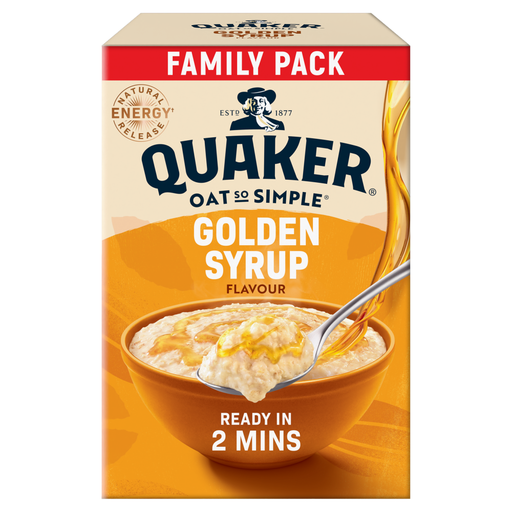 No image available
A convenient wholegrain-oat sachet option when a warm lunch needs a stated quick preparation method.
The 20-sachet pack has a stated 2-minute microwave method. Its ingredients include 81% oats, sugar, flavourings and salt, and the nutrition panel states 6.4g sugars per 36g sachet.
It may contain barley, wheat and soya. Microwave preparation, stirring and the standing period require adult supervision before serving.
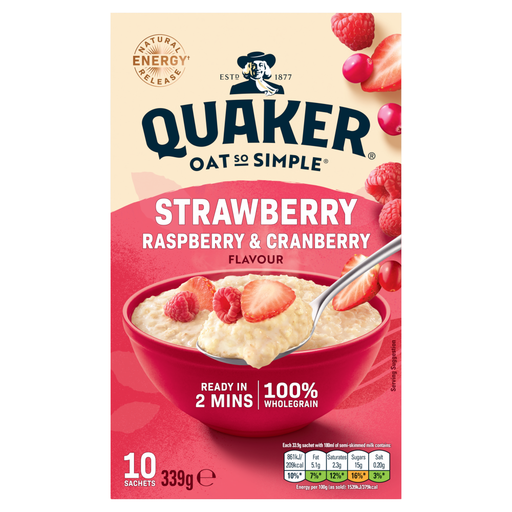 No image available
A flavoured wholegrain-oat sachet option for fast individual warm servings.
The 10-sachet pack has a stated 2-minute microwave method. It contains 79% wholegrain rolled oats, sugar and mixed-berry flavouring, with 19g sugars per 100g.
It contains gluten-containing cereals and oats and may contain barley, soya and wheat. Use a microwave-safe bowl and allow the porridge to cool before serving.
No. Check the pack rather than assuming from the category name. Look for wording such as wholegrain oats or wholegrain oat flakes, or an ingredients list identifying wholegrain rolled oats; the cited Quaker, Flahavan's, Jordans and Waitrose products use wholegrain wording.
For under-2s, NHS guidance says not to give only wholegrain starchy foods because they can be filling before children obtain the calories and nutrients they need. After age 2, introduce more wholegrain foods gradually, using age-appropriate portions as part of a varied diet.
No. The Food Standards Agency states that foods labelled gluten-free must contain no more than 20mg/kg gluten, and Coeliac UK notes that standard oats can be contaminated with wheat, barley or rye. For coeliac disease, choose oats specifically marked gluten-free and follow individual clinical advice where needed.
The ingredients list does not always answer cross-contact questions. For example, Quaker lists possible barley and wheat, Jordans warns of possible other gluten sources and nuts, and Waitrose instant oats may contain milk and nuts; check the current physical pack for a child with a relevant allergy or intolerance.
Use plain oats as one carbohydrate-and-fibre component rather than treating porridge as the whole meal. NHS guidance recommends getting fibre from a variety of foods, so pair oats with age-appropriate fruit, vegetables and protein- or dairy-containing foods according to the child's needs and dietary restrictions.