Students cooking inexpensive meals regularly
Suitable when you want a shelf-stable wholegrain base for porridge, baking or savoury recipes. A 1kg pack can be practical if you will use and store it well.


For regular student cooking, plain 100% wholegrain rolled oats in a 1kg pack are a flexible starting point for porridge, baking and savoury recipes. Choose quick-cook or sachet formats when preparation time matters most, jumbo oats for a thicker texture, and a specifically labelled gluten-free product where gluten avoidance is required; use oats as a starchy base alongside protein foods and vegetables.
Suitable when you want a shelf-stable wholegrain base for porridge, baking or savoury recipes. A 1kg pack can be practical if you will use and store it well.
Suitable when microwave preparation or a short hob method matters more than using loose oats. Quick-cook flakes absorb liquid faster, while sachets offer portioned preparation.
Suitable when gluten avoidance, wheat allergy, nut allergy or another dietary requirement affects the choice. Similar-looking oat products can carry different ingredient and allergen statements.
Start with the format you can cook and use regularly, then check the pack wording for wholegrain ingredients, preparation instructions and allergen information.
| Priority | What to check | Your needs |
|---|---|---|
| Regular-use format | Compare pack weight and portion format. Check that the pack size suits your storage space and how often you cook with oats. | I want a staple I can keep for repeated meals, rather than a format that only works for one rushed breakfast. |
| Wholegrain ingredients | Look for wording such as 100% wholegrain rolled oats or wholegrain oat flakes. Check whether wheat bran, wheat protein or other ingredients have been added. | I want plain wholegrain oats as a versatile base, while understanding that an oat-and-bran or protein-oat product is a different recipe. |
| Cooking speed and texture | Read the stated hob or microwave method. Smaller quick-cook flakes are made for faster absorption, while jumbo flakes are intended for a thicker texture. | On busy days, I need a short preparation method; when I have more time, I may prefer oats with more bite. |
| Allergen suitability | Read the current ingredient list and allergen declaration. Check gluten-free wording, wheat-related qualifications and any nut or other cereal warnings. | If an allergy, intolerance or gluten-free requirement matters, I need the exact pack statement rather than relying on the oat type or brand name. |
| Dinner planning | Use oats as a starchy, fibre-containing base and plan other meal components separately. Include protein foods and vegetables across the day or week. | I want an oat-based dinner that fits into a varied eating pattern, rather than treating oats alone as the whole meal. |
Small sachet packs can look convenient, but their format may be less practical for regular cooking than loose oats in a larger pack.
Compare the displayed unit price on the same weight basis, then decide whether the convenience format fits your routine.
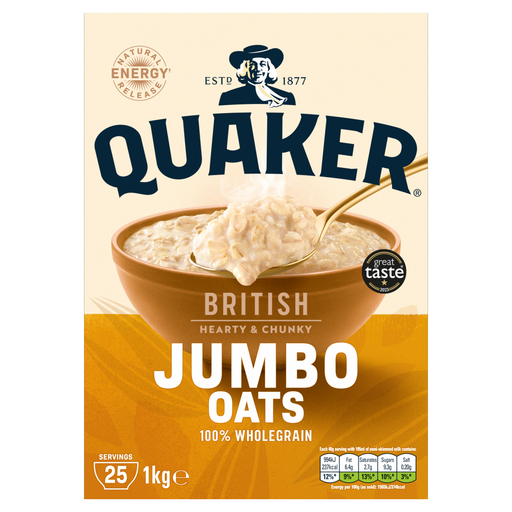
Quick-cook oats use smaller flakes for faster absorption, whereas jumbo oats are intended for a thicker, more textured porridge.
Choose quick-cook oats for short preparation, jumbo oats for bite and thick porridge, and standard rolled oats when neither condition is essential.
A product can meet the gluten-free standard while still carrying a wheat-related qualification. Other oat products may include wheat bran or have nut and other cereal warnings.
Read the exact current ingredient and allergen declaration each time, and choose a specifically suitable product rather than relying on oat type, organic status or brand alone.
Wholegrain oats can provide a starchy, fibre-containing base, but NHS guidance places wholegrains within a balanced pattern that also includes protein foods and fruit and vegetables.
Build a savoury oat meal around vegetables and a protein source, rather than relying on sweetened oats or toppings as the only meal component.
Relevant for comparing plain oats, oats with added wheat bran and instant porridge formats.
Relevant for choosing between texture-led jumbo oats and fast-cooking wholegrain oats.
Relevant for plain 100% wholegrain rolled oats, including organic variants, with recipe ideas beyond a sweet bowl of porridge.
Relevant for conventional rolled oats, microwaveable sachets and a separately labelled gluten-free traditional wholegrain oat option.
Relevant for wholegrain rolled oats, organic porridge and a separate protein-oat range.
Joybuy product options for student meals using porridge oats, including quick preparation, jumbo rolled oats and gluten-free-labelled choices.
 No image available
A portioned option for students who need a short microwave preparation.
Six sachets have a stated 2½-minute microwave method, and the ingredients list Quaker wholegrain rolled oats only. A microwave is required for the stated method; sachets may be less flexible than loose oats for savoury cooking or baking.
 No image available
A 1kg plain-oat option for regular porridge, overnight oats and baking.
The listing states 100% wholegrain oat flakes and 9g dietary fibre per 100g. It may contain traces of wheat, so it is not a substitute for specifically labelled gluten-free oats.
 No image available
A plain organic wholegrain oat option for regular pantry use.
The ingredients are stated as 100% organic wholegrain oat flakes. Check the current pack instructions if cooking time or porridge texture is important, and do not treat this product as a gluten-free option.
 No image available
A 1kg oat option for students with access to a microwave or hob.
The listing states 100% rolled oats, with a 2–3-minute microwave method or 4–5 minutes on the hob. Check current pack wording if wholegrain status is essential; the product may contain wheat and barley.
 No image available
A 1kg option for porridge or baking where a gluten-free and wheat-free product description is required.
The listing states 100% gluten-free oat flakes and describes the product as gluten and wheat free. Check the current pack if wholegrain wording is essential, and follow relevant clinical advice for medically required diets.
Check the ingredient list and product description for wording such as “100% wholegrain rolled oats” or “wholegrain oat flakes”. Quaker explains that whole grains retain bran and germ, while Flahavan's identifies its Irish Porridge Oats as 100% wholegrain rolled oats. Granolas, protein products and oat-and-bran blends can include other ingredients, so do not assume every oat-based cereal is plain wholegrain oats.
Oats can be a wholegrain starchy base, but they should not be treated as the complete dietary pattern. NHS guidance recommends higher-fibre or wholegrain starchy foods alongside protein foods, fruit and vegetables; for a savoury oat meal, add a suitable protein source and vegetables.
They can suit a student when individual portions and rapid preparation solve a genuine time or equipment problem. Check the preparation method, ingredients and allergen statement, and consider whether sachets will be practical for the quantities and recipes you make most often.
Choose a product explicitly labelled gluten free rather than assuming ordinary oats qualify. Quaker states that its gluten-free traditional wholegrain oats meet the gluten-free standard, but may not be suitable for wheat allergy and may contain wheat; check the current pack and follow clinical advice where applicable.
Follow the specific pack instructions. Waitrose advises storing its dry oat-and-wheatbran product in a cool, dry place and using an airtight container once opened; its instant sachet product states that, once prepared, it should not be stored or reheated.