Parents starting family porridge breakfasts
Choose a plain wholegrain base while balancing fibre, texture and variety instead of making wholegrain starches the only option for a child under 2. NHS guidance supports this approach.


For most toddlers, choose plain porridge oats with wholegrain oats as the ingredient, cook them to a manageable texture and add suitable toppings separately. For children under 2, wholegrain starchy foods should be part of a varied diet rather than the only starchy choice; choose gluten-free-labelled oats when a gluten-free diet is required.
Choose a plain wholegrain base while balancing fibre, texture and variety instead of making wholegrain starches the only option for a child under 2. NHS guidance supports this approach.
Quick-cook wholegrain oats can suit mornings when a smoother, creamier porridge is easier for a toddler to accept. Mornflake describes its smaller flakes as cooking quickly and producing this texture.
Ordinary oats and oats labelled “100% oats” are not automatically suitable for a gluten-free diet. Coeliac UK advises choosing oats labelled gluten free where this diet is needed.
Start with the ingredient list, then match the flake format and cooking method to the child’s usual texture and the household routine.
| Priority | What to check | Your needs |
|---|---|---|
| Fibre and meal balance | Look for wholegrain oats in the ingredients. Keep wholegrain starches within a varied diet for children under 2. | I want wholegrain porridge as one breakfast option, without making it the child’s only type of starchy food. |
| Plain ingredients | Check whether the product is plain oats or includes sweetened flavourings. Read the ingredient list on each sachet or pack. | A plain oat base lets me choose suitable fruit or other additions rather than relying on syrup-flavoured cereal products. |
| Texture and preparation | Compare flake size, cooking instructions and required standing time. Smaller quick-cook flakes can make smoother porridge; jumbo oats may leave more texture. | I need porridge that can be cooked and softened to a consistency my toddler manages comfortably. |
| Gluten-free suitability | For a gluten-free diet, choose a pack labelled gluten free and check its allergen statement. Do not rely on “organic”, “pure” or “100% oats” wording. | If my child follows a gluten-free diet, I need an oat product labelled for that requirement rather than standard oats. |
Higher-fibre foods can make a young child feel full before they have taken in enough calories and nutrients.
Serve wholegrain porridge as part of varied toddler meals rather than replacing every starchy food with wholegrain versions.
Sweetened cereal products can add sugars that are not present in plain oats, while plain oats leave flavourings and toppings under your control.
For routine breakfasts, read the ingredients and choose a plain oat product; check flavoured variants separately.
Standard oats can be contaminated with wheat, barley or rye, so these descriptions do not establish gluten-free suitability.
Where a gluten-free diet is required, buy oats labelled gluten free and check the allergen statement whenever the pack changes.
Whole nuts are a choking hazard for children under 5.
Use age-appropriate toppings. If nuts are suitable for the child, use crushed or ground nuts mixed into food and supervise while eating.
A broad UK porridge range including traditional rolled oats, quick sachets and gluten-free traditional wholegrain oats.
A UK oat specialist offering standard, quick-cook, jumbo, organic and gluten-free oat formats.
An Irish oat brand with plain Irish porridge oats, organic oats and jumbo oats.
A UK retailer offering own-label standard porridge oats and a separate Free From gluten-free porridge-oat option.
Relevant here through an organic jumbo porridge-oat listing in the UK retail market.
More relevant to oat-based granola and muesli than to plain porridge oats.
Joybuy product options for plain, quick-cook, jumbo and gluten-free oat routes for toddler breakfasts.
 No image available
A portioned plain oat option for busy mornings when a quick cooked breakfast is useful.
Single-serve 38.5g sachets; wholegrain rolled oats are the listed ingredient; stated microwave method: 2½ minutes. The listing does not establish gluten-free suitability, so check the current pack if this is required.
 No image available
A plain wholegrain-oat base for carers who can cook porridge to the child’s accepted consistency.
Listed ingredient: 100% organic whole grain oat flakes. It is not presented as gluten free; check the pack for cooking instructions and allergen information.
 No image available
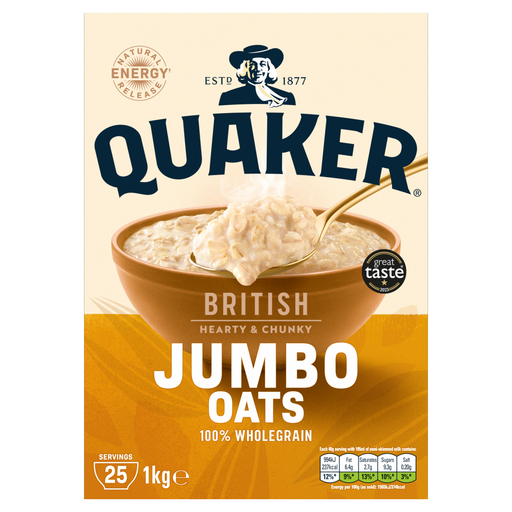
Consider this jumbo option for a toddler who already manages a more textured porridge.
Listed ingredient: 100% whole grain oat flakes. It may contain traces of wheat, and the listing does not confirm cooking time or finished texture.
 No image available
A plain rolled-oat choice for households able to adjust liquid and cooking for a softer finished porridge.
Listed ingredient: 100% rolled oats. Stated cooking methods are 4–5 minutes on the hob or 2–3 minutes in a microwave; the listing notes a thicker texture and possible wheat and barley gluten.
 No image available
A specialist oat route where a child has been advised to follow a gluten-free diet.
The listing identifies 100% gluten-free oat flakes and describes them as gluten and wheat free. Check the current pack for cooking instructions, texture and whether a wholegrain declaration is important to you.
They can be part of a varied toddler diet. NHS guidance says children under 2 should not have only wholegrain starchy foods, as the higher fibre can fill them before they take in enough calories and nutrients; vary the child’s starchy foods and adjust porridge texture to what they manage.
Choose plain oats as the regular base when possible, because they let you control what is added. NHS guidance says babies do not need sugar; check each sachet’s ingredient list rather than assuming it is plain.
Oats contain avenin, and standard oats may be contaminated with wheat, barley or rye. Coeliac UK advises using oats labelled gluten free for a child who needs a gluten-free diet rather than relying on “100% oats”, “pure” or “organic” wording.
Gluten-free oats may be suitable, but Coeliac UK notes that a small number of people with coeliac disease may be sensitive to avenin. Use a product labelled gluten free and follow the child’s clinician or dietitian advice, especially if symptoms continue.
Do not give honey before age 1, and do not give whole nuts to children under 5 because of choking risk. Where suitable, use crushed or ground nuts mixed into food; give dried fruit with meals rather than as a between-meal snack.