Regular pasta eaters considering wholewheat
For households that eat pasta often, a wholewheat version is one way to include more wholegrains and fibre alongside other foods. The NHS identifies wholewheat pasta as a wholegrain choice.


Choose pasta clearly labelled wholewheat, then pick spaghetti or a short shape according to the meals you cook and how you prefer to serve them. Compare fibre figures only when the nutrition panels use the same dry or cooked basis. Wholewheat pasta contains wheat, so it is not a substitute for a required wheat- or gluten-free product; anyone advised to modify their fibre intake should follow their individual dietary advice.
For households that eat pasta often, a wholewheat version is one way to include more wholegrains and fibre alongside other foods. The NHS identifies wholewheat pasta as a wholegrain choice.
Spaghetti and short shapes offer different ways to serve familiar sauces. The pack’s portion guide and cooking instructions can help when planning a regular household meal.
Anyone who needs to avoid wheat or gluten should check the allergen statement and choose a suitable alternative. People following an advised modified-fibre diet also need to check whether wholewheat pasta fits their individual instructions.
Start with dietary suitability, then decide whether the wholewheat ingredients or the serving format matters most for your meals. Wholewheat pasta is not appropriate when wheat or gluten must be avoided.
| Concern | What to check | Who this matters to |
|---|---|---|
| Wholegrain ingredients and fibre | Confirm wholewheat semolina in the ingredients. Compare fibre figures only on the same dry or cooked basis. | If I eat pasta regularly, making it a wholegrain choice matters more to me than the shape; about 50% of consumers would put that need first. |
| Shape and serving | Match spaghetti, penne or fusilli to the meals you make. Read the pack’s dry-portion guide and cooking instructions. | For regular sauce meals, I want pasta I can serve comfortably and cook to a texture I prefer; about 30% of consumers would make practical serving their primary concern. |
| Dietary suitability | Read the current wheat and gluten declaration. If a modified-fibre diet has been advised, follow the individual guidance given. | When shopping for someone with a dietary restriction, I need to establish what they can eat before choosing a shape; about 20% of consumers would put suitability first. |
Wheat is a cereal containing gluten, according to the Food Standards Agency. The wholewheat pasta examples from Sainsbury’s, M&S and Asda declare wheat or gluten.
Read the current allergen statement and choose a separately checked alternative if wheat or gluten must be avoided.
M&S presents a per-100g product figure for its Wholewheat Penne, while Asda gives nutrition for boiled pasta. A dry-product figure and a cooked-product figure are not directly comparable.
Check whether each panel describes dry or cooked pasta before using its fibre value to compare products.
United Lincolnshire Hospitals NHS Trust advises that some people following a modified-fibre diet need to restrict certain high-fibre foods.
If an intended eater has been given fibre-related dietary instructions, check the suitable pasta type and portion with their clinician or dietitian.
Ingredients, allergen details and preparation instructions can change. A saved listing may not describe the pack in hand.
Check the current pack before preparing pasta, particularly when dietary suitability is important.
Barilla lists wholewheat spaghetti and penne for shoppers choosing between long and short pasta.
Sainsbury’s lists own-label wholewheat spaghetti with pack-level serving and preparation details.
Asda’s own-label wholewheat spaghetti offers a dry-portion guide for meal planning.
M&S lists wholewheat penne for shoppers considering a short shape and a product-level nutrition panel.
Tesco lists own-label wholewheat spaghetti, penne and fusilli formats.
These Morrisons wholewheat fusilli listings are short-pasta choices for sauce-based meals. If considering the listing marked 6 Packs, confirm its total pack quantity before buying.
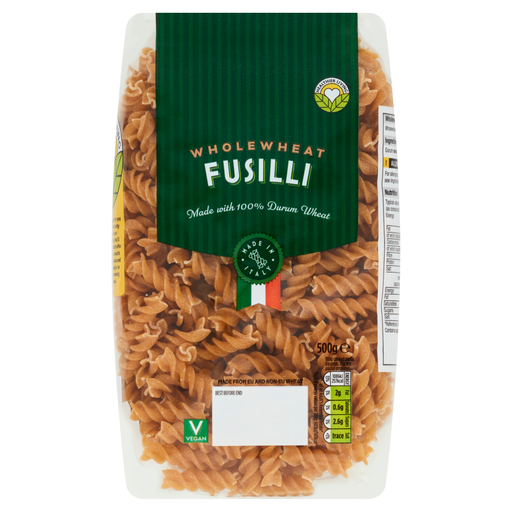 Image unavailable
Consider this short pasta shape if you usually combine pasta with a sauce. The product is listed as a 500g wholewheat fusilli pack.
Wholewheat pasta contains wheat and is not a substitute for a required wheat- or gluten-free product.
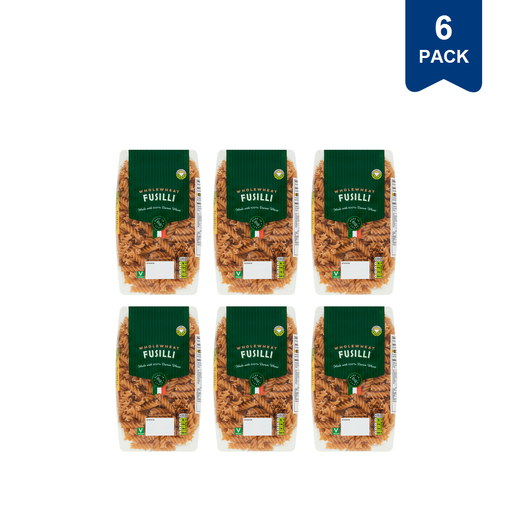 Image unavailable
Consider this listing if you want to keep more of the same short pasta shape in the cupboard. Its title says six 500g packs, but another product detail gives a 500g gross weight; confirm the total quantity before buying.
Wholewheat pasta contains wheat and is not a substitute for a required wheat- or gluten-free product.
Yes. The NHS identifies wholewheat pasta as a wholegrain choice within a varied diet. If comparing products for fibre, check that their nutrition figures describe pasta on the same dry or cooked basis.
No. Wholewheat pasta contains wheat, which the Food Standards Agency identifies as a cereal containing gluten. Choose a separately checked wheat- or gluten-free product if that is required.
Use the particular pack’s guidance as a starting point: Sainsbury’s suggests 90g dry pasta per person for its wholewheat spaghetti, while Asda suggests 75g for its version. Adjust meal quantities to the people eating and any individual dietary advice.
Check their individual instructions before serving it. United Lincolnshire Hospitals NHS Trust advises that some people on modified-fibre diets need to restrict certain high-fibre foods; their clinician or dietitian can advise on the suitable pasta and amount.
Yes, especially when an ingredient or allergen affects the choice. Sainsbury’s and M&S note that product information can change, so use the current pack’s ingredients, allergen statement and cooking instructions.