Shoppers choosing wholegrain pasta
If you want to include a wholegrain starchy food in the weekly shop, wholewheat pasta is one option named in NHS guidance. Check the ingredients on the pack when that distinction matters to your choice.


Choose wholewheat pasta for the weekly shop if it fits the meals you plan and everyone eating it can have wheat and gluten. The NHS includes wholewheat pasta among higher-fibre or wholegrain starchy choices; for a repeat purchase, choose a shape your household will use and a pack size that fits those meals. Ordinary wholewheat pasta is not a gluten-free substitute, as Coeliac UK explains.
If you want to include a wholegrain starchy food in the weekly shop, wholewheat pasta is one option named in NHS guidance. Check the ingredients on the pack when that distinction matters to your choice.
A larger pack is worth considering when the household expects to use the same shape across planned meals. Tesco lists wholewheat fusilli in both 500 g and 1 kg packs, giving shoppers two pack sizes to assess against their meal plan.
Start with the shape you already use for planned dishes rather than buying several unfamiliar formats at once. Barilla offers wholewheat spaghetti and penne rigate and publishes its own sauce-pairing suggestions; household preference still needs to be judged at the table.
For a weekly shop, decide whether the wholewheat ingredients, the amount you will use or the shape for planned meals is your main priority.
| Concern | What to check | Who this matters to |
|---|---|---|
| Wholewheat ingredients | Read the ingredient declaration for wholewheat or whole wheat semolina, and compare fibre per 100 g on current packs if that is part of your choice. | If wholegrain pasta is my reason for changing the weekly shop, I want the ingredient declaration to match that aim; about 42% of consumers put this need first. |
| Pack size and repeat use | Check the total quantity and whether the same shape fits the meals you have planned. | When I am cooking pasta more than once, a larger pack only suits me if I will use that shape across those meals; roughly 33% of consumers make repeat use their primary concern. |
| Shape and cooking | Choose a shape for your planned dishes and follow the cooking instructions on the current pack. | If my household is new to wholewheat pasta, I would rather try one familiar shape before buying several packs. Shape and household acceptance come first for about 25% of consumers. |
Ordinary wholewheat pasta contains wheat. Coeliac UK identifies wheat and semolina as containing gluten and says people with coeliac disease need to avoid them.
If a gluten-free diet is required, choose pasta clearly labelled gluten-free and check the current pack’s ingredients and allergen information.
A larger quantity is less useful if its shape does not fit the meals the household actually cooks. Check the total contents, particularly when a listing describes a multipack.
Choose the pack size after planning which dishes will use it, rather than assuming a larger pack is the right weekly-shop choice.
A manufacturer’s texture or sauce suggestions cannot establish whether everyone in a household will like a particular wholewheat pasta.
Try one familiar shape with a sauce you regularly make before adding more formats to the next shop.
Tesco warns that food ingredients, nutrition information and allergens can change when products are reformulated.
Check the current pack before cooking, especially when an ingredient or allergen affects who can eat the meal.
These ranges offer different formats or meal-planning roles; a sauce brand should not be mistaken for a wholewheat pasta range.
Tesco lists own-label wholewheat fusilli in 500 g and 1 kg packs.
Barilla’s wholewheat range includes spaghetti, penne rigate and fusilli for shoppers choosing a particular shape.
M&S lists a 500 g Wholewheat Spaghetti for shoppers planning spaghetti dishes.
Dolmio is relevant here as a pasta-sauce option, not as an identified dried wholewheat-pasta range.
These Morrisons wholewheat fusilli listings suit a shop built around short pasta. Decide between the single pack and the listing described as a multipack only after confirming how much pasta the latter contains.
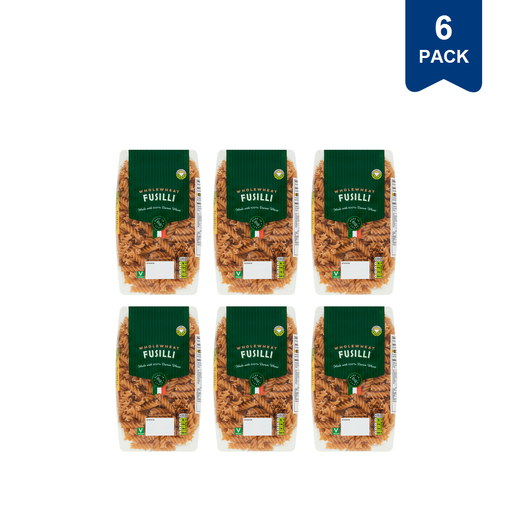 No image available
Consider this listing if you plan to use fusilli for several meals. The title describes six 500 g packs, but another quantity in the product information conflicts with it; confirm the total contents before buying. This wheat-based pasta is not a gluten-free alternative.
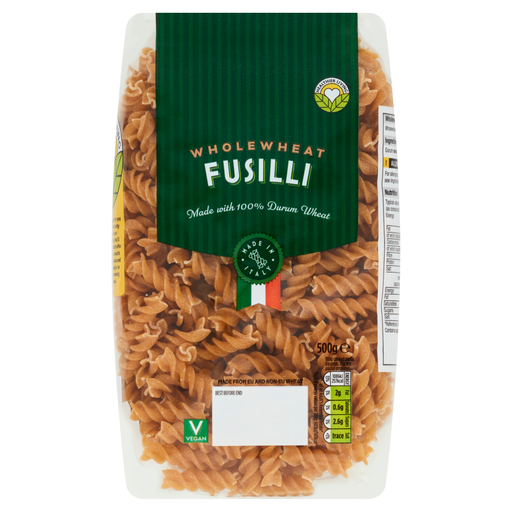 No image available
This single 500 g pack is an option if you want to try wholewheat fusilli or need that quantity for planned meals. Check the current pack’s cooking instructions and allergen declaration; wholewheat pasta is not a gluten-free substitute.
The NHS includes wholewheat pasta among higher-fibre or wholegrain starchy choices. If that is what you want from your pasta, check the current pack’s ingredient and fibre information, then choose a shape your household will use.
No. Coeliac UK says people with coeliac disease need to avoid wheat and semolina because they contain gluten. Choose pasta clearly labelled gluten-free instead, and check its current allergen information.
Choose a shape that fits dishes you already plan to cook. Tesco describes its wholewheat fusilli as suitable for hot or cold serving, while spaghetti fits a meal planned around long strands; if the household is new to wholewheat pasta, trying one familiar shape limits the commitment.
Choose the quantity you expect to use in planned meals, rather than the larger pack by default. Tesco lists both sizes of wholewheat fusilli; check that the shape works for the meals you have in mind and confirm the quantity on the listing and pack.
Yes. Tesco notes that ingredients, nutrition information and allergens can change when foods are reformulated. Read the current pack, particularly if someone eating the pasta must avoid an ingredient or allergen.