Choose wholewheat pasta when you want a wholegrain base and can get protein from the sauce or other ingredients; wholewheat alone does not establish that a pasta is high in protein. If protein from the pasta itself is your priority, compare protein declarations on the same basis and check the ingredients: Tesco’s High Protein Fusilli, for example, contains 50% durum wholewheat semolina and added wheat gluten, so it is not entirely wholewheat.
Who each approach suits
Protein-per-portion shoppers
If you need the pasta itself to contribute more protein, compare its declared protein per 100g or per serving with other packs on the same basis. Tesco’s protein-enriched pasta illustrates why the ingredients matter too: its fusilli contains added wheat gluten.
Wholegrain-first meal planners
If the pasta base needs to be wholewheat, check the ingredient description rather than assuming a protein claim follows. Protein can come from other parts of the meal; NHS guidance includes pulses among ingredients to add to meals.
Everyday pasta shoppers
If you use wholewheat pasta regularly, consider the pack quantity and whether its shape works for the meals you make. Tesco describes its standard wholewheat fusilli as suitable for hot or cold dishes; assess the meal’s protein separately.
What to check when buying
Wholewheat pasta with protein elsewhere in the meal
Choose when: A wholegrain pasta base matters most and the sauce or topping can supply protein.
Trade-off: Do not assume that a standard wholewheat pasta has the protein content you want without checking its nutrition panel and the rest of the meal.
Protein-enriched pasta containing wholewheat
Choose when: Protein from the pasta portion is the main priority and its ingredients suit your requirements.
Trade-off: Tesco’s High Protein Fusilli contains 50% durum wholewheat semolina alongside other wheat ingredients and added wheat gluten, rather than being entirely wholewheat.
| Concern | What to check | Who this matters to |
|---|
| Protein from the pasta |
Compare declared protein per 100g or per serving on the same basis; check the ingredients used for enrichment. |
If I rely on the pasta portion for protein, I need to know what that portion contributes before choosing a shape. About 42% of consumers put protein from the pasta itself first. |
| Wholewheat content and fibre |
Read the ingredient description to distinguish wholegrain semolina from a blend; check the fibre declaration. |
A wholegrain pasta base matters more to me than an enriched protein claim because I can add other ingredients to the meal. Roughly 33% of consumers make wholewheat content and fibre their primary concern. |
| Everyday flexibility |
Check the total pack quantity and whether the shape suits the dishes you plan to make. |
For regular meals, I want a pack and shape I can use across my usual dishes while assessing protein in the finished meal. Around 25% of consumers prioritise that everyday flexibility. |
Buying pitfalls
-
Assuming wholewheat means high in protein
Wholegrain ingredients and protein enrichment answer different buying questions. Tesco’s protein-positioned pasta includes wheat gluten, while the standard wholewheat products described by Sainsbury’s and Barilla are presented around their wholegrain ingredients.
Compare the protein declaration as well as the ingredient list, using the same portion or per-100g basis across packs.
-
Confusing a wholewheat blend with entirely wholewheat pasta
Tesco lists 50% durum wholewheat semolina in its High Protein Fusilli, alongside durum wheat semolina and wheat gluten. The presence of wholewheat in a name does not tell you its proportion.
If wholewheat content is decisive, read the current ingredient description rather than relying on the front of the pack.
-
Overlooking wheat and gluten ingredients
The Food Standards Agency identifies wheat as a cereal containing gluten, and Tesco lists added wheat gluten in its High Protein Fusilli and Penne.
Check the current ingredient and allergen statements against your dietary requirements; neither wholewheat nor wheat-gluten-enriched pasta should be treated as gluten-free.
Brands to consider
Tesco
Tesco lists both standard wholewheat fusilli and protein-enriched wheat pasta, making the distinction between those formulations useful when comparing labels.
- According to Tesco’s product description, its High Protein Fusilli contains 50% durum wholewheat semolina and wheat gluten.
- That enriched fusilli is not entirely wholewheat; check the current label and availability before planning around it.
Sainsbury's
Sainsbury’s Wholewheat Fusilli is a wholegrain durum-wheat option for meals where protein can come from other ingredients.
- Sainsbury’s describes the fusilli as made with wholegrain durum-wheat semolina.
- Assess its declared protein separately rather than treating the wholewheat description as a protein claim.
Barilla
Barilla offers whole-wheat pasta in spaghetti, fusilli and penne formats for different dishes.
- Barilla describes its Whole Wheat Spaghetti as made with whole-wheat semolina.
- Check the nutrition panel if protein from the pasta itself is a deciding factor.
Wholewheat pasta on Joybuy
These Morrisons wholewheat fusilli listings suit meals where you plan to assess protein across the pasta and its accompaniments, rather than choosing pasta for an enriched-protein formulation.
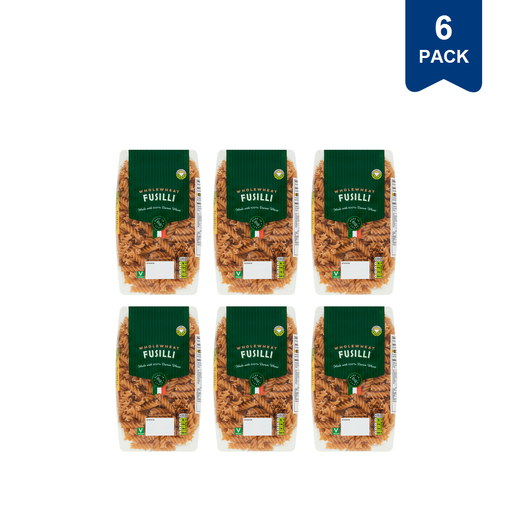 No image available
Morrisons Wholewheat Fusilli 500g (6 Packs)
Consider this listing if you want wholewheat fusilli as the base of meals with other protein-containing ingredients. The title says 6 Packs, while the accompanying listing information gives 500g as the gross weight; confirm the total quantity before ordering. Check the current nutrition panel for protein per stated portion.
View on Joybuy
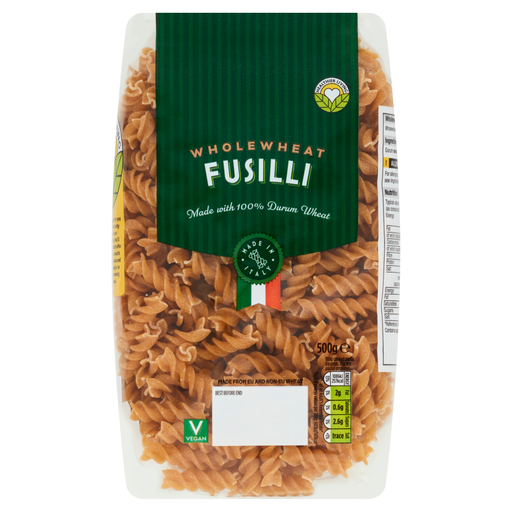 No image available
Morrisons Wholewheat Fusilli 500g
This 500g wholewheat fusilli listing fits meals where you will consider the pasta’s protein alongside the sauce or topping. Compare its current protein declaration per 100g or per serving with any enriched pasta you are considering.
View on Joybuy
Common questions
Is wholewheat pasta automatically high in protein?
No. A wholewheat ingredient description does not establish a high-protein claim. Check the declared protein for the portion you intend to use and consider what the other ingredients contribute to the meal.
What if I want both wholewheat ingredients and more protein from the pasta?
Compare the protein declarations on the same basis, then read the ingredient lists to see how much wholewheat each pasta contains and where its protein comes from. Tesco’s High Protein Fusilli, for example, lists 50% durum wholewheat semolina and added wheat gluten; it is not entirely wholewheat.
Is wholewheat pasta gluten-free?
No: wholewheat is wheat, which the Food Standards Agency identifies as a cereal containing gluten. Read the current allergen statement, particularly for protein-enriched pasta that may also list added wheat gluten.
Does every high-protein meal need protein-enriched pasta?
No. Standard wholewheat pasta can be the pasta base while other ingredients supply protein. NHS guidance includes wholewheat pasta among wholegrain choices and suggests adding pulses to meals; check the quantities and nutrition information for the meal you intend to make.


