Who is choosing the pasta?

School-event organisers managing allergens

Start with the host school’s arrangements for food brought to the event. Keep ingredient information for the complete recipe, not just the dry pasta. Department for Education guidance for schools in England says food brought from home should be considered in allergy-safety approaches; the event’s practical instructions still need to come from the school.

Cooks making portable savoury portions

A short shape is easier to spoon into a pasta bake or cold salad than long strands. Tesco describes its wholewheat fusilli as suitable hot or cold and its ridged, hollow wholewheat penne as a shape that holds sauce.

Wholewheat recipe planners

Check the named pack’s cereal ingredients, shape and cooking instructions rather than assuming all wholewheat pasta is alike. Barilla describes its Whole Wheat Penne Rigate as made with 100% whole wheat, while the Tesco and Sainsbury’s examples list durum wholewheat semolina.

What matters when buying?

For a school bake sale, establish whether the finished dish fits the school’s allergy arrangements before choosing a shape or planning the batch.

Concern What to check Who this matters to
School allergy rules Confirm the school’s event instructions and check ingredients in the pasta and every addition. If I bring a dish to school, I need to know whether it can be accepted and how its ingredients must be communicated; about 33% of consumers put school-policy fit first.
Serving shape Match a short shape to the planned pasta bake, cold salad or spooned portion. For a dish served in individual portions, I want a shape I can spoon and pack without managing long strands; about 27% of consumers place serving format first.
Wholewheat ingredients Read the exact pack’s cereal ingredient and any fibre information you intend to use. When the recipe calls for wholewheat pasta, I want the ingredient list to confirm what I am buying; roughly 20% of consumers make that their primary concern.
Batch preparation Check the product’s cooking instructions and suggested dry portion against the recipe. If I am preparing several portions, I need a workable cooking and quantity plan, particularly when the pasta will be baked afterwards; around 20% of consumers prioritise batch planning.

Mistakes to avoid

  • Assuming wholewheat means gluten-free

    The wholewheat products discussed here are wheat-based. Choosing wholewheat instead of standard wheat pasta does not remove wheat or gluten.

    If the dish must avoid either, do not substitute one of these products. Check the school’s instructions and the complete label of any alternative recipe and product.

  • Checking the pasta but not the sauce

    Sauce, cheese, toppings and garnishes add ingredients to the finished dish. A dry-pasta label cannot describe everything in the portion served.

    Keep ingredient information for each component and check the finished recipe against the host school’s requirements before packing it.

  • Using the same cooking time for every pack

    Stated hob times differ: Barilla gives 9 minutes for its Whole Wheat Penne Rigate, while Sainsbury’s gives 11–13 minutes for its wholewheat penne. Neither instruction automatically accounts for a further oven step.

    Follow the pack you buy and the recipe’s instructions for cooling or baking the pasta afterwards.

  • Relying on an older product listing

    Ingredients and allergen information can change, as retailer product pages caution.

    Read the physical pack when buying, especially before preparing food for an event with allergy controls.

Brands to consider for this recipe

Barilla

Its Whole Wheat Penne Rigate is one named short-shape option.

  • Barilla states that this 500 g penne is made with 100% whole wheat and gives a 9-minute cooking time.
  • It is wheat-based; those details should not be applied to every Barilla pasta.

Tesco

Its wholewheat penne and fusilli offer two short shapes for portioned dishes.

  • Tesco describes the penne as ridged and hollow for sauce, and the fusilli as suitable hot or cold.
  • Check the purchased pack’s ingredients and allergen information, which may change.

Sainsbury's

Its 500 g wholewheat penne is another short-shape option.

  • Sainsbury’s lists durum wholewheat semolina and an 11–13-minute hob guide for this penne.
  • The wheat-containing product needs to fit the school’s arrangements for the finished dish.

Asda

Its 500 g wholewheat penne has pack guidance for batch planning.

  • Asda lists a 10–12-minute cooking guide and suggests six servings for this product.
  • It declares wheat; recheck the pack because product information may change.

M&S

Its wholewheat spaghetti suits a recipe planned around long strands rather than spooned portions.

  • The M&S listing describes a 500 g pack with a 9–11-minute cooking guide.
  • The spaghetti contains wheat and cereals containing gluten; long strands may also be awkward for individually spooned servings.

Dolmio

The referenced Bolognese product is a sauce accompaniment, not wholewheat dry pasta.

  • Dolmio describes the sauce as intended to be served with pasta.
  • If using it, check its own ingredients alongside the pasta and every other addition.

Wholewheat fusilli on Joybuy

These Morrisons fusilli listings are short-shape options for a wholewheat pasta salad or portioned savoury dish. Choose the listing that fits the quantity you plan to prepare, and check the school’s allergy instructions before packing the finished recipe.
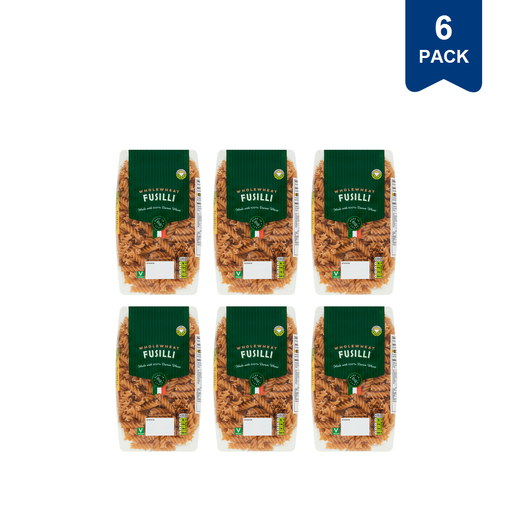
Morrisons Wholewheat Fusilli 500 g, listed as six packs

Morrisons Wholewheat Fusilli 500 g (6 packs)

Consider this fusilli listing if the recipe calls for several batches of a short-shape pasta dish. The title lists six 500 g packs; confirm the bundle quantity before planning portions. The product declares wheat, so check the school’s rules and every ingredient in the finished recipe.

View on Joybuy
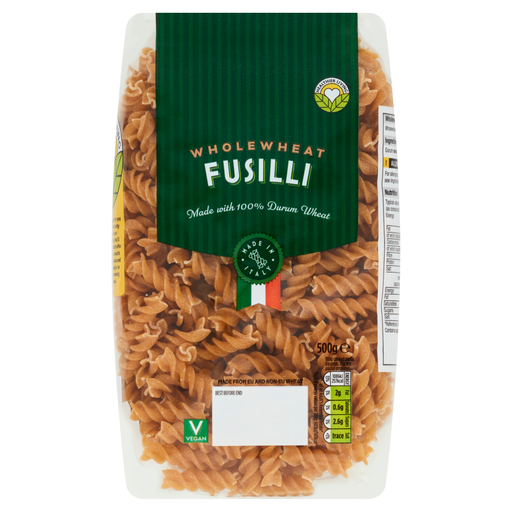
Morrisons Wholewheat Fusilli 500 g

Morrisons Wholewheat Fusilli 500 g

Consider this 500 g fusilli listing when the recipe needs a short wholewheat shape. Check its pack instructions against your cooking plan. It declares wheat, so confirm the school’s rules and the ingredients of the complete dish before bringing it to the event.

View on Joybuy

Common questions

Can I bring a wholewheat pasta dish to a school bake sale?

Check the host school’s current allergy policy and event instructions before bringing it. Department for Education statutory guidance for schools in England addresses support for pupils with allergies and says food brought from home should be considered in allergy-safety approaches. The school’s instructions determine how to handle this particular event; arrangements elsewhere in the UK may differ.

Is wholewheat pasta gluten-free?

No: the wholewheat pasta products discussed here are made from wheat or durum wholewheat semolina. Do not use them for a dish that must avoid wheat or gluten; check the complete label of any product chosen instead.

Should I choose penne or fusilli for a pasta bake or cold salad?

Both are short shapes that can be spooned into portions. Tesco describes its wholewheat penne as hollow and ridged for holding sauce and its wholewheat fusilli as suitable hot or cold, so choose according to how the recipe will be mixed and served.

How much dry wholewheat pasta should I prepare?

Use the recipe and intended portion size as your starting point, then compare them with the exact pack’s guidance. Tesco gives approximately 75 g dry pasta per person for its penne and fusilli, and Asda gives 75 g for its wholewheat penne; a mixed bake-sale dish may call for a different amount.

Is the retailer’s allergen listing enough to plan the dish?

Use it to plan, but read the physical pack when buying and check the other ingredients in the recipe. Tesco and Asda caution that product and allergen information can change.