First-shop fibre planners
If you are putting together cupboard meals with vegetables, pulses or sauces, wholewheat pasta is one starchy-food option to consider. The NHS includes it among higher-fibre or wholegrain choices.


For a first food shop, choose the wholewheat pasta shape that fits the meals you plan to make: spaghetti for strand-based dishes, penne for thicker sauces or bakes, and fusilli for mixed dishes or pasta salads. An own-label or branded pack can both fit; compare the shape, pack quantity and current label rather than assuming the brand decides. Ordinary wholewheat pasta contains wheat, so choose a specifically gluten-free alternative if you need to avoid gluten.
If you are putting together cupboard meals with vegetables, pulses or sauces, wholewheat pasta is one starchy-food option to consider. The NHS includes it among higher-fibre or wholegrain choices.
If you are still learning which meals you will cook regularly, start with a pack size you expect to use. Tesco and Sainsbury's list own-label wholewheat shapes, while the quantity on a multipack needs particular attention.
If your first meals are already planned, choose a shape to match them. Spaghetti suits strand-based dishes, while penne and fusilli offer short shapes for mixed meals; Tesco describes its ridged penne as holding sauce.
Start with wheat suitability, then choose a shape and quantity for the meals you intend to cook. Compare fibre figures only when the labels use the same basis, such as per 100g dry or per 100g cooked.
| Concern | What to check | Who this matters to |
|---|---|---|
| Wholewheat ingredients | Read the ingredient list for wholewheat or wholegrain semolina. If comparing fibre figures, use labels with the same dry or cooked basis. | I want a wholewheat starchy food for cupboard meals and need to recognise it on the pack. About 36% of consumers put that ingredient choice first. |
| Pack quantity | Check the stated pack size and, for a multipack, confirm how many individual packs and how much pasta it contains altogether. | If I am stocking a first cupboard, I want an amount I can use in the meals I have planned. About 29% of consumers make quantity their primary concern. |
| Shape and cooking | Match spaghetti, penne or fusilli to your planned dishes, then read that product's cooking instructions. | When I know my next few meals, I want a shape that works in those dishes. For about 21% of consumers, meal fit comes first. |
| Wheat suitability | Read the current ingredient and allergen statement. Ordinary wholewheat pasta is not a gluten-free alternative. | If I need to avoid wheat or gluten, that requirement decides whether this pasta is an option at all. About 14% of consumers put suitability first. |
Wholewheat pasta is made from wheat. The NHS identifies wheat-containing pasta as a source of gluten, so ordinary wholewheat pasta does not meet a gluten-free requirement for coeliac disease.
Choose pasta specifically labelled gluten-free instead, and read its current allergen statement.
A value per 100g cooked and one per 100g dry are not a like-for-like comparison.
Check the basis beside each nutrition figure before comparing products, or use each label to understand that product on its own.
Whether the household likes a particular wholewheat pasta is a matter of preference. A larger pack is less useful if it does not suit the meals you make.
Try a single pack in a shape you will use soon before choosing a larger quantity.
An unsuitable larger pack may leave pasta unused in the cupboard.
M&S and Sainsbury's advise that food product information can change. This matters particularly when you are checking an allergen.
Read the current pack label before using the pasta rather than relying only on a listing you saw earlier.
Tesco Groceries lists own-label wholewheat spaghetti, penne and fusilli, giving first-shop cooks several familiar shapes to choose from.
Sainsbury's lists own-label wholewheat fusilli and spaghetti for everyday meals.
Barilla offers a branded wholewheat spaghetti for shoppers who want that particular shape and pack format.
M&S lists wholewheat penne for shoppers planning dishes that use a short pasta shape.
These Morrisons wholewheat fusilli listings suit a first shop built around mixed pasta dishes or salads. They offer a single pack and a listing described as a six-pack; check the multipack's total quantity before deciding which fits your plans.
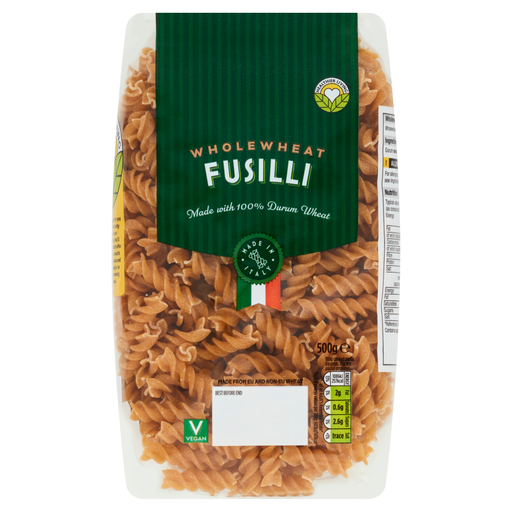 Image unavailable
A single pack to consider if fusilli fits the meals you plan to make first. The product name identifies a 500g wholewheat fusilli pack; check the current label if you need to avoid wheat or gluten.
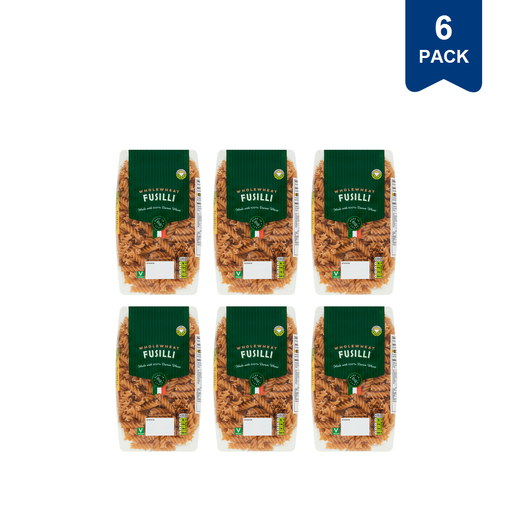 Image unavailable
Consider this listing if fusilli is already part of several planned meals. Its title says 500g (6 Packs), but confirm the number of bags and total quantity before buying; do not assume the bundle total from the title alone. Check the current label for wheat and gluten suitability.
It can be a useful cupboard choice if you eat wheat and have meals in mind for it. The NHS includes wholewheat pasta among higher-fibre or wholegrain starchy-food options; plan the other ingredients for the meal as well.
Start with the shape that fits your next few meals: spaghetti for strand-based dishes, penne for thicker sauces or bakes, or fusilli for mixed dishes and pasta salads. Read the cooking guide on the pack you choose.
No. The NHS identifies wheat-containing pasta as a source of gluten. Choose a pasta specifically labelled gluten-free and check its current pack label.
Use the instructions on your particular pack as the starting point. Sainsbury's wholewheat spaghetti listing suggests 90g per person; the amount you prepare can also reflect the other ingredients in the meal.
Yes, especially if an ingredient or allergen affects your choice. M&S and Sainsbury's advise that product information can change, so use the current pack label rather than an older online listing.