Ordinary wholewheat pasta is made with wheat, so it is not the route for someone who must avoid wheat or for someone with coeliac disease. Choose pasta specifically labelled gluten-free for a gluten-free diet, but check its ingredients separately if wheat allergy is involved. If wheat and gluten are not restricted, plain dried wholewheat pasta can be checked separately from a sauce; always review the current pack and every other part of the meal.
Who needs which checks?
Households managing wheat allergy
Ordinary wholewheat pasta is not a wheat-free choice. Check the current ingredients and allergen statements for each product, and assess precautionary wording in line with the affected person's established allergy-management plan.
People shopping for coeliac disease
Choose pasta specifically labelled gluten-free rather than assuming that wholewheat pasta is suitable. A gluten-free claim does not, on its own, settle a separate wheat-allergy question.
Households managing other food allergens
If wheat is not restricted, a plain pasta base can be assessed separately from sauces and toppings. Read the complete label for a prepared meal: its other ingredients may change which allergens need checking.
What matters when choosing pasta?
Decide whether wheat or gluten must be excluded before comparing pasta formats. For any remaining choice, check the current label for the complete dish, not just the pasta.
| Concern |
What to check |
Who this matters to |
| Wheat and gluten exclusion |
Identify the named cereal in the ingredients. For coeliac disease, look for a specifically gluten-free pasta; for wheat allergy, check its wheat ingredients too. |
If wheat or gluten must be excluded, I need to rule out ordinary wholewheat pasta before considering the shape or recipe. About 42% of consumers put that exclusion first. |
| Current label and cross-contact wording |
Read the exact pack's full ingredients, emphasised allergens and any precautionary statement, especially after a substitution. |
A familiar product might have changed, so I need to check the pack I will actually use. Roughly 33% of consumers make current label and cross-contact information their primary concern. |
| Allergens elsewhere in the meal |
Check each sauce and topping, or the complete ingredient list of a prepared pasta meal. |
When I can eat the pasta itself but must avoid another allergen, I need to assess what comes with it. Around 25% of consumers prioritise the composition of the whole meal. |
Allergen-checking mistakes to avoid
-
Taking “wholewheat” to mean wheat-free or gluten-free
Barilla and Tesco list wheat-based semolina in their reviewed wholewheat pastas. The NHS identifies wheat-containing pasta as a gluten-containing food.
For coeliac disease, choose pasta specifically labelled gluten-free. For wheat allergy, check its full ingredients and allergen information rather than relying on that claim alone.
-
Checking the pasta but not the finished meal
A sauce or prepared meal can introduce allergens unrelated to the pasta. An M&S wholewheat linguine meal, for example, lists fish, molluscs and crustaceans.
Check every sauce, topping and prepared-meal ingredient against the allergens that matter to the eater.
-
Relying on an older product listing
Tesco and M&S advise that product information can change. A previously checked listing does not replace the label on a current pack.
Read the pack being bought or delivered, particularly when the product has been substituted or its packaging has changed.
-
Ignoring “may contain” wording
A precautionary statement concerns possible unintended allergen presence, even when that allergen is not listed as an ingredient. Food Standards Agency research describes its use for unavoidable cross-contamination risk.
Read it alongside the ingredients and follow the affected person's established allergy-management advice. If suitability remains unclear, ask the manufacturer before serving the food.
Brands and product lines to compare
Barilla
Barilla Whole Wheat Spaghetti is an example of plain dried wholewheat pasta with a short listed recipe.
- Barilla lists whole wheat semolina and water for this specific spaghetti.
- Its wheat ingredient makes it unsuitable as a wheat-free or gluten-free alternative.
Tesco
Tesco's reviewed wholewheat fusilli and organic spaghetti show the ingredient information available for these particular dried-pasta lines.
- Both reviewed products list durum wholewheat semolina.
- Neither is a wheat-free or gluten-free route. Tesco advises reading the current label because food products may be reformulated.
M&S
M&S provides contrasting examples: plain wholewheat spaghetti and a multi-ingredient wholewheat linguine meal.
- The meal's listed fish, molluscs and crustaceans show why its full ingredient list matters, not just the pasta description.
- The reviewed plain spaghetti has a product-specific warning that it is not suitable for people with an egg allergy. Check the current pack rather than applying that warning to every wholewheat pasta.
Joybuy pasta selections
These selections include plain wholewheat fusilli for households that do not need to avoid wheat or gluten, and a gluten-free lasagne option for a different dietary requirement. Check each current pack against the eater's specific allergens.
 No image available
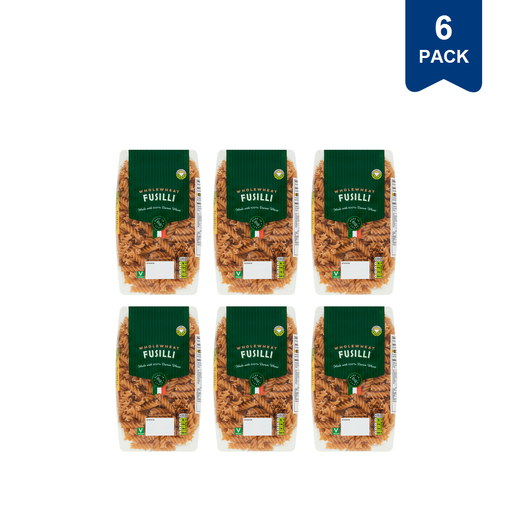
Morrisons Wholewheat Fusilli, 6 × 500 g
For meals where wheat and gluten are not restricted, plain fusilli can be assessed separately from the sauce or toppings. This is a six-pack of 500 g packs; wholewheat pasta is not a wheat-free or gluten-free choice. Check the current pack for other allergen and precautionary statements.
View on Joybuy
 No image available
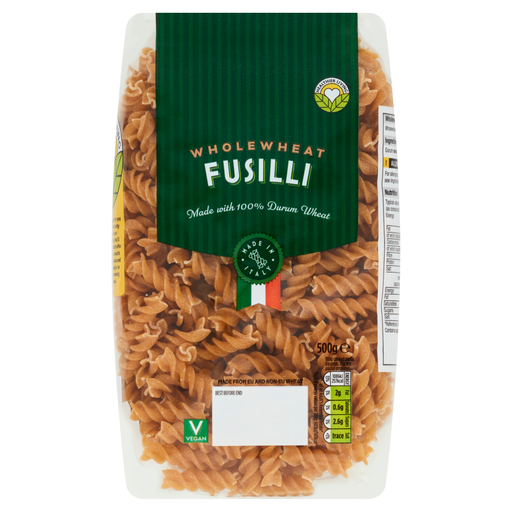
Morrisons Wholewheat Fusilli, 500 g
This single pack offers a plain pasta base to check separately from other meal ingredients when wheat and gluten are not restricted. Its 500 g pack is distinct from the six-pack above. Read the current allergen and precautionary information before use.
View on Joybuy
 No image available
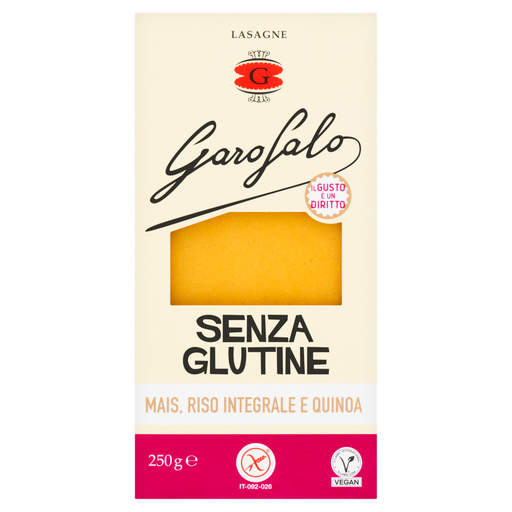
Garofalo Gluten Free Lasagne, 250 g
This labelled gluten-free lasagne is an alternative to ordinary wholewheat pasta when shopping for a gluten-free diet. The pack is 250 g. A gluten-free label alone does not establish suitability for wheat allergy, so check the full current ingredients and allergen statements.
View on Joybuy
Common questions
Is wholewheat pasta suitable for someone with a wheat allergy?
Ordinary wholewheat pasta is not a wheat-free choice: the reviewed Barilla and Tesco products use wheat-based semolina. Check the exact product's current ingredients and allergen statements rather than assuming all pasta recipes are alike.
Can someone with coeliac disease eat ordinary wholewheat pasta?
No. The NHS identifies wheat-containing pasta as a gluten-containing food. Choose pasta specifically labelled gluten-free instead of ordinary wholewheat pasta, and check the current pack.
Does “gluten-free” also mean wheat-free?
No. Coeliac UK notes that some gluten-free foods can contain gluten-free wheat starch. If wheat allergy is the concern, check the ingredients and allergen declaration separately and follow the affected person's allergy-management advice.
What does “may contain” mean on a pasta pack?
It is a precautionary statement about possible unintended allergen presence, not a declaration that the allergen was deliberately added. Consider it alongside the ingredients and the affected person's established allergy-management advice; contact the manufacturer if suitability is unclear.
Do sauces and ready-made pasta meals need their own allergen check?
Yes. An M&S ready meal made with wholewheat linguine also lists cod, scallops and king prawns. Assess the ingredients of the complete dish rather than deciding from the pasta type alone.


