
24/7 Customer Support

Free returns

Same-day & Next-day Delivery

Quality Guaranteed

Unlock Your Welcome Offers: FREE Delivery | Up to 80% OFF | Free 30-day JoyPlus trial
Download the APP
A Wi-Fi security camera can help you check on a hallway, garden, child, pet or small business from your phone. However, choosing one based only on “HD”, “AI” or “360° coverage” can lead to disappointing footage, unreliable alerts and unexpected subscription costs.
Before buying an indoor security camera or outdoor security camera, look beyond the headline specification. The right choice depends on where it will be installed, how it will be powered, what it needs to detect and how you want to store recordings.
A 4K security camera has more pixels than a 2K security camera, but resolution alone does not guarantee clearer footage. Poor lighting, a narrow field of view, digital zoom and a weak Wi-Fi connection can still affect the result.
For an indoor room, 2K may provide sufficient detail for identifying movement and checking on family members or pets. Outdoor areas, driveways and larger gardens may benefit from 4K, particularly when you need to inspect distant footage. Remember that higher resolution can also require more storage and bandwidth.
Most Wi-Fi cameras use wireless internet but still require a mains adapter. A plug-in model may be straightforward indoors, but it can be inconvenient near a garden gate or detached garage. A solar-powered security camera offers a different installation approach, although its panel needs a suitable position for daylight and its cable connections still need protection from moisture.
Check the power method, cable length and mounting hardware before ordering. For outdoor installation, verify the weather-resistance rating rather than relying on the word “outdoor” in the title.
Cloud recording may be convenient, but it can require a paid plan. A microSD recording camera can reduce recurring costs, although the card is often sold separately and local footage may be lost if the camera or card is damaged or stolen.
Check the maximum supported card capacity, whether continuous recording is available and how long footage remains accessible. Some cameras support both local storage and cloud backup, giving you more flexibility.
For indoor use, look for stable placement, privacy mode and features such as two-way audio. A pet camera or baby monitor camera should ideally support clear live viewing, useful night vision and adjustable alerts without excessive notifications.
Outdoor cameras should have a stated IP rating. For example, IP65 indicates protection from dust and water jets, while IP66 provides stronger water-jet protection. Neither rating means the camera can be submerged. Keep power connections dry and use suitable waterproof junction protection where necessary.
A fixed CCTV camera may be adequate for a doorway, but a 360° pan and tilt camera can cover a wider room or garden when positioned correctly. Check both horizontal and vertical movement. A camera that pans 360° but has limited tilt may not cover high or low areas effectively.
Auto-tracking can follow movement, but it should not replace careful positioning. Activity zones and privacy masking are also useful for excluding roads, neighbours’ windows or private areas.
Basic motion detection can be triggered by shadows, moving curtains or passing vehicles. An AI motion detection camera may distinguish between people, pets and vehicles, helping reduce irrelevant alerts. Features vary, so confirm exactly what the model recognises.
Night vision may use infrared, colour illumination or a starlight sensor. Colour footage can provide more context, but spotlights may be noticeable and can affect neighbours. Two-way audio is useful for speaking to visitors, carers, children or pets, but microphone and speaker quality can vary in noisy environments.
In the UK, camera owners should consider privacy obligations and avoid recording areas where people have a reasonable expectation of privacy. Use strong passwords, enable available security updates and check app permissions regularly.
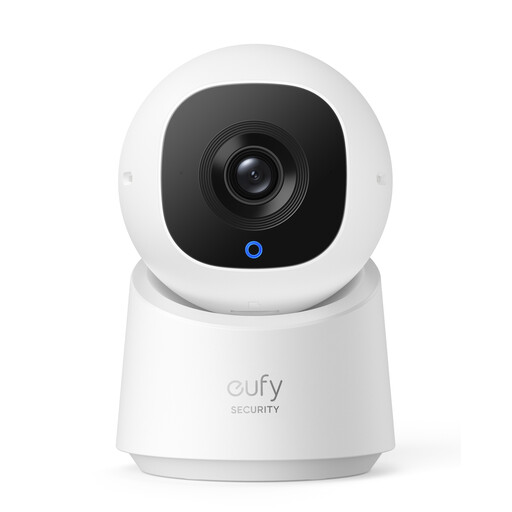
Why This Fits Their Persona: This wired indoor camera suits renters, first-time buyers and households wanting room monitoring without outdoor installation or a mandatory monthly recording plan.
It clearly states indoor-only use and supports local microSD recording up to 128GB, helping buyers account for placement and recurring storage costs.
2K resolution, 360° pan and tilt, on-device human detection and a physical privacy mode.
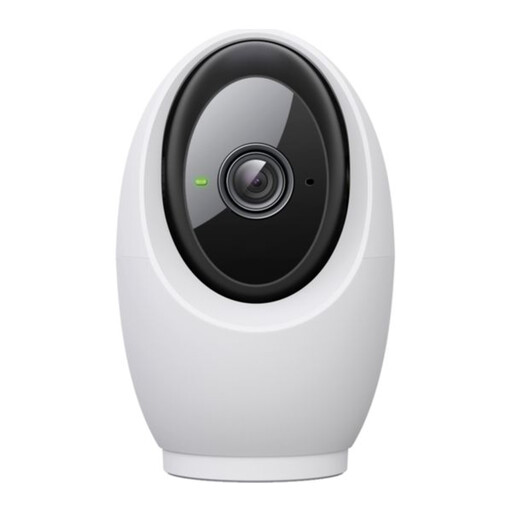
Why This Fits Their Persona: A suitable option for homeowners seeking high-resolution indoor coverage, flexible detection settings and smart-home compatibility.
The specification separates 4K image resolution from digital zoom and states that cloud storage requires a subscription, while microSD storage is also available.
4K 8MP video, 360° horizontal and 116° vertical movement, person/pet/vehicle detection and physical privacy mode.
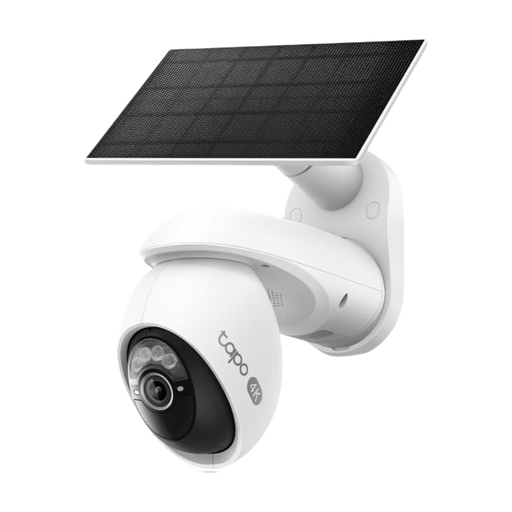
Why This Fits Their Persona: Designed for homeowners monitoring gardens, driveways or larger outdoor areas where running a power cable is difficult.
It combines a stated IP65 rating with a separate solar panel, but buyers should still position the panel for suitable daylight and seal all connections.
4K 8MP video, 360° AI tracking, dual-band Wi-Fi, two-way audio and microSD support up to 512GB.
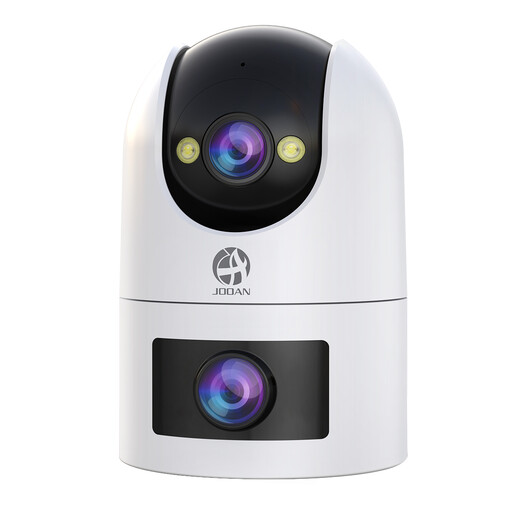
Why This Fits Their Persona: The dual-lens design suits users covering outdoor entrances, shops, courtyards or other areas requiring a fixed and moving view.
The IP66 rating is stated with its limitation: the camera is not designed for submersion, and outdoor power connections must remain protected from water.
Dual 2.4GHz and 5GHz Wi-Fi, 360° PTZ viewing, colour and infrared night vision, person detection and up to 256GB microSD storage.
We have compiled a complete, real-time list of products that fully satisfy these strict selection criteria and UK safety regulations.
Most consumer models use an app-led setup process. You normally connect the camera to power, download the manufacturer’s app and pair it with a 2.4GHz or 5GHz Wi-Fi network, depending on compatibility. 2.4GHz generally travels further through walls, while 5GHz can offer faster local streaming over a shorter range.
This depends on the storage method, resolution and recording mode. A microSD card may hold several days or more of footage, but continuous 4K recording uses capacity faster than motion-triggered clips. Cloud retention periods and fees vary by provider, so check the plan details before relying on cloud history.
Mains-powered cameras use electricity continuously, although actual consumption varies by model and features such as infrared lighting or pan-and-tilt movement. Solar-powered models can reduce the need for regular charging, but their performance depends on installation position, daylight and weather. Always check the supplied power requirements and storage costs alongside the purchase price.