
24/7 Customer Support

Free returns

Same-day & Next-day Delivery

Quality Guaranteed

Unlock Your Welcome Offers: FREE Delivery | Up to 80% OFF | Free 30-day JoyPlus trial
Download the APP
A weak home signal and uncertain tyre readings can both create unnecessary frustration. A Wi-Fi extender may appear powerful on the box but perform poorly when placed behind thick walls, while a wireless TPMS may display impressive figures without matching your vehicle’s tyre pressure range or length.
This guide separates useful specifications from marketing noise, helping UK households, gamers, streamers, drivers, caravan owners and small-office users compare suitable options before buying.
A Wi-Fi 7 range extender advertised with a multi-gigabit figure will not automatically deliver that speed to every device. Actual performance depends on your broadband package, router, device compatibility, distance, wall construction and wireless interference.
Similarly, the “up to” speed of a powerline Wi-Fi extender depends on the condition and layout of your home’s electrical wiring. Power strips and extension leads can interfere with powerline communication.
A range extender should receive a reasonably strong signal from the router. Placing it inside the dead zone may simply reproduce a weak connection. For powerline products, adapters should be plugged directly into wall sockets rather than extension blocks.
For a TPMS, sensor range is equally important. A system designed for a short passenger car may not maintain a reliable connection across a long motorhome, caravan or trailer unless a repeater is included and positioned correctly.
Mesh features are not interchangeable. EasyMesh range extender, OneMesh Wi-Fi and other mesh systems generally require compatible networking equipment for unified roaming. Check your router model before paying extra for a feature you cannot use.
On external-sensor TPMS products, also check valve-stem compatibility, sensor batteries, pressure limits and whether the displayed sensor count matches the actual monitoring arrangement.
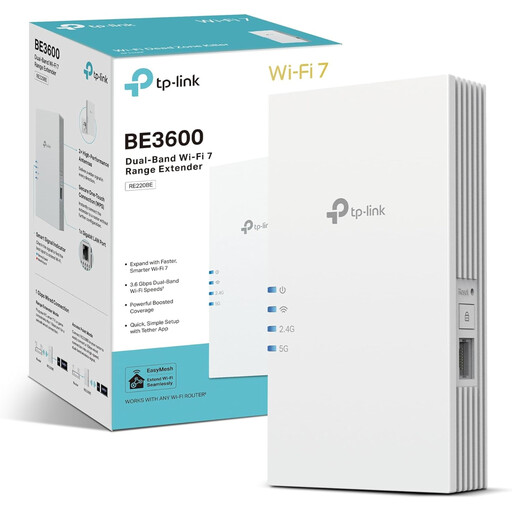
Why This Fits Their Persona: A straightforward option for a home user who wants to address one weak room without replacing the existing router. Setup is available through WPS or the Tether app.
It specifies both 2.4 GHz and 5 GHz operation, EasyMesh support and a 1 Gbps LAN port, rather than relying only on a coverage slogan.
Wi-Fi 7 support, EasyMesh compatibility, access point mode and a Gigabit Ethernet port.
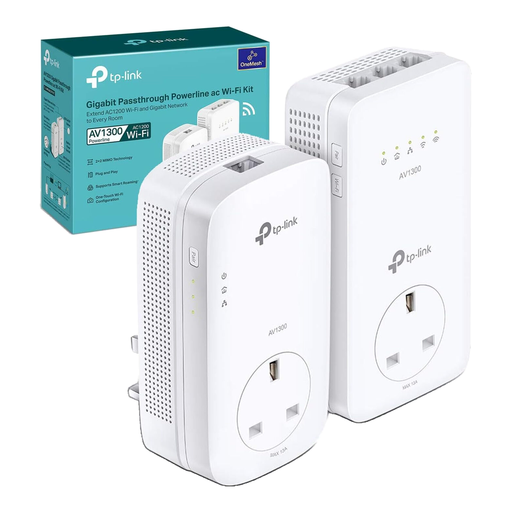
Why This Fits Their Persona: Suits larger UK homes where wiring a device is preferable to depending on a distant wireless link, particularly for streaming, gaming or home-office equipment.
Its powerline design avoids placing a wireless repeater in an already weak signal area. Direct wall-socket installation remains important.
AV1300 powerline specification, dual-band 802.11ac Wi-Fi, three Gigabit Ethernet ports and OneMesh compatibility.
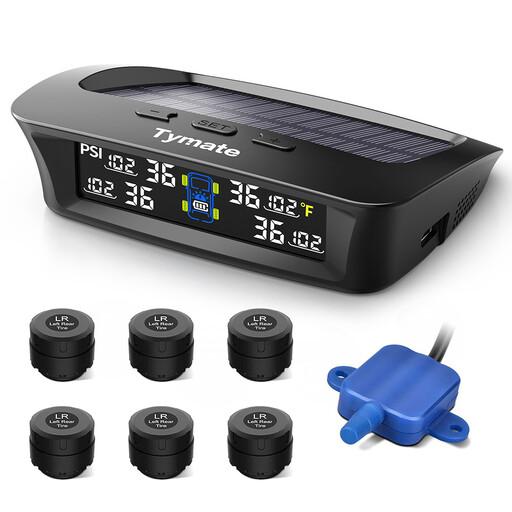
Why This Fits Their Persona: Designed for RVs, motorhomes, travel trailers, fifth-wheel trailers and light trucks where a longer wireless distance and solar-assisted display are useful considerations.
The listing states a 0–87 PSI range, external screw-on sensors and support for vehicles up to 50 feet with the repeater. Check your exact tyre specification before installation.
Six-sensor package, solar charging display, repeater and pressure and temperature readings.
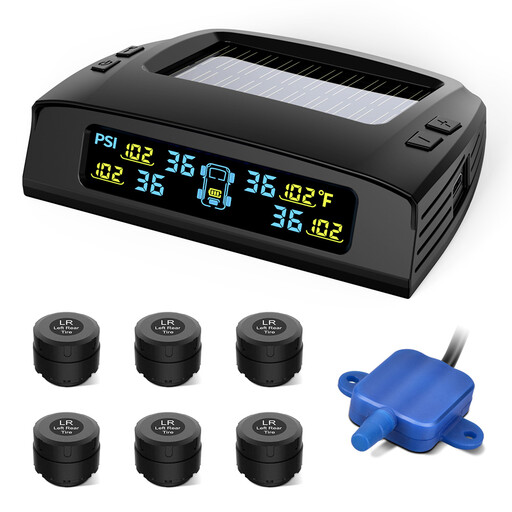
Why This Fits Their Persona: A practical match for drivers who want a compact display covering four tyre positions during commuting, motorway trips or family travel.
It lists pressure, temperature, rapid-leakage and low-sensor-voltage alerts. Confirm the supplied sensor quantity and vehicle length against your requirements.
0–8 BAR monitoring specification, automatic wake-up, adjustable backlight and replaceable CR1632 sensor batteries.
We have compiled a complete, real-time list of products that fully satisfy these strict selection criteria and UK safety regulations.
For Wi-Fi equipment, place a wireless extender approximately halfway between the router and the problem area, then check the signal before finalising its position. Keep it away from large metal objects and interference sources. A powerline kit should use direct wall outlets, with both adapters on compatible electrical circuits.
For a TPMS, fit external sensors to suitable valve stems without overtightening. Set the reference pressure according to the vehicle manufacturer’s guidance, not simply the pressure shown by the device. Check sensor batteries periodically and inspect for damage, corrosion or air leakage around the valve.
It depends on the router and layout. A compatible EasyMesh or OneMesh range extender can provide one shared network name. A conventional extender may be sufficient for one room, while a powerline solution can be useful where thick walls reduce wireless communication.
The supplied CR1632 batteries are listed as lasting about two years, although actual life depends on usage and conditions. Replace them when the low-voltage alert appears and check that each sensor is securely fitted.
Some systems are designed for this purpose, but confirm the pressure range, vehicle length, sensor count and repeater arrangement. A system listed for vehicles up to 50 feet may be suitable for a longer towing combination only when installed according to its instructions. Always verify compatibility before travelling.