
24/7 Customer Support

Free returns

Same-day & Next-day Delivery

Quality Guaranteed

Unlock Your Welcome Offers: FREE Delivery | Up to 80% OFF | Free 30-day JoyPlus trial
Download the APP
A WiFi security camera can make it easier to check on your home, family, pets or business from a mobile app. However, attractive feature lists do not always tell you how a camera will perform in a real UK property. A camera may offer high resolution but struggle with weak WiFi, or claim weather resistance while leaving its power connection vulnerable to rain.
Before buying, focus on the features that affect everyday use rather than marketing language.
Terms such as 2K security camera, 4MP security camera and “Full HD” describe image detail, but they do not guarantee useful footage in every situation. A higher pixel count can help when viewing faces, clothing or packages, yet positioning, lighting, lens quality and compression also matter.
A camera pointed through a bright window may produce glare, while an outdoor camera facing a dark driveway may need infrared or colour night vision. Check the complete specification rather than selecting a product based only on its headline resolution.
Many wireless security cameras still require a mains adaptor. This is often suitable for continuous recording, but you will need to route and protect the cable. Battery-powered models reduce cabling but require recharging and may prioritise event recording to conserve power.
Also check the WiFi band. 2.4GHz WiFi generally travels further and passes through walls more effectively, whereas 5GHz WiFi can offer higher local speeds over a shorter range. A dual-band camera gives you more flexibility, but it still needs a reliable signal at the installation point.
Cloud recording may involve a monthly charge, limited retention or a trial that later becomes paid. Local microSD storage can reduce ongoing costs, but cards are usually not included and continuous recording uses capacity quickly.
Look for the supported card size, recording modes and whether key features, such as AI alerts or playback, depend on a subscription. A home CCTV camera is only useful if you can retrieve footage when needed.
An indoor security camera is designed for dry rooms such as lounges, nurseries, hallways or offices. An outdoor security camera should have a stated ingress protection rating. IP66 indicates protection against dust and powerful water jets; it does not mean the camera can be submerged. Keep power adaptors, plugs and cable joins dry, ideally inside a suitable waterproof junction box.
For renters, window-mounted cameras can avoid drilling. Through-glass models should include anti-glare features and be positioned carefully to reduce reflections from indoor lighting.
A fixed camera may provide a clearer view of one entrance, while a 360° PTZ camera can pan and tilt across a room, garden or shop floor. Check the actual pan and tilt ranges rather than relying on “360° coverage” alone. Some products combine a fixed lens with a PTZ lens, creating different views in the app.
An auto-tracking security camera can follow detected movement, but it may not keep a subject centred in every situation. Activity zones and adjustable sensitivity are useful for reducing notifications caused by trees, passing traffic or pets.
Infrared night vision usually produces monochrome footage. A colour night vision camera may use a spotlight or available ambient light, which can improve visible detail but may be more noticeable outdoors.
Two-way audio is useful for speaking to family members, delivery visitors or pets. If you need a baby monitor camera, look for features such as one-touch calling, sound alerts and privacy masking. For a pet camera, pet or movement detection and local recording may be more practical than a large number of cloud features.
Before installation, point the camera only at areas you are entitled to monitor. Avoid neighbours’ windows and private spaces, and consider informing people who may be recorded. UK data protection and privacy responsibilities can apply when cameras capture areas beyond your own private household space.
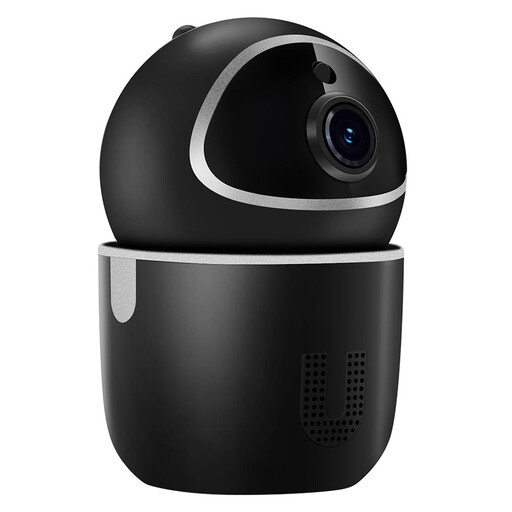
Why This Fits Their Persona: A practical plug-in option for renters, flat owners or first-time buyers monitoring a room, hallway, shop or home office.
Its stated 1080P resolution and plug-in design set clear expectations, without presenting it as a wire-free outdoor device.
360° rotation, motion detection, night vision and two-way audio with app notifications.
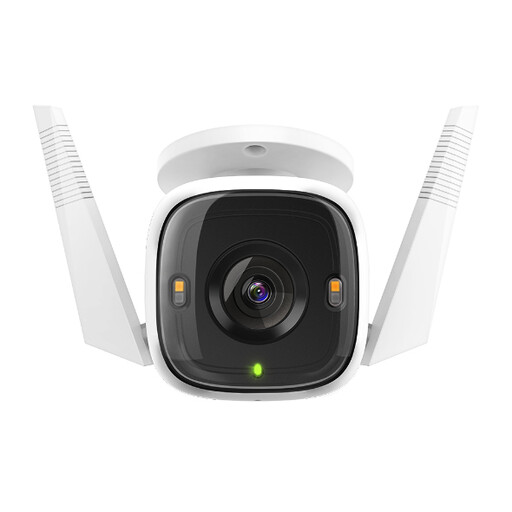
Why This Fits Their Persona: Suitable for homeowners wanting detailed outdoor monitoring with a choice of WiFi or Ethernet connection.
Its IP66 rating is specified for outdoor use, while the Ethernet port offers an alternative if the garden WiFi signal is inconsistent.
2K QHD video, starlight colour night vision, person and vehicle detection, microSD support up to 256GB.
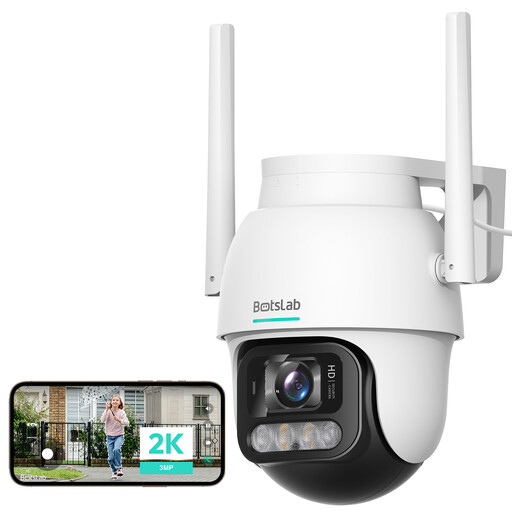
Why This Fits Their Persona: A consideration for users covering a larger outdoor area such as a driveway, courtyard or small business perimeter.
The listed PTZ and human-motion features are more relevant to broad-area monitoring than a fixed indoor camera.
2K 3MP video, 360° coverage, human motion detection and smart tracking for outdoor surveillance.
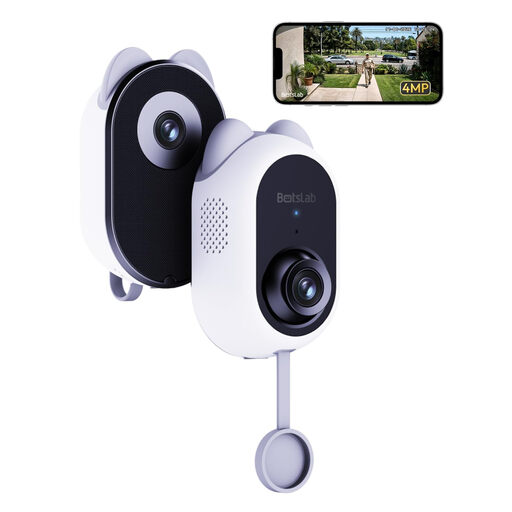
Why This Fits Their Persona: Designed for monitoring outside a flat or rented property from indoors without drilling into walls.
The peel-and-stick mounting method avoids permanent wall holes, while the anti-glare design addresses a common through-glass problem.
4MP video, front and rear lenses, person and vehicle detection, dual-band WiFi and microSD support up to 512GB.
We have compiled a complete, real-time list of products that fully satisfy these strict selection criteria and UK safety regulations.
Most WiFi security cameras require a router and internet connection for remote app viewing, cloud storage and phone notifications. Some models can record locally to a microSD card if the internet is temporarily unavailable, but remote access may stop until the connection returns.
A plug-in camera adds a small amount to household electricity use. The larger variable cost is storage: local microSD recording may avoid a recurring fee, while cloud recording is commonly offered through a paid subscription. Check whether the advertised free trial automatically changes to a paid plan.
Lifespan depends on installation, moisture protection, temperature, sunlight and maintenance. An outdoor camera with an IP66 waterproof rating still needs sealed power connections and should not be submerged. Clean the lens periodically, avoid modifying the casing and replace damaged cables or mounting parts promptly.