Bird-feeder and close-up watchers
If the subject is a bird table or feeder, focus and framing at that short distance matter. NatureSpy’s placement guidance also notes that small birds can need a closer camera position to trigger capture.


Choose around the animal’s distance from the camera and the footage you want: birds at a feeder call for close-range focus and framing, while a path used by night-time visitors calls for dependable triggering and useful night footage. Check power, storage and weather protection for the intended position, and aim the camera so its view stays within your garden where possible.
If the subject is a bird table or feeder, focus and framing at that short distance matter. NatureSpy’s placement guidance also notes that small birds can need a closer camera position to trigger capture.
For visitors such as hedgehogs or foxes, assess night stills or video as well as whether the camera will trigger when an animal crosses the intended path.
If the camera will stay outdoors between checks, consider how often its batteries and storage need attention, how it will be mounted and whether its weather protection suits the position.
Start with where the animal will appear and what you want to record. Then check the exact camera’s capture modes and the upkeep those settings require.
| Concern | What to check | Who this matters to |
|---|---|---|
| Night-time footage | Look at night stills or video for the exact model and check its night mode. Consider how recording length affects battery and storage use. | If I hope to see mammals after dark, daylight images alone will not tell me whether the footage I need is usable. About 29% of consumers would put night-time capture first. |
| Placement and triggering | Check the detection area, trigger and recovery times, and sensitivity settings; make a test capture at the planned position. | When animals cross a particular garden path, I want the camera to catch them rather than produce empty files. Dependable placement and triggering would be the main concern for about 29% of consumers. |
| Close-up bird capture | Check minimum focus distance and examples recorded at a distance comparable to your feeder or bird table. | If I watch birds at a feeder, I need them to be recognisable in the frame, not tiny subjects in a wide garden view. Close-range capture would come first for about 24% of consumers. |
| Outdoor upkeep | Check the power options, supported storage and documented weather protection for the exact model. | When I leave a camera outside between visits, I need its power and storage demands to fit how often I can check it. About 18% of consumers would make manageable upkeep their primary concern. |
A photo specification does not establish the quality of night video or whether a moving animal will trigger the camera. Which? assesses daylight and night-time capture, triggering and ease of use separately.
Compare evidence for the exact model in the mode you plan to use, particularly if night video is the reason for buying it.
A bird or small mammal may be difficult to detect or identify at a distance; the sensor’s detection area need not match the whole visible frame.
Aim at the feeder or route you want to watch, then test the planned distance and angle before leaving the camera in place.
Avon Wildlife Trust notes that longer videos or more photos per trigger drain batteries faster. A full memory card also stops recording.
Choose clip length and capture frequency alongside a suitable power and storage arrangement, and plan when you will check the camera.
The Information Commissioner’s Office advises positioning home cameras to capture only your own property where possible. In the UK, capturing someone else’s property, a public area or communal space can bring data-protection obligations into play.
Reposition the camera or use privacy masking to exclude those areas, and avoid unnecessary audio recording.
NatureSpy offers garden-focused models, including the WiFi WildCam 3, Helarctos Solar and WiFi BirdCam Pro.
Which? includes Browning models in its UK wildlife-camera test sample.
Zeiss models also appear in Which?’s UK wildlife-camera test sample.
These camera-equipped feeders are options for watching birds at a garden feeding spot. If your main aim is to record mammals crossing a path at night, assess a camera’s detection area and night footage for that separate use.
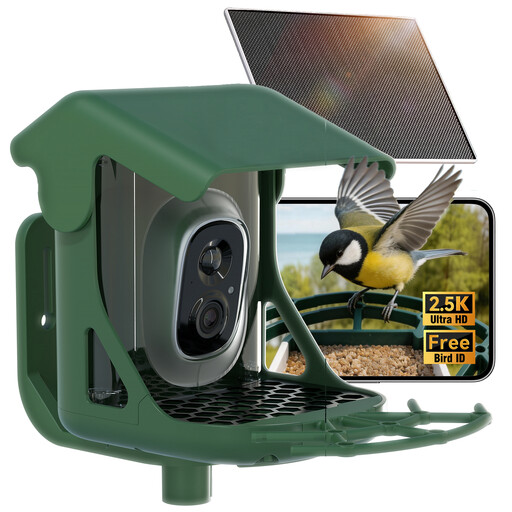 Image unavailable
Consider this feeder-style camera if you want to watch birds at the feeding spot rather than frame a wider garden path. Its product name specifies 2.5K capture, 2.4G Wi-Fi and solar power. Check Wi-Fi coverage at the feeder and look for footage and trigger information relevant to your intended lighting and position.
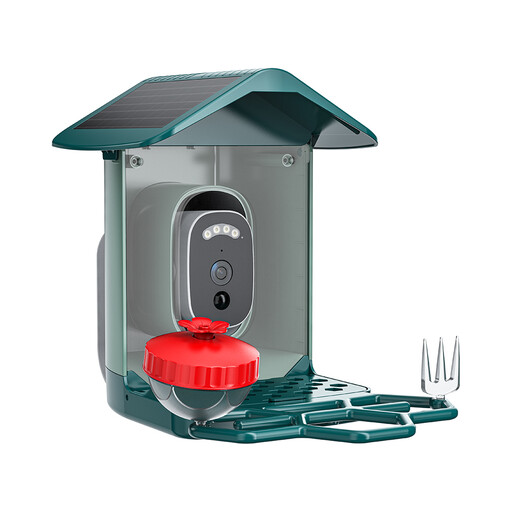 Image unavailable
This feeder-style option suits a planned bird-watching position where Wi-Fi access is practical. Its product name specifies 2K photos and video and a solar-powered design. Before choosing it for after-dark observation or an exposed location, check its night mode, weather protection and mounting requirements for that position.
Yes, although the animals you see can change with the seasons. The Royal Horticultural Society notes that some garden birds are seasonal visitors, while robins and blackbirds are present year-round.
Follow the exact camera’s instructions and test it at your intended position. NatureSpy’s placement guidance suggests usually placing a camera within 5–10 ft for small birds and mammals, and gives 5–15 ft as guidance for hedgehogs; those distances are not specifications for every camera.
A passive infrared camera can trigger when movement and changing heat occur in its detection area, even if the intended animal is not in the resulting image. Check for nearby moving vegetation, re-aim the camera, adjust sensitivity if the model permits it and run a test capture.
Yes. The UK Information Commissioner’s Office advises keeping a home camera’s view within your property where possible; capturing someone else’s property, a public area or communal space can bring data-protection obligations into play. Check the frame before leaving the camera running and use repositioning or privacy masking where needed.
Avoid recording conversations unnecessarily. The Information Commissioner’s Office says audio recording of conversations between members of the public should not normally be used because it is highly intrusive and unlikely to be justified; check whether you can disable audio for your wildlife setup.