
24/7 Customer Support

Free returns

Same-day & Next-day Delivery

Quality Guaranteed

Unlock Your Welcome Offers: FREE Delivery | Up to 80% OFF | Free 30-day JoyPlus trial
Download the APP
Keeping windows sparkling clean is a task that few enjoy. For many UK homeowners and businesses, it involves balancing on ladders, dealing with awkward angles or simply spending hours trying to achieve a streak-free finish. This is especially true for properties with large panes of glass, conservatories or upper-floor windows that are difficult and unsafe to reach.
An automatic window cleaner offers a modern solution to this age-old problem. These devices are designed to save you time, effort and the risk associated with manual cleaning. This guide is here to help you understand what to look for in a window cleaning robot and to highlight a noteworthy option available right now.
Navigating the market for a smart window cleaner can be confusing. To help you make an informed choice, here are a few key features to consider, based on what works well for typical UK homes.
The most critical feature of any robotic window cleaner is its ability to adhere securely to the glass. Suction power, often measured in Pascals (Pa), determines how firmly the device grips the surface. A strong motor ensures it stays put, even on slightly uneven or textured glass. Always look for models that include essential safety features:
Different models use different methods to clean. Most rely on microfibre pads, but how they move and apply cleaning fluid varies. A window cleaning robot with spray functionality offers a significant advantage. An integrated water tank and nozzle system can automatically apply a fine mist of cleaning solution as the robot works. This ensures even coverage and a more effective clean compared to models that require you to wet the pads manually, which can lead to them drying out mid-cycle.
An effective automatic window cleaner needs to be able to navigate the entire window surface without missing spots. Look for models with intelligent path planning, which typically use Z-shaped or N-shaped patterns to ensure comprehensive coverage. A remote control window cleaner also adds a layer of convenience, allowing you to manually direct the device to tackle specific spots or to start and stop a cleaning cycle without having to reach the unit itself.
After analysing the features that matter most to users, we've identified a model that offers a compelling combination of performance and value.
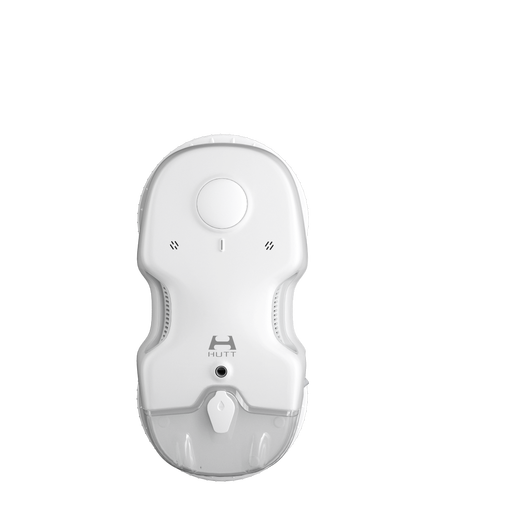
[Clearance Sale - £138.99 with Free Next-Day Delivery] HUTT C65 window cleaning robot with spray function and with remote control, 80ML tank, automatic window cleaner robot, for indoor and outdoor windows
Why It Stands Out
The HUTT C65 distinguishes itself with its built-in water tank and automated spray function, a feature often found on more expensive models. Its 80ML tank holds enough water or cleaning solution for a substantial cleaning area, and the nozzle atomises the liquid precisely where it's needed. It also features variable frequency suction, which allows it to automatically adjust its grip strength based on the surface, making it suitable for more than just windows, including tiles and mirrors.
Pros
Who is it for?
This model is an excellent choice for homeowners with multi-storey houses, conservatories or large picture windows who want to automate their cleaning routine. It is also a practical investment for small business owners with glass shopfronts, helping to maintain a professional appearance without the recurring cost and hassle of manual cleaning.
While the HUTT C65's integrated tank is designed specifically for its cleaning cycle, you might be interested in other storage solutions for your home. Whether it's for decanting homemade, eco-friendly cleaning fluids or organising your kitchen, having the right container is essential.
Explore our selection of high-quality glass tanks and containers to find the perfect fit for your household needs.
1. Can a window cleaning robot be used on frameless windows?
Yes, many modern robotic cleaners, including the HUTT C65, are equipped with advanced sensors that detect the edges of the glass. This allows them to clean frameless windows and mirrors safely without falling off.
2. How effective are automatic window cleaners on very dirty windows?
For windows with heavy, caked-on grime (such as after construction work or a long winter), a preliminary manual wipe-down may be beneficial for the first clean. For typical levels of dust, pollen and rain marks, a good quality automatic window cleaner with a spray function and clean pads can achieve excellent results, often with a single pass.
3. Do robotic window cleaners leave streaks?
Streaking is often caused by using too much cleaning fluid, dirty pads or a poor-quality cleaning solution. A window cleaning robot with spray helps to minimise this by applying a controlled, fine mist. Using distilled water or a manufacturer-recommended cleaning solution, along with ensuring the microfibre pads are clean before each use, will give you the best chance of a perfectly clear, streak-free finish.