Small-flat touch-up cleaners
If you mainly clean one or two side tables, cupboard space, straightforward emptying and charging time may matter more to you than a long rated runtime.


For one or two glass side tables, a manual squeegee and cloth may be enough if you can dry the edges; a compact window vacuum is worth considering if you want it to collect the wash water. A wider, longer-runtime vacuum makes more sense when the same appliance will also clean windows or other smooth surfaces. Whichever route you choose, remove dust and loosen marks before clearing the moisture.
If you mainly clean one or two side tables, cupboard space, straightforward emptying and charging time may matter more to you than a long rated runtime.
If your cleaning session also covers windows, mirrors, tiles or shower screens, compare nozzle fit, tank capacity and runtime across all those surfaces rather than judging a vacuum by the side tables alone.
If the table has divided glass sections or raised edges, check the clear width available for the blade. An optional narrow nozzle or a tool that works at different angles may matter more than runtime.
Choose it when: You want to collect liquid after washing the table, particularly if you will use the appliance on other smooth surfaces too.
Allow for: Charging, emptying and storage; the vacuum does not replace washing away dust or marks.
Choose it when: Occasional table cleaning does not justify another appliance to charge and store.
Allow for: Wiping up runoff and drying the edges yourself, because a manual blade does not vacuum water.
For consumers chiefly cleaning glass side tables in a rented flat, settle the cleaning method first, then compare the fit and upkeep of any tool you plan to buy.
| Concern | What to check | Who this matters to |
|---|---|---|
| Removing wash water | Check whether the tool collects liquid or pushes it towards an edge, and plan to loosen dirt before using it. | If I want less water left on the glass after washing, I am willing to clean it before using the vacuum. Around 45% of consumers put clearing that moisture first. |
| Storage and upkeep | Compare the tool’s storage size and, for a vacuum, its tank capacity, charge time and emptying method. | With little cupboard space and only short touch-ups to do, I do not want the tool to be awkward to put away. Roughly 33% of consumers place compact, manageable ownership first. |
| Blade or nozzle fit | Measure the narrowest unobstructed glass section; check whether a narrower head is included or available separately. | My table has narrow sections or raised trim, so the head must reach the glass I actually need to clean. About 22% of consumers prioritise that fit and flexibility. |
A 28 cm or 280 mm standard head may be awkward on a table with narrow sections, raised trim or fixed ornaments, even if it suits a broad window pane.
Measure the narrowest clear section before ordering. If the head cannot sit flat there, check for a compatible narrow nozzle or consider a manual tool and cloth.
A window vacuum collects moisture after washing; dust or sticky marks still need attention before that stage.
Remove dust, loosen marks with a suitable solution and a clean microfibre cloth or soft sponge, then collect the liquid. Dry the edges with a cloth if water remains.
Robert Dyas lists a 60 ml tank and 30-minute operating time for the compact Beldray BEL0749TT. Those figures call for a different decision when cleaning one or two tables than when cleaning several windows in one session.
Match the tank and rated runtime to the surfaces you intend to clean together, rather than choosing on runtime alone.
Electrical Safety First advises against putting appliances or batteries in general waste or normal recycling.
Check your local council’s electrical-recycling arrangements or an eligible retailer take-back option when the appliance reaches the end of its life.
These product lines illustrate different approaches to the job; compare the exact model and included accessories before choosing.
The cordless WV 6 Plus is relevant if table cleaning is part of a longer session across smooth surfaces.
The Dry&Clean range is worth examining when nozzle width or operating angle is an important part of the choice.
The BEL0749TT is a compact cordless option to compare for occasional table touch-ups and limited storage space.
The manual 3-in-1 window kit offers a non-electric route when a squeegee and additional reach matter more than powered water collection.
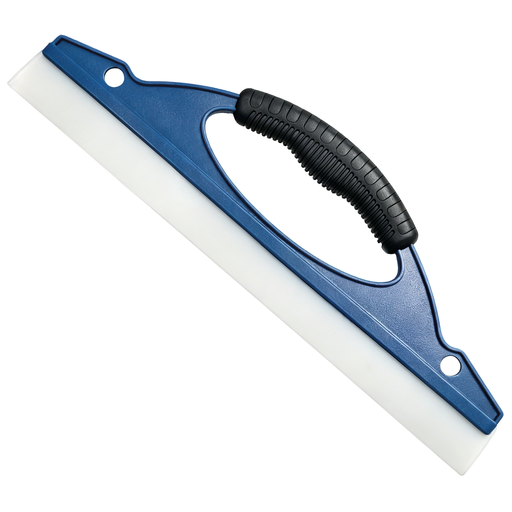
For a small glass table, this hand-operated squeegee is an option for moving water off the surface after washing. It is not a powered window vacuum, so keep a cloth ready for runoff and edges.
 No image available
Consider this manual tool if you want to clear water from a washed glass table without charging an appliance. Its silicone lip moves liquid rather than vacuuming it up; measure the usable glass area to check the blade’s fit, and dry any remaining water at the edges.
No: use it to collect liquid after cleaning the glass, not as a substitute for removing dust and marks. Vileda recommends dusting first and using a suitable cleaning solution with a microfibre cloth or soft sponge; wipe the edges with a dry cloth if needed.
Measure the narrowest clear section of glass, excluding raised edges and fixed ornaments, and compare it with the head’s stated width. Kärcher specifies a 280 mm head for the WV 6 Plus, while Leifheit specifies a 28 cm head and offers an optional 17 cm narrow nozzle for Dry&Clean.
Expect to empty its dirty-water tank and keep the cleaning cloth and water-contact parts clean. Kärcher describes a removable blade on the WV 6 Plus, and Leifheit specifies a removable tank for Dry&Clean; follow the exact model’s instructions before washing any component.
No. Electrical Safety First advises against placing appliances or batteries in general waste or normal recycling. Check your council’s electrical-recycling arrangements or whether an eligible retailer take-back service is available.