
24/7 Customer Support

Free returns

Same-day & Next-day Delivery

Quality Guaranteed

Unlock Your Welcome Offers: FREE Delivery | Up to 80% OFF | Free 30-day JoyPlus trial
Download the APP
As a Joybuy Product Recommendation Officer, my role is to help you navigate the crowded market of home appliances. When it comes to selecting a wine cooler, it’s easy to be swayed by sleek marketing photos and impressive bottle counts, only to find the reality falls short. Many buyers find their new appliance is noisy, doesn't fit their favourite bottles or fails to protect their wine collection as promised.
Before you invest, let’s look at the common pitfalls that can lead to disappointment and how to sidestep them.
To ensure your chosen wine cabinet is a long-term asset rather than a short-term frustration, focus on these key specifications.
The first decision is how the cooler will fit into your home. This choice dictates the models you can consider.
This is arguably the most important functional feature.
Look beyond simple cooling and check for features that actively preserve your wine.
Here are a few models that align with specific needs, chosen because they successfully address the common pitfalls.

Why This Fits Their Persona: This is for the homeowner undertaking a premium kitchen renovation. It's a 60cm integrated wine cooler that sits perfectly under a counter, offering a sleek, built-in look. Its 44-bottle capacity and dual-zone functionality are ideal for those who entertain often and have a diverse collection of red and white wines.
It directly solves the single-zone compromise with two independent temperature zones. It also features an Anti-Vibration system and anti-UV glass, tackling the two "silent saboteurs" of wine preservation.
Its Natural Airflow System maintains optimal humidity to keep corks moist. The Wi-Fi connectivity with the hOn App allows for remote control and inventory management.
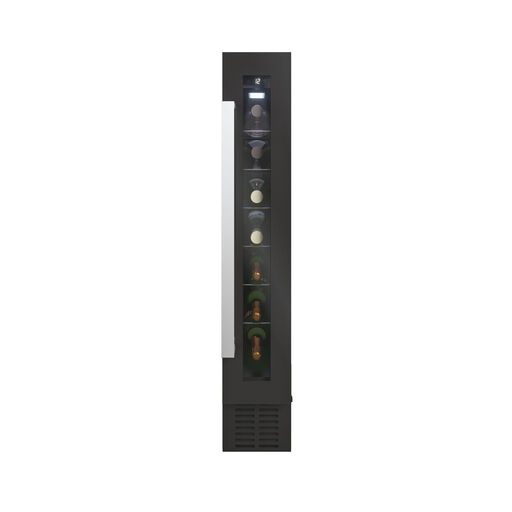
Why This Fits Their Persona: Perfect for those with smaller kitchens or who want to fill an awkward 15cm gap in their cabinetry. This slimline wine cooler turns a small, unused space into a feature, holding 7 bottles—ideal for keeping a curated selection ready for the week.
It avoids the capacity illusion by being upfront about its purpose as a small wine cooler. Its UV-resistant glass door provides essential protection, a feature often missing in compact models.
Its ultra-slim 15cm width is its main selling point, offering a built-in solution where others can't fit. The digital touch controls and reversible door add to its convenience.
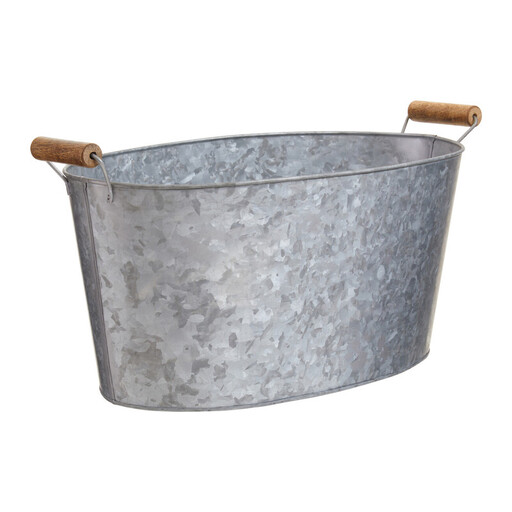
Why This Fits Their Persona: Not everyone needs an electric cooler. For garden parties, barbecues or indoor gatherings, a stylish and practical wine ice bucket is the perfect solution. This tub is for the host who values convenience and aesthetics for short-term chilling.
This is a wine chiller, not a preservation cabinet. It sidesteps all the pitfalls of electric coolers by serving a different, more immediate purpose. There are no misleading claims or complex features—it simply keeps drinks cold for an event.
Its generous capacity holds multiple bottles and cans, while the galvanised steel and rubberwood handles offer a durable, rustic-industrial charm. It's a versatile and portable centrepiece.
We have compiled a complete, real-time list of products that fully satisfy these strict selection criteria and UK safety regulations.
It is generally not recommended. A freestanding wine cooler typically vents from the rear and sides and requires several inches of clearance for air to circulate. Enclosing it in a tight cabinet can cause the compressor to overheat, reducing its efficiency and lifespan. If you want an under counter wine cooler, you must choose a model specifically designed for built-in use, which will have its ventilation system at the front.
The running cost depends on the unit's size, energy efficiency class (as shown on the UK energy label) and how often it's opened. A modern, small-to-medium-sized wine cooler is generally quite efficient. For a rough comparison, its annual energy consumption is often similar to that of a small secondary refrigerator. Always check the kWh/annum figure on the product specification to estimate costs based on your current electricity tariff.
While they look similar, their functions differ. A wine cooler is designed for the long-term storage and preservation of wine. It offers precise temperature control, UV protection, humidity management and anti-vibration technology. A beverage cooler, on the other hand, is designed for rapidly chilling a wide variety of drinks like soft drinks, beer and water. It prioritises powerful cooling over the nuanced environment that wine requires.