
24/7 Customer Support

Free returns

Same-day & Next-day Delivery

Quality Guaranteed

Unlock Your Welcome Offers: FREE Delivery | Up to 80% OFF | Free 30-day JoyPlus trial
Download the APP
A wine cooler can add useful storage and serving convenience to a kitchen, dining room or home bar. However, choosing one based only on bottle capacity or a stylish glass door can lead to costly mistakes. The right wine fridge must also suit your available space, installation plan, wine collection and household running costs.
This guide highlights the main buying pitfalls, explains the specifications that matter and matches several options to different UK households.
Bottle figures usually refer to standard 750ml Bordeaux-style bottles arranged neatly on the shelves. Larger Champagne, Burgundy or unusual-shaped bottles may reduce the usable capacity. Shelves can also need to be removed to accommodate taller bottles.
Before buying, consider your real collection rather than the headline number. An 18-bottle wine refrigerator may be suitable for occasional entertaining, while a 38- or 46-bottle wine cooler offers more flexibility for regular hosting and mixed bottle sizes.
A built-in wine cooler, integrated wine cooler or under-counter wine cooler requires accurate measurements. Width is only one consideration. Check the height, depth, ventilation arrangement, door clearance and whether the unit vents from the front.
A freestanding wine cooler should not automatically be enclosed inside cabinetry. Restricted airflow can increase energy consumption and place additional strain on the appliance. Always follow the installation manual and allow the specified ventilation clearances.
A dual-zone wine cooler allows separate temperature settings for different wine types. This can be useful when storing reds and whites together, but it may not be necessary for a smaller collection made up mostly of one style.
A single-zone model can be simpler and more space-efficient. If you regularly serve sparkling, white and red wines at different temperatures, dual-zone control is more likely to justify the additional cost and cabinet space.
Measure the intended aperture before ordering. A 30cm or slimline wine cooler can make use of a narrow gap, while a 60cm wine cooler generally occupies a standard-width kitchen unit area. Tall integrated models may require a full-height cabinet rather than an under-counter position.
Check whether the product is:
For electrical safety, use a properly earthed UK mains connection and have built-in installation completed in line with the manufacturer’s instructions. Avoid extension leads and multi-plug adapters where the manual prohibits them.
Temperature ranges vary between models. A range such as 5°C–18°C or 5°C–20°C provides flexibility for serving and short- to medium-term storage. Dual-zone models typically offer a cooler upper compartment for white or sparkling wines and a warmer lower compartment for reds.
Temperature is only one part of wine storage. Avoid placing the appliance next to a radiator, oven or strong sunlight, and allow several hours for the internal temperature to stabilise after installation or adjustment.
Noise levels around 38–40dB(A) are generally worth considering for open-plan kitchens and living areas, although the sound may vary during cooling cycles. Compare the stated rating rather than relying on phrases such as “ultra-quiet”.
UK energy labels run from A to G under the current system, so compare the annual energy consumption in kWh where available rather than comparing old-style ratings with current labels. UV-resistant or smoked glass can reduce light exposure, while wooden or bamboo shelves may help organise bottles and reduce movement when shelves are pulled out.
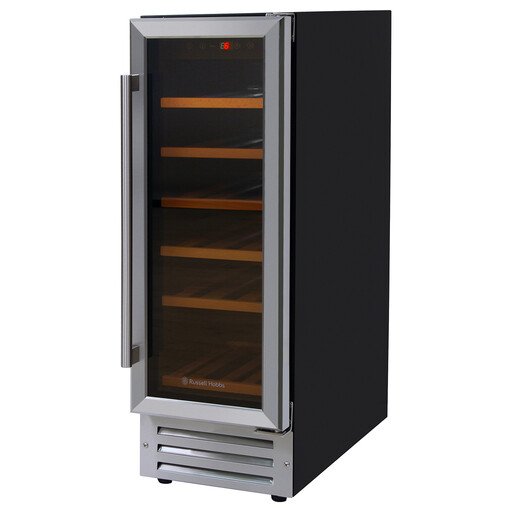
Why This Fits Their Persona: A practical choice for UK households starting a collection, with flexible placement in a kitchen, utility room or home bar.
Its stated 18-bottle capacity is more realistic for a modest collection, while freestanding or built-in use avoids committing to one layout.
5°C–18°C temperature range, six wooden shelves and stated 39dB(A) operation.
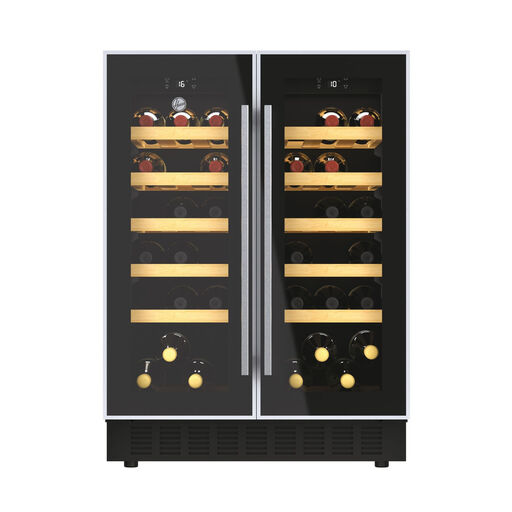
Why This Fits Their Persona: Designed for a fitted kitchen where a larger collection and separate red and white wine storage are priorities.
Its two independent zones address the limitation of using one temperature for mixed wine styles, while the 60cm integrated format is clear for cabinet planning.
Up to 38 Bordeaux-style bottles, Wi-Fi control through the hOn app and stated 39dB noise level.
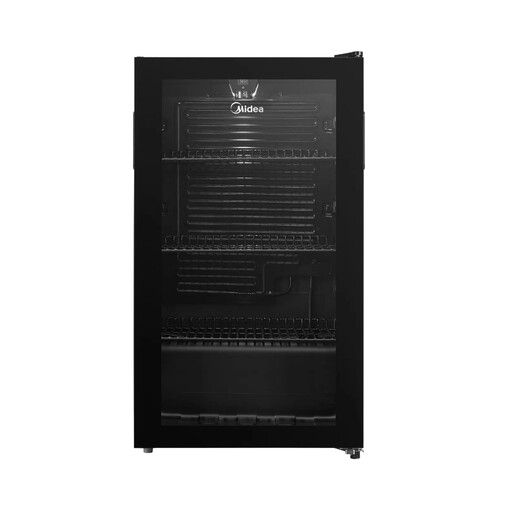
Why This Fits Their Persona: Suitable for larger collections or households that want one appliance for wine and other chilled beverages.
The 93-litre interior gives more room than compact wine fridges, reducing the need to stack or overcrowd bottles.
47cm width, double-layer Low-E and UV glass, LED lighting and stated E energy efficiency class.

Why This Fits Their Persona: A narrow integrated option for fitted kitchens with a 15cm gap or limited under-counter space.
Its 15cm slimline format is intended for compact spaces, so buyers can plan around a measured narrow aperture rather than forcing in a standard-width appliance.
Seven-bottle capacity, 5°C–18°C single-zone control and reversible door.
We have compiled a complete, real-time list of products that fully satisfy these strict selection criteria and UK safety regulations.
Once delivered, keep the appliance upright for the period stated in the manual before switching it on. Allow the temperature to stabilise before loading bottles, particularly after transport.
Place bottles securely on the shelves and avoid blocking vents. Clean the interior with a soft cloth and mild detergent, and disconnect the appliance before maintenance. Built-in units should be installed by a suitably qualified person, with ventilation maintained around the grille and electrical connection.
Running costs depend on the model, energy rating, room temperature, usage and ventilation. Compare the stated annual kWh consumption on the energy label rather than assuming a compact appliance always uses less electricity. Keeping the door closed and away from heat sources can also help limit unnecessary cooling.
The appropriate setting depends on the wine and whether you are serving it soon or storing it. Many wine coolers offer a broad range suitable for red, white and sparkling wines. Dual-zone models make it easier to keep different styles at separate settings, while a single-zone wine refrigerator may suit a more consistent collection.
Lifespan varies according to construction, usage, ventilation and maintenance. Choosing the correct installation type, avoiding overloading and keeping vents clear can support reliable operation. Check the manufacturer’s warranty, service information and replacement shelf availability before purchase.