
24/7 Customer Support

Free returns

Same-day & Next-day Delivery

Quality Guaranteed

Unlock Your Welcome Offers: FREE Delivery | Up to 80% OFF | Free 30-day JoyPlus trial
Download the APP
A wine cooler can make serving wine more convenient, but choosing the wrong one may leave you with limited storage, unnecessary running costs or an appliance that does not fit your kitchen. UK homes also vary widely: a flat may need a compact freestanding wine refrigerator, while a fitted kitchen may require an under-counter wine cooler or integrated model.
Before comparing bottle counts and touchscreen controls, watch for these common buying traps.
An advertised capacity usually assumes standard 75cl Bordeaux-style bottles. Champagne bottles, Burgundy bottles and larger formats may occupy more shelf space. A claimed 46-bottle wine cooler may therefore hold fewer bottles if your collection includes varied shapes.
Check the shelf layout, internal depth and whether shelves can be removed. A narrow 18-bottle wine cooler may suit standard bottles but offer less flexibility for wider sparkling wine bottles.
A drinks refrigerator and a dedicated wine fridge are not always the same. Some beverage appliances prioritise general chilling, while wine coolers are designed around horizontal bottle storage, adjustable temperature settings and reduced vibration.
Small thermoelectric units, such as portable 4-litre coolers, are useful for drinks, snacks or short-term personal storage. However, they cool relative to room temperature and cannot freeze. They are not a direct replacement for a compressor-based wine refrigerator intended for a collection.
Noise figures should be checked in decibels, rather than relying on phrases such as “silent”. A model rated at 39–40dB may be suitable for many kitchens and living areas, but sound can be more noticeable in a quiet studio flat.
Also, a freestanding wine cooler cannot automatically be placed inside cabinetry. Built-in and integrated models require the correct aperture, ventilation and electrical installation. Always compare the appliance dimensions with the manufacturer’s installation instructions.
For flexible everyday use, look for a stated temperature range rather than a vague “perfect cooling” claim. Several models in this selection provide settings from approximately 5°C to 18°C or 20°C, covering common serving requirements for whites, rosés and reds.
A single-zone wine cooler is straightforward if you usually store one wine style at a time. A dual-zone wine cooler is more practical when you want red and white wine stored at separate temperatures. Independent controls are particularly useful for households that entertain regularly.
Measure the available space, including door clearance, ventilation gaps and the depth behind the worktop. An under-counter wine cooler normally needs a specific opening height and width. Integrated models should be installed according to the manual, with suitable ventilation and a correctly earthed power connection.
Freestanding models offer more flexibility for rented homes, home bars and utility rooms. Reversible doors and adjustable feet can help when positioning the appliance in a corner or on an uneven floor.
A UV-protected wine cooler with smoked or double-glazed glass can reduce exposure to light while displaying the bottles. Wooden shelves may help organise bottles and are often designed to reduce movement, but check the shelf spacing and weight capacity.
For a bedroom, open-plan kitchen or lounge, compare the stated noise level. The products below list figures between 39dB and 40dB, allowing a more practical comparison than promotional wording alone. Energy labels should also be considered: ratings such as F, G or E are based on the current UK/EU-style appliance scale, so compare the stated annual energy consumption where available.
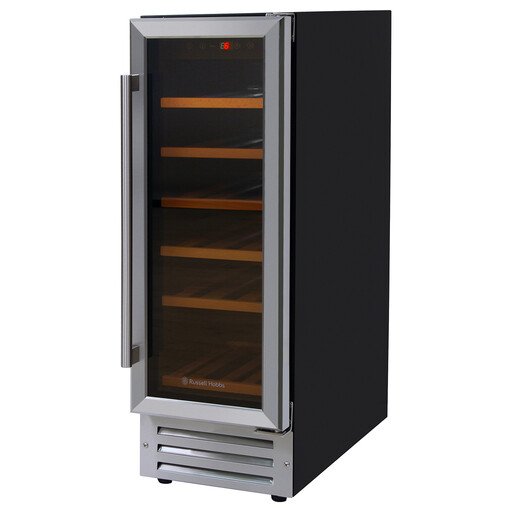
Why This Fits Their Persona: A practical choice for a first collection, rented property or compact kitchen, with freestanding and built-in installation options.
The listed 18-bottle capacity and 5°C–18°C temperature range make the storage scope clear, while the 39dB(A) noise specification avoids relying on vague quietness claims.
Six wooden shelves, reversible door, adjustable feet and a 58-litre capacity.
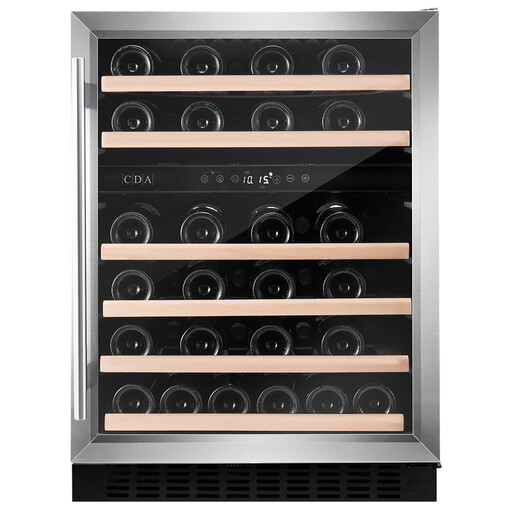
Why This Fits Their Persona: Suits a modern kitchen or entertaining space where separate red and white storage, presentation and structured access matter.
Its dual temperature zones avoid forcing different wine styles into one setting, while the stated 40dB noise level and dimensions support more informed installation planning.
46-bottle capacity, UV-protected smoked glass, wooden slide-out shelves and electronic controls.
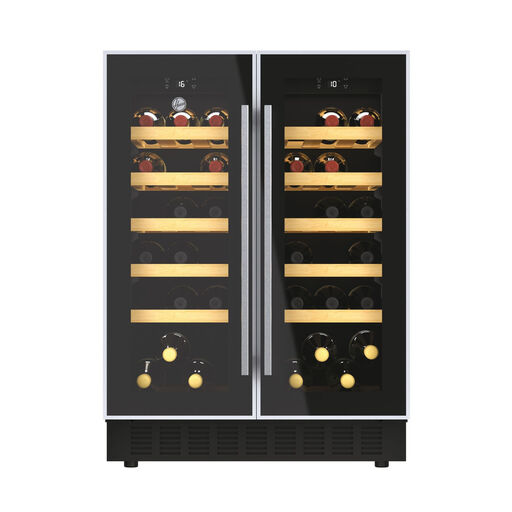
Why This Fits Their Persona: Designed for homeowners planning a fitted kitchen or dedicated wine-storage area with frequent entertaining needs.
The integrated 60cm format, 38-bottle capacity and dual-zone design are clearly specified, helping prevent an unsuitable fit or single-temperature compromise.
Two independent zones, bamboo shelving, UV-resistant smoked glass, Wi-Fi connectivity and a listed 39dB noise level.
We have compiled a complete, real-time list of products that fully satisfy these strict selection criteria and UK safety regulations.
Running cost depends on the appliance’s energy rating, annual consumption, room temperature, ventilation and how often the door is opened. Compare the energy label and annual kWh figure rather than assuming a smaller appliance always uses less electricity.
Yes, but only if it is designed for built-in or under-counter installation. Confirm the stated aperture dimensions, ventilation requirements and door clearance. A freestanding wine fridge should not simply be enclosed inside cabinetry.
Lifespan varies with build quality, usage, ventilation and maintenance. Keeping the appliance level, cleaning it as instructed and leaving ventilation clear can support reliable operation. Check the warranty, spare-parts information and installation requirements before purchase.