
24/7 Customer Support

Free returns

Same-day & Next-day Delivery

Quality Guaranteed

Unlock Your Welcome Offers: FREE Delivery | Up to 80% OFF | Free 30-day JoyPlus trial
Download the APP
Investing in a wine cooler feels like a sophisticated step up for any home. It promises perfectly chilled whites and correctly tempered reds, ready for any occasion. Yet, the path to finding the right appliance is often cluttered with marketing claims and hidden design flaws that can lead to disappointment and, worse, spoiled wine.
As the Joybuy Product Recommendation Officer, my role is to help you navigate this market. We will bypass the hype and focus on the practical details that ensure your chosen wine fridge is a lasting asset, not a short-lived gadget. Before you commit, let's look at the common pitfalls many UK buyers encounter.
integrated wine cooler is designed to vent from the front.To avoid these issues, focus on three core parameters. Getting these right is crucial for a successful purchase.
How you plan to install your cooler is the first and most important decision.
under counter wine cooler is designed to fit neatly below your worktop. For this to work safely, the appliance must be front-venting. A grille at the base of the unit draws in cool air and expels warm air, allowing the compressor to breathe within a confined space. Always check the product specifications for "integrated use" or "front-venting" and ensure your kitchen fitter follows the required niche dimensions.This choice depends entirely on your collection.
dual zone wine cooler is the more versatile option for enthusiasts who enjoy a mix of red and white wines. It features two independently controlled compartments, allowing you to set the perfect serving temperature for different varietals simultaneously. This is essential for anyone who entertains regularly and wants every bottle to be ready to pour.Consider both your kitchen layout and your collection size.
60cm wine cooler models to match. However, for smaller kitchens or to fill an awkward gap, a slimline wine cooler (typically 15cm or 30cm wide) can be an elegant solution. A small wine fridge is also a great option for those with limited space or a modest collection.Based on these practical considerations, we have matched several models to different user needs. These recommendations focus on products that offer reliable features to avoid the common pitfalls.
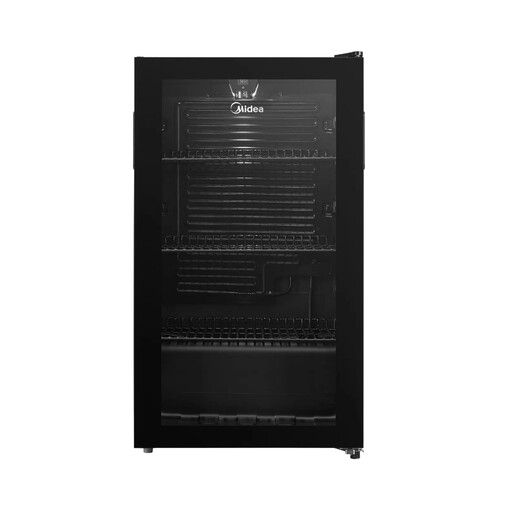
Why This Fits Their Persona: This freestanding unit offers a substantial 93-litre capacity, making it a great starting point for someone beginning to build a collection. It provides ample space without the cost of a high-end integrated model, perfect for a garage or utility room.
As a freestanding model, the risk of improper integrated installation is eliminated. Its Low-E and UV glass door directly addresses the pitfall of light damage, protecting the wine inside.
A large capacity for the price point and a protective UV-filtering glass door make it a practical first step into serious wine storage.

Why This Fits Their Persona: This is the perfect appliance for homeowners with a new or existing fitted kitchen who want to utilise an awkward 15cm gap. It turns a sliver of wasted space into a sophisticated and functional feature.
As a purpose-built slimline wine cooler for integration, it solves the space and ventilation problem simultaneously. It also includes anti-vibration bamboo shelves and a UV-resistant door, addressing the wine damage pitfalls.
Its 15cm width is a unique solution for compact UK kitchens. It also offers smart connectivity via the hOn App, a feature rarely seen in models of this size.

Why This Fits Their Persona: For the enthusiast with a diverse collection of reds and whites, this model offers professional-grade preservation. It is designed for seamless integration and provides the precise, separate control needed to keep every bottle at its peak.
It directly solves the single-temperature compromise with its dual zone capability. Furthermore, its anti-vibration system, active carbon filter and natural airflow for humidity control address all the subtle pitfalls that can ruin fine wine.
True independent dual zone control combined with advanced preservation technologies (humidity, anti-vibration and air filtration) make this a superior choice for long-term cellaring.
We have compiled a complete, real-time list of products that fully satisfy these strict selection criteria and UK safety regulations.
Yes, this is non-negotiable. An integrated wine cooler or under counter wine cooler must be a front-venting model. This design allows the appliance to draw in cool air and expel heat from a grille at the front base, enabling it to function correctly within a confined cabinet. Never attempt to build in a freestanding, rear-venting cooler, as it will lead to overheating and component failure.
The running cost depends on its size, energy efficiency class and the ambient temperature of your home. Modern wine coolers sold in the UK use the A-G energy rating scale. A G-rated small wine fridge might consume around 150-180 kWh per year, which is comparable to a small standard refrigerator. Models with better insulation, double-glazed UV-protected doors and higher efficiency ratings will have lower running costs.
While you can, it may not be ideal. Wine coolers are optimised for temperatures between 5°C and 18°C, which is perfect for wine but warmer than the 1-4°C of a standard beverage fridge. Your soft drinks and beers will be cool, but not ice-cold. However, a dual zone wine cooler offers some flexibility, as you could set one zone to its lowest temperature (usually 5°C) for chilling beers and whites.