
24/7 Customer Support

Free returns

Same-day & Next-day Delivery

Quality Guaranteed

Unlock Your Welcome Offers: FREE Delivery | Up to 80% OFF | Free 30-day JoyPlus trial
Download the APP
Buying wine glasses can seem straightforward until a delivery arrives with bowls that are too small, stems that feel unstable or a set that does not suit your usual drinks. For UK households, the right choice depends on more than appearance. Capacity, glass composition, cleaning instructions and set size all affect whether your glassware works for everyday dinners, entertaining and special occasions.
This guide explains the common buying traps, the specifications worth checking and a selection of wine glasses suited to different households.
A 570ml or 700ml glass may look impressive, but capacity refers to the total volume the bowl can hold, not the recommended pour. Large wine glasses need more cupboard space and may be less practical for smaller tables. They can, however, provide room to swirl fuller-bodied red wines.
The word crystal is used across many product listings, but it does not automatically tell you how a glass will perform. Check whether the listing specifies lead-free crystal, reinforced stems, resistance features or dishwasher suitability. Clear conventional glass can also be a sensible option where affordability and straightforward replacement matter.
Dishwasher-safe wine glasses still need careful loading. Contact with plates, cutlery or other glasses can cause chips and breakage. Some listings also recommend hand washing to help preserve clarity. Always check the manufacturer’s care guidance rather than relying on a marketing badge alone.
Choose the capacity according to the wine and occasion:
The bowl should be wide enough for the intended drink but not so large that it becomes difficult to store or wash. A tapered rim may direct aroma towards the nose, while a stable foot helps reduce accidental tipping.
For regular use, look for clear glass with a smooth rim and a stem that feels secure. Lead-free wine glasses may be preferable for shoppers who specifically want to avoid lead-containing glass compositions. Listings should clearly identify the material rather than relying on vague terms such as “luxury glass”.
Some crystal wine glasses use technologies or treatments described by the manufacturer as improving clarity, strength or resistance to abrasion. Treat these as product features, not guarantees against breakage. All glass can break if dropped or exposed to sudden temperature changes.
Check the full dimensions, not only the capacity. A 25cm-tall glass may not fit comfortably in a standard kitchen cupboard or dishwasher rack. For everyday convenience, dishwasher-safe wine glasses can reduce washing-up, although careful loading remains important.
Also consider:
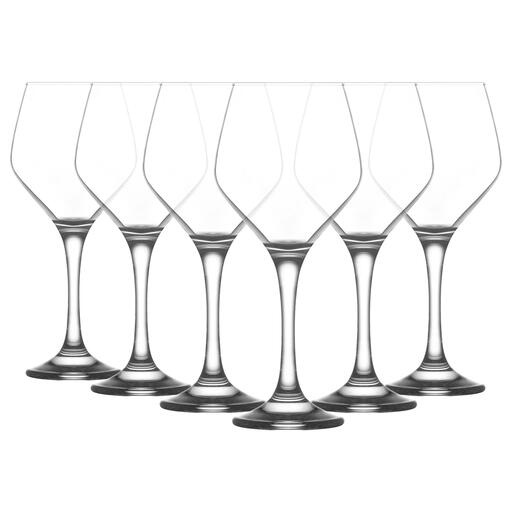
Why This Fits Their Persona: A six-piece set gives couples, families or hosts a practical starting collection for dinners and informal entertaining. The 440ml capacity is suitable for red wine and other drinks.
The stated capacity and dimensions make storage and serving expectations easier to judge before purchase, rather than relying only on photographs.
Six matching glasses; 440ml capacity; angular silhouette; listed two-year warranty.

Why This Fits Their Persona: These four white wine glasses suit shoppers upgrading everyday glassware for dinner parties, weddings or a more coordinated home dining setting.
The listing identifies lead-free crystal, dishwasher suitability and break-resistant construction, giving more useful detail than an unspecified “crystal” label.
450ml capacity; softly tapered design; lead-free crystal; listed dishwasher-safe construction.
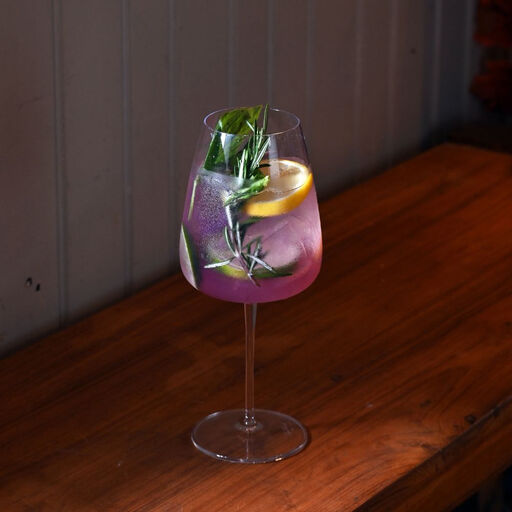
Why This Fits Their Persona: The generous bowl is designed for shoppers who regularly serve full-bodied red wines and want large wine glasses for swirling and entertaining.
Its 700ml capacity is stated clearly, so buyers can assess cupboard space and serving style before choosing an oversized bowl.
Four glasses; 700ml capacity; lead-free crystal; listed break-resistant and dishwasher-safe construction.
We have compiled a complete, real-time list of products that fully satisfy these strict selection criteria and UK safety regulations.
They can be, particularly for red wine, but check their height and width first. Large bowls may require more cupboard and dishwasher space. They are also not intended to be filled to capacity for a normal serving.
Lead-free glass is a clearly identified material choice for shoppers who wish to avoid lead-containing glass compositions. Check the product description for a specific material statement and follow the care instructions supplied with the glassware.
A wine glasses set of 4 is suitable for smaller households or occasional entertaining. A wine glasses set of 6 provides extra places for guests and a spare if one glass is being washed or damaged. Choose according to cupboard space, hosting habits and whether you want matching glasses across red, white and sparkling wines.