Reference-focused orchestral listeners
If you compare instrumental balance, reverberation and small differences between recordings, a balanced or flat-response-oriented presentation may matter more to you than added bass.


For comparing orchestral recordings, start with a secure fit and a model presented as balanced or flat-response-oriented if tonal differences are your main concern. Sennheiser and Etymotic position the IE 200 and ER2SE along those lines; Audio-Technica’s ATH-E70 offers a professional-monitor route, while Shure’s SE215 puts more emphasis on isolation and a secure fit. These descriptions do not establish which sound you will prefer, so check comfort, seal and playback-device compatibility before choosing.
If you compare instrumental balance, reverberation and small differences between recordings, a balanced or flat-response-oriented presentation may matter more to you than added bass.
If you replay passages or listen through complete movements, tip choice and a repeatable seal matter: changes in fit can affect perceived bass and isolation.
If you listen from a laptop, DAC or player, check the connection you need. A detachable cable may also be worth considering if cable replacement matters to you.
For recording-to-recording comparisons, consider tonal balance and repeatable fit before deciding how much isolation you need in a quiet room. Check the wired connection against your playback device before ordering.
| Concern | What to check | Who this matters to |
|---|---|---|
| Tonal balance | Look for the exact model’s stated tuning rather than inferring neutrality from its driver count. Sennheiser describes the IE 200 as balanced; Etymotic positions the ER2SE as flat-response-oriented. | If I am comparing strings, brass and hall ambience across recordings, I want the earphone’s own tonal character to be less of a distraction. Around 42% of consumers put this reference-focused need first. |
| Fit and seal | Check the supplied tip options and whether you can maintain a comfortable, consistent seal when replaying passages. | Long movements and repeated listening make an uncomfortable or changing fit hard to ignore. For around 33% of consumers, a repeatable, comfortable seal is the primary concern. |
| Isolation and connection | Assess how much passive isolation you need, then confirm the supplied plug works with your source or a compatible audio adapter. | If residual room noise distracts me, I need useful isolation without losing sight of how the IEM connects to my player. This practical need comes first for around 25% of consumers. |
Etymotic states 35–42 dB passive attenuation for the ER2SE, while Shure states up to 37 dB isolation for the SE215. Both figures depend on an effective seal; a poor fit can also change perceived bass.
Try the supplied tips for comfort and keep the same tip and insertion method when comparing recordings.
Shure describes the SE215 as having deep bass, while Sennheiser and Etymotic position the IE 200 and ER2SE around balanced and flat-response-oriented sound respectively. Those descriptions point to different buying priorities, not a proven winner.
If tonal comparison matters most, begin with the reference-oriented options. Choose an isolation-led model when its fit and practical features matter more to you.
The IE 200, SE215 and ATH-E70 have stated 3.5 mm connection paths. A source without a matching audio output needs a compatible connection solution.
Check the plug supplied with the exact variant and the audio output on your laptop, DAC or player.
A separate compatible DAC or audio adapter may be needed if your device has no matching headphone output.
Under the UK Consumer Contracts Regulations 2013, regulation 28, the cancellation exception for hygiene reasons applies to sealed goods unsuitable for return for health protection or hygiene reasons once unsealed. That condition does not establish whether a particular IEM qualifies.
Check the seller’s change-of-mind terms before breaking a seal, and keep the packaging and accessories. A fault or misdescription is a separate issue from changing your mind.
Sennheiser positions the wired IE 200 around diffuse-field equalisation, balanced sound and a compact fit.
Audio-Technica positions the ATH-E70 for professional monitoring and precise mix balancing.
Shure positions the wired SE215 around sound isolation, over-ear wear and a detachable MMCX cable.
Etymotic positions the wired ER2SE as a flat-response-oriented earphone for sound professionals and audiophiles.
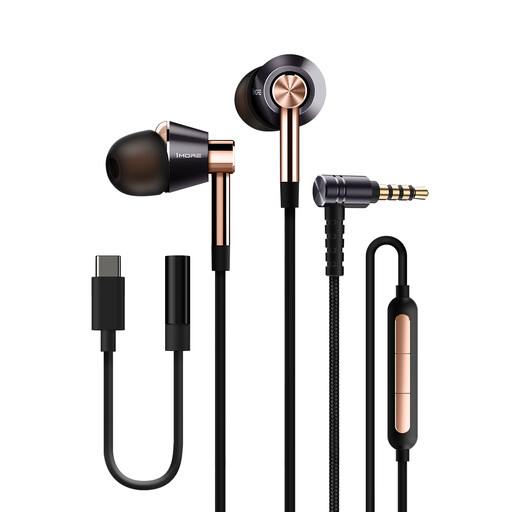
This wired in-ear option offers tip choices to consider for repeatable listening. Its deep-bass description makes checking its tonal suitability particularly important if you are comparing orchestral recordings.
 No image available
Consider this model if you want to try silicone and foam tips for a comfortable, repeatable seal while listening to recordings. Its title describes deep bass, so do not assume neutral tuning; check the exact connector against your playback device before ordering.
Not necessarily: a stable passive seal may be enough to reduce distractions in a quiet library. Shure and Etymotic state isolation or attenuation figures for the SE215 and ER2SE, but the result you experience depends on tip choice and fit.
Use the lowest comfortable volume and take breaks during extended listening. Royal Free London NHS Foundation Trust advises keeping headphone volume below 60% of maximum and taking at least a five-minute break each hour.
Only if the device has a compatible audio output for the cable supplied with that IEM. Sennheiser’s IE 200, Shure’s SE215 and Audio-Technica’s ATH-E70 have stated 3.5 mm connection paths; check your exact variant and device before ordering an adapter or DAC.
Do not assume that opening a sealed IEM leaves change-of-mind cancellation unaffected. Under the UK Consumer Contracts Regulations 2013, regulation 28, an exception applies to sealed goods unsuitable for return for health protection or hygiene reasons once unsealed; whether it applies to a particular item depends on those conditions. Check the seller’s terms before opening it, and treat a fault or misdescription separately from a change-of-mind return.