Presenters recording a commentary they cannot easily repeat
A teacher or curator making a one-take recording may value a straightforward wired connection or a wireless system that can keep its own recording if the receiver feed is interrupted.


Choose a wired lavalier for a presenter who stays near a compatible recorder or camera; choose a wireless system when movement around classroom displays matters more. For a commentary that would be difficult to repeat, consider a wireless system with on-board recording, while allowing time to check connections, batteries and interference in the room.
A teacher or curator making a one-take recording may value a straightforward wired connection or a wireless system that can keep its own recording if the receiver feed is interrupted.
Walking around the classroom makes a cable restrictive. A wireless transmitter gives the presenter more room to move, provided the complete setup works in the room and is ready for the length of the session.
Questions, discussions or names may be captured alongside the presenter. Department for Education guidance makes the school’s data-protection procedures and privacy information relevant to the recording workflow.
Decide whether the presenter needs to move beyond the reach of a cable, then check the entire path from microphone to recording device. Pickup pattern and backup recording matter for different reasons; neither fixes an incompatible connection.
Choose when: The presenter can stay near a recorder or camera with a compatible microphone input.
Trade-off: The cable limits movement, and a phone or tablet may need an appropriate adapter.
Choose when: The presenter must move between displays, or on-board recording would help protect a difficult-to-repeat take.
Trade-off: Charging, pairing, receiver compatibility and interference need attention before the session.
| Concern | What to check | Who this matters to |
|---|---|---|
| Recoverable recording | For a wireless system, check whether the transmitter records from the selected microphone input and how files are retrieved. Monitor the sound during the take. | If a commentary cannot easily be repeated, I want a recording I can retrieve even if the receiver feed fails; around 40% of consumers would put recoverable capture first. |
| Movement and connections | Match the lavalier connector, any required microphone power, the receiver output and the recording device’s input. Check adapters for phones and tablets. | When I move between objects and workstations, I need freedom from a cable without losing the connection to my recorder; roughly 30% of consumers would prioritise movement and compatibility. |
| Discreet speech pickup | Check the exact microphone’s pickup pattern and mounting accessories, then test its position on the presenter’s clothing. | I want the microphone to stay unobtrusive while I speak; if feedback is the problem, its orientation also matters. About 30% of consumers would make placement and pickup their primary concern. |
A plug that fits is not enough: TRS and TRRS connections, transmitter sockets and microphone-power requirements can differ.
Identify the recorder or transmitter input before choosing a microphone. RØDE says its Lavalier GO needs a TRS-to-TRRS adapter for a phone or tablet with a native 3.5 mm TRRS input.
An adapter, interface or different microphone may be needed to complete the connection.
Ofcom notes that licence-exempt frequencies are shared with other low-power equipment and can experience interference. A range figure cannot establish how a system will behave in the intended classroom.
Test the microphone, transmitter, receiver and recorder together in that room. Check charging and pairing before a one-take session, and use on-board recording if the selected system offers it.
Pickup pattern does not prevent clothing rub, interruptions or poor placement. Shure describes omnidirectional cartridges as more forgiving of several placement-related effects, while its cardioid option addresses situations needing more gain before feedback.
Secure the microphone and cable, then test the presenter’s voice and clothing movement. Consider cardioid when feedback is the actual problem and its position can be kept consistent.
Identifiable voices may be captured with the commentary. Department for Education guidance covers school data-protection procedures and privacy notices explaining the purpose, use, retention and sharing of personal data.
Before recording, follow the school’s approved process for privacy information, storage, access and retention.
Consider its lavaliers and wireless systems when deciding between a fixed wired setup and recording while moving.
Its WL18xM lavaliers are relevant when a compatible professional wireless bodypack and a particular pickup pattern are part of the plan.
Its compact omnidirectional lavaliers are relevant to recording setups built around compatible wireless bodypacks.
Its compact wireless systems are relevant when the presenter needs to move around the classroom.
These DJI wireless kits are options for a presenter who needs room to move. Check the connection to your recording device, the exact bundle contents and any backup-recording requirement before choosing one.
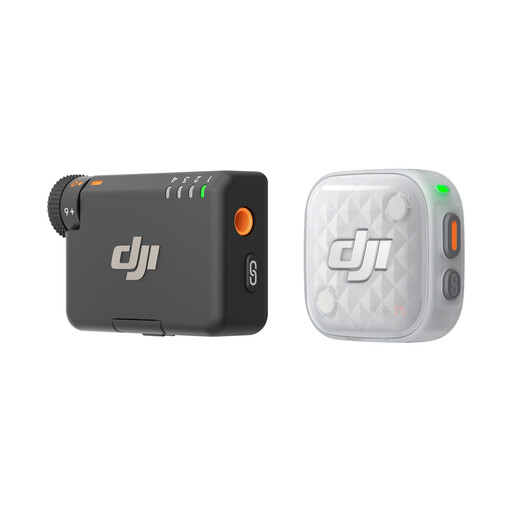 Image unavailable
For a moving presenter, check that the Mobile RX connects to your recording device. Confirm the included items before purchase, as the bundle descriptions differ from the title.
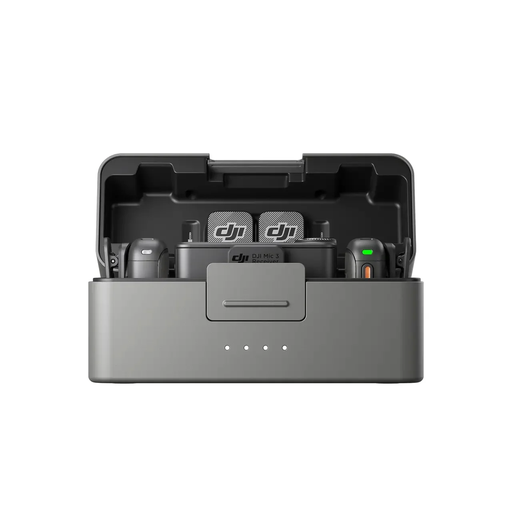 Image unavailable
For commentary recorded while moving, confirm that the included RX connects to your recorder. If you need lavalier-style mounting or a separate backup file, check how this exact kit provides each.
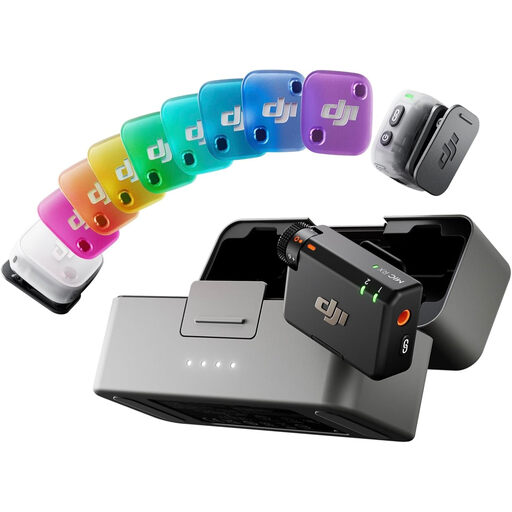 Image unavailable
For a mobile classroom setup, check how the RX connects to your chosen recording device. Confirm lavalier-style mounting and internal recording if either is essential to your commentary workflow.
Use wired when the presenter can stay close to a compatible recorder or camera; use wireless when movement between displays is important. For a take that cannot easily be repeated, check whether the wireless transmitter can make its own recording.
Not every 3.5 mm lavalier will connect directly. RØDE says its TRS Lavalier GO needs a TRS-to-TRRS adapter for a phone or tablet with a native 3.5 mm TRRS socket; check the appropriate audio connection for a USB-C or Lightning device.
Yes. Ofcom notes that licence-exempt frequencies are shared with other low-power equipment and can be subject to interference. Confirm the selected system’s applicable operating requirements and test the complete setup in the intended room.
Follow the school’s approved data-protection and recording procedures before capturing identifiable pupil voices. Department for Education guidance addresses school privacy notices, including how the purpose, use, retention and sharing of personal data are explained.
Not solely because the classroom is noisy. Shure describes omnidirectional lavaliers as more forgiving of several placement-related effects and points to its cardioid WL185 when more gain before feedback is needed. Test the microphone on the presenter’s clothing and choose for the problem the recording setup actually has.