
24/7 Customer Support

Free returns

Same-day & Next-day Delivery

Quality Guaranteed

Unlock Your Welcome Offers: FREE Delivery | Up to 80% OFF | Free 30-day JoyPlus trial
Download the APP
Wireless Bluetooth earbuds are convenient for commuting, travel, exercise and everyday listening. However, product listings can make similar-looking models appear very different, while important details are often buried in the specification panel.
Before choosing a pair, look beyond phrases such as “premium sound” or “all-day battery”. The useful questions are: how securely will they fit, how well should calls perform in real surroundings and what protection do they offer against rain and sweat?
A headline such as “48-hour battery life” usually combines the earbuds and their charging case. The buds themselves may provide considerably fewer hours per charge. Check whether the stated figure refers to:
Long-battery-life earbuds are useful for flights and multi-day trips, but a case with USB-C charging is equally important if you regularly travel with a laptop, tablet or phone charger.
Bluetooth 5.4 earbuds can offer modern connectivity and efficient power use, but the Bluetooth version alone does not determine audio performance. Driver size, codec support, tuning and the seal created by the ear tips also affect what you hear.
Similarly, “deep bass earbuds” may suit electronic music, hip-hop and films, but extra bass can make vocals or acoustic instruments sound less distinct. Consider your normal listening rather than relying on a single promotional description.
An IPX7 rating generally indicates protection during temporary immersion in controlled conditions, commonly up to 1 metre for up to 30 minutes. It does not mean that every part of the charging case is suitable for immersion, nor does it guarantee protection from salt water, soap or high-pressure water.
For gym sessions and light rain, IPX4 earbuds may be sufficient. For heavier exposure, a higher rating provides more protection, but the charging contacts should still be dried before the buds are returned to the case.
True wireless in-ear headphones normally create a seal inside the ear canal. This can improve passive noise isolation and bass response, provided the ear tips fit correctly. Look for several tip sizes and avoid forcing a bud into an uncomfortable position.
Clip-on designs sit around or near the ear rather than relying solely on an in-ear seal. They can feel more secure during walking or exercise and may reduce the plugged-up sensation associated with some in-ear models. The trade-off can be less isolation from nearby sound.
Earbuds with clear calls should have more than a general “noise reduction” label. A 4-microphone array can provide multiple microphones for voice pickup and environmental noise processing, but results still depend on wind, traffic and the phone or app being used.
Environmental noise cancellation, often shortened to ENC, is intended to make your voice easier for the other person to hear. It is separate from active noise cancellation, which reduces sound reaching you during playback. If calls are a priority for office meetings or outdoor commuting, check the microphone count and call-processing description.
USB-C wireless headphones are simple to recharge with common UK-compatible cables. Check whether the cable is supplied, how long a full charge takes and whether a short top-up provides useful playback.
Also consider controls, automatic reconnection, case size and whether the earbuds can be used independently. These small details often matter more than a minor difference in advertised driver size.
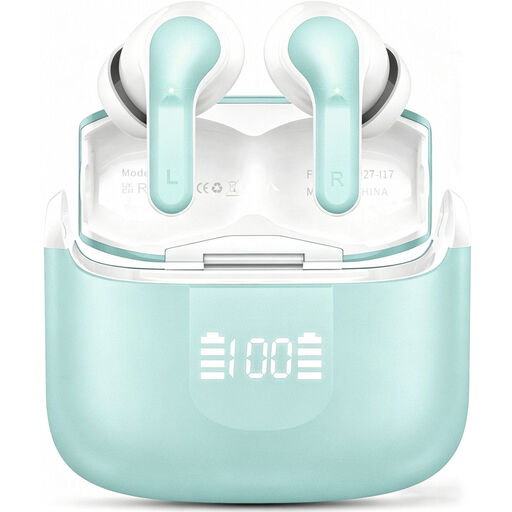
Why This Fits Their Persona: A practical choice for shoppers wanting everyday true wireless in-ear headphones with a feature-led specification at an accessible starting point.
The listing identifies Bluetooth 5.4, four ENC microphones, IPX7 protection, USB-C charging and a stated 48-hour combined battery figure rather than relying only on vague sound claims.
Hi-Fi stereo and deep-bass positioning, plus a USB-C port and IPX7 rating for varied daily use.
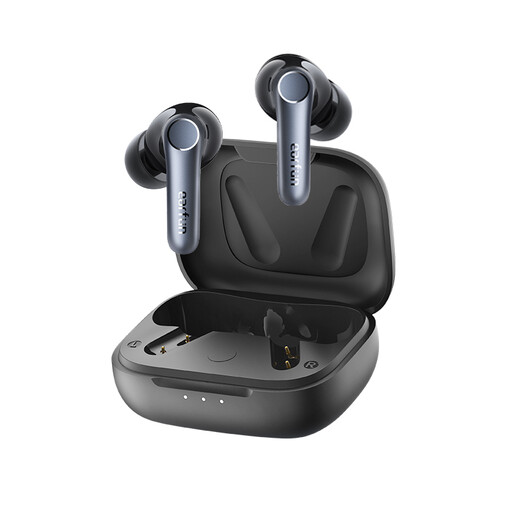
Why This Fits Their Persona: Suited to listeners who want advanced audio formats, adjustable features and stronger control over music, calls and device connectivity.
The specification separates adaptive ANC, microphone processing, codecs and battery information, helping you assess each feature rather than treating “premium” as a complete explanation.
Bluetooth 5.4, LDAC and aptX Lossless support, six microphones, multipoint connectivity and up to 52 hours with the case.
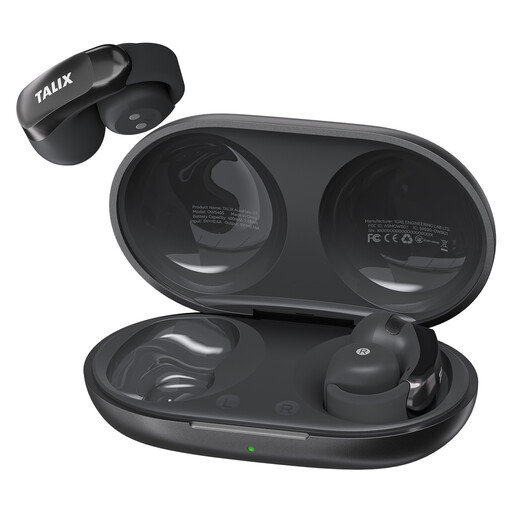
Why This Fits Their Persona: A suitable format for gym users, walkers and commuters who prioritise a secure clip-on fit and frequent hands-free calls.
The clip-on silicone earhook addresses movement-related slipping, while the IPX4 rating sets a clearer expectation for sweat and light rain instead of implying full waterproofing.
Each earbud is listed at 5.2g, with four microphones, Bluetooth 5.3, up to 28 hours with the case and fast charging.
Pair the earbuds close to your phone, then check that both sides show as connected. For clearer calls, position the microphones as intended and avoid covering them with hair, hats or clothing. In busy areas such as railway stations, occasional interference can occur because Bluetooth shares the 2.4GHz band with other wireless devices.
After exercise, wipe away sweat before placing the earbuds in their case. Keep charging contacts clean and never connect a USB-C cable while the port is wet. Avoid listening at high volume for extended periods and do not use earbuds while driving or cycling where awareness is required.
We have compiled a complete, real-time list of products that fully satisfy these strict selection criteria and UK safety regulations.
The useful life depends on battery ageing, charging habits, moisture exposure and physical wear. The advertised playback figure normally describes a new battery under stated conditions, not a guaranteed duration over several years. Keeping the case and charging contacts dry can help maintain reliable charging.
You should not assume so. IPX7 describes a specific water-ingress test and does not automatically cover prolonged swimming, salt water, cleaning chemicals or the charging case. Follow the product instructions and dry the earbuds fully before charging.
No. Four-microphone earbuds can provide additional voice and environmental sound data, but call clarity also depends on microphone placement, wind reduction, software processing, Bluetooth conditions and the other person’s network. Use the microphone count as one comparison point rather than a guarantee.