
24/7 Customer Support

Free returns

Same-day & Next-day Delivery

Quality Guaranteed

Unlock Your Welcome Offers: FREE Delivery | Up to 80% OFF | Free 30-day JoyPlus trial
Download the APP
Choosing wireless Bluetooth earbuds should be straightforward, but product listings often make similar promises using very different standards. A long battery figure may include the charging case, “noise reduction” may refer only to call microphones, and a high Bluetooth number does not automatically mean better sound.
This guide explains the specifications that matter, the common buying traps to avoid and which true wireless earbuds may suit different lifestyles in the UK.
Active noise cancellation (ANC) uses microphones and electronic processing to reduce surrounding sound, particularly steady low-frequency noise from trains, buses and aircraft. ENC microphone earbuds, by contrast, use microphone processing to make your voice clearer during calls. ENC does not necessarily make your listening environment quieter.
Some products provide both. Check whether the listing specifies ANC for playback and the number of microphones or call-processing system for conversations.
A headline such as “40-hour battery life” commonly combines the earbuds and charging case. The earbuds themselves may provide considerably less playback per charge, particularly with ANC enabled.
Before buying, check:
A quick top-up can be more useful than an impressive total figure if you commute, work away from a desk or regularly forget to charge your devices.
An IP rating describes protection under defined test conditions. IPX4 is intended for splashes, while IPX5 covers water jets from specified directions. IPX7 indicates protection against temporary immersion under stated conditions. These ratings do not automatically mean that earbuds are suitable for swimming, salt water, hot showers or prolonged submersion.
For running and gym use, sports earbuds with IPX4 or IPX5 protection may be appropriate. Always check the manufacturer’s care instructions, especially after sweating, and dry charging contacts before placing earbuds in their case.
A larger driver does not, by itself, guarantee better sound. Look for a combination of driver design, fit, equaliser controls and supported codecs. Hi-Res audio earbuds may support higher-resolution codecs such as LDAC or aptX Lossless, but the phone, music service and settings must also support the relevant format.
LDAC earbuds can offer higher data-rate wireless transmission on compatible devices. However, some phones require LDAC to be selected manually in Bluetooth or developer settings. For everyday listening, a secure seal and comfortable ear tips can have as much practical impact as codec support.
Bluetooth 5.3, Bluetooth 5.4 earbuds and Bluetooth 6.0 earbuds can offer improvements in power management, connection handling or latency, but the version number should not be treated as a complete performance rating.
For work and study, multipoint is useful because it allows compatible earbuds to switch between two devices, such as a laptop and phone. For gaming and video, look for a stated low-latency or game mode rather than relying solely on the Bluetooth version.
In-ear headphones usually create a passive seal that can improve bass and reduce some external sound. Semi-in-ear and clip-on designs may feel less enclosed and can suit people who dislike silicone tips. Earhooks and clip-on frames can provide extra stability during exercise.
For calls, look for several microphones and a clearly described voice-processing system. A microphone count is not a guarantee of perfect performance, but it gives more useful information than a vague phrase such as “clear calls”.
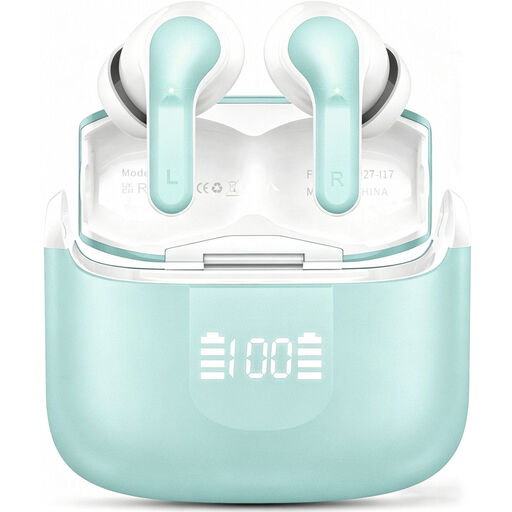
Why This Fits Their Persona: A straightforward option for commuting, study and everyday music, with USB-C charging and a stated 48-hour combined battery figure.
The listing separates four ENC microphones from waterproofing and battery details, making the intended call and daily-use features easier to assess.
Bluetooth 5.4, USB-C charging, IPX7 rating and stated Hi-Fi stereo playback.
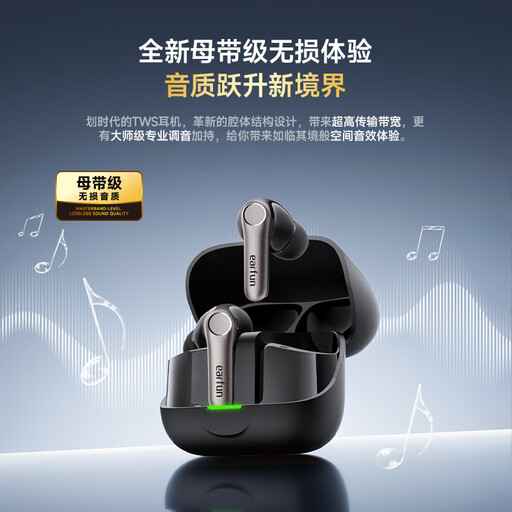
Why This Fits Their Persona: Suited to listeners who want detailed music playback, adjustable noise control and features for commuting, travel and video calls.
It distinguishes adaptive ANC for listening from six-microphone ENC and AI call processing, rather than presenting all noise reduction as one function.
Dual-driver design, LDAC and aptX Lossless support, Bluetooth 6.0, multipoint and up to 54 hours with the case.
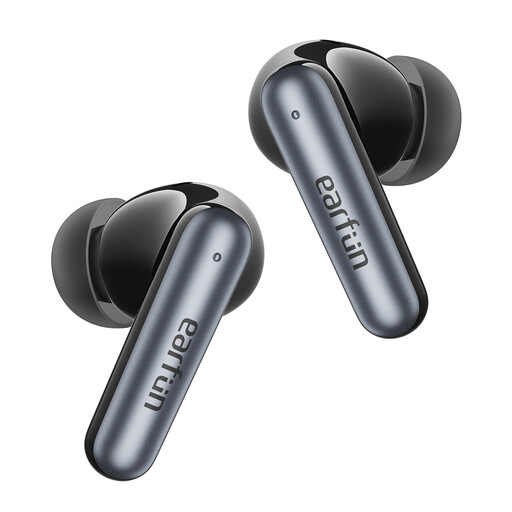
Why This Fits Their Persona: A practical match for gym sessions, regular commuting and hybrid work where ANC, call clarity and durability all matter.
Its IP55 rating is described for dust, sweat and water exposure, while the stated 50dB ANC and six-microphone call system are listed separately.
11mm drivers, LDAC support, Bluetooth 6.0, USB-C charging, wireless charging and up to 40 hours with the case.
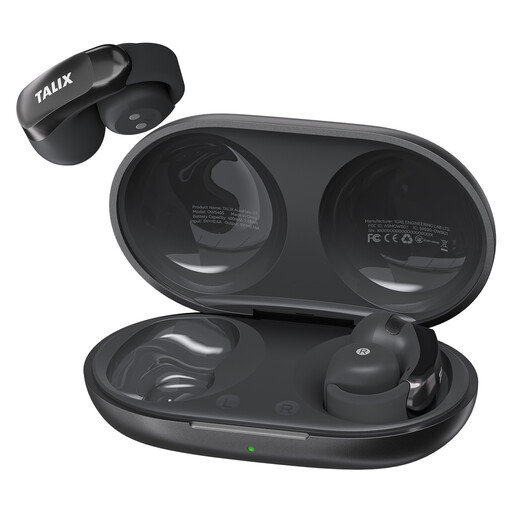
Why This Fits Their Persona: The clip-on and silicone earhook design suits users who prefer a less enclosed fit for walking, office work and fitness sessions.
The IPX4 rating sets a sensible expectation for sweat and light rain rather than implying suitability for immersion or swimming.
5.2g earbuds, four-microphone call processing, Bluetooth 5.3 and up to 28 hours with the case.
We have compiled a complete, real-time list of products that fully satisfy these strict selection criteria and UK safety regulations.
They can be, provided the microphone system is suitable for your environment. Look for multiple microphones and stated ENC or AI call processing. In busy streets, cafés and stations, performance can still vary with wind, traffic and network quality.
Battery capacity gradually decreases with charge cycles, and overall service life depends on charging habits, moisture exposure and physical wear. Choosing a case with fast charging, keeping contacts clean and avoiding extreme heat can help maintain usability.
Usually, ANC changes power consumption because microphones and processing remain active. Compare the quoted playback figures with ANC on and off where the manufacturer provides both. If you need continuous listening throughout a working day, prioritise comfortable fit, fast charging and the combined case capacity rather than one headline number.