
24/7 Customer Support

Free returns

Same-day & Next-day Delivery

Quality Guaranteed

Unlock Your Welcome Offers: FREE Delivery | Up to 80% OFF | Free 30-day JoyPlus trial
Download the APP
As a Joybuy Product Recommendation Officer, my role is to help you navigate the crowded market of tech accessories. A wireless charger promises a future free from tangled cables, but the reality for many UK buyers is often disappointing. A cluttered nightstand is replaced by the frustration of a phone that hasn't charged overnight or a charger that seems to slow down after a few weeks.
Before you make a purchase, it is important to be aware of a few common pitfalls that lead to wasted money and inconvenience.
To ensure you get a reliable and efficient wireless charger, focus on these core technical details rather than just marketing claims.
The technology that powers your charger is the most important factor.
A charger's power rating can be misleading if you don't consider the whole system. To achieve a 15W fast charge, the charger itself must be paired with a capable power adapter—typically a 20W or higher USB-C Power Delivery (PD) wall plug, which is often sold separately.
For a 3 in 1 charging station or a multi device wireless charger, check the total power output as well as the output for each individual charging spot. A charger might claim a high total wattage, but if it can only deliver 5W to the phone pad while the watch and earbuds are also charging, you will not get the fast charge you expect.
Finally, consider where and how you will use the charger.
Instead of providing a simple list, we have matched a few standout products to specific user needs. This helps you find a solution that genuinely fits your daily routine.
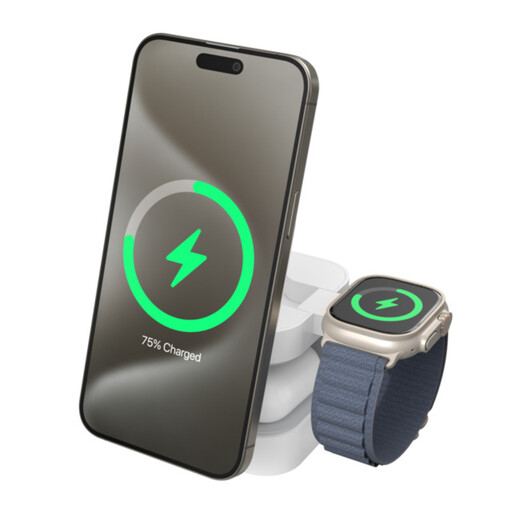
Why This Fits Their Persona: This is the ideal Apple charging station for anyone with an iPhone, Apple Watch and AirPods. It consolidates three messy cables into one sleek, organised stand for a desk or nightstand.
It uses the official Qi2 standard, guaranteeing a reliable 15W magnetic charge for your phone and a secure connection that won't fail overnight. It avoids the slow-charging and weak-magnet pitfalls of non-certified chargers.
Simultaneously charges three devices with optimised power. The stand is also foldable and features an adjustable viewing angle for added versatility.
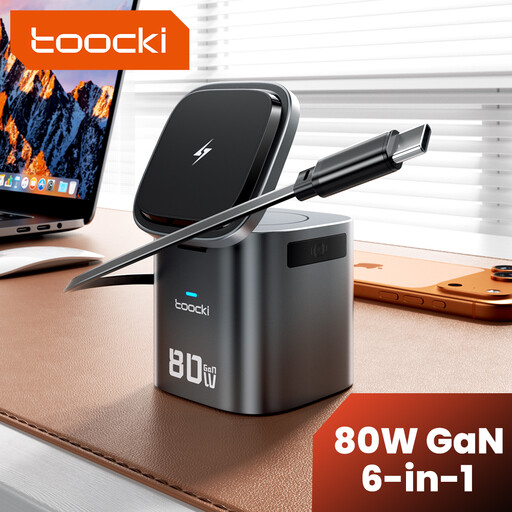
Why This Fits Their Persona: This foldable travel charger is designed for life on the move. Its incredibly compact, lightweight design folds down to a small square, easily fitting into a carry-on or backpack without adding bulk.
The strong magnetic connection ensures your devices snap into place and remain secure, even on an unsteady hotel nightstand or train table. It replaces three separate chargers and cables, solving travel clutter.
Powers an iPhone, Apple Watch and AirPods from a single plug. Its primary benefit is its extreme portability and space-saving design, making it a must-have for any tech-savvy traveller.
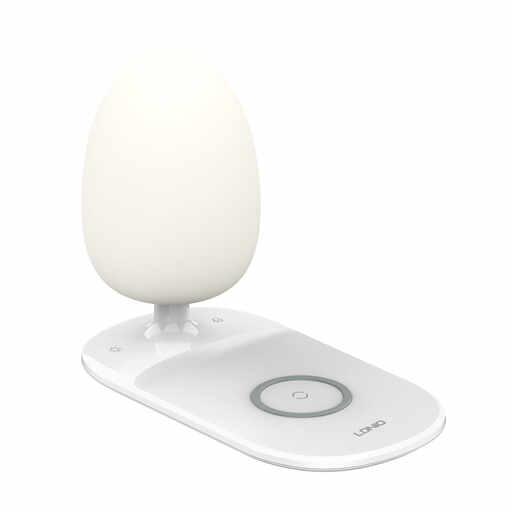
Why This Fits Their Persona: This user values a clean, functional and uncluttered workspace. This clever product combines two essential desk items—a task lamp and a phone charger—into one elegant unit, saving valuable surface area.
By focusing on doing one charging job well, it provides a stable, flat 15W charging pad without the power-splitting complexities of multi-device stations. It offers a simple, reliable charge every time.
Its dual-function design is its greatest strength. You get a flexible, eye-caring LED lamp with adjustable brightness and a powerful 15W wireless charger integrated seamlessly into the base.
We have compiled a complete, real-time list of products that fully satisfy these strict selection criteria and UK safety regulations.
Yes, provided you use a charger that is certified to a recognised standard (Qi, MagSafe or Qi2). These chargers include safety mechanisms like temperature control, which automatically slows down charging if the device gets too warm. This protects your phone's battery from heat-related damage, which is a risk with cheap, uncertified models.
In most cases, yes. To get the maximum advertised speed (e.g., 15W), you will likely need a USB-C power adapter with a sufficient output, typically 20W or more. Many wireless chargers do not include this adapter in the box, so it is an important factor to check before you buy to avoid being disappointed by slow charging speeds.
For standard non-magnetic chargers, it will generally work with thin, non-metal cases (usually under 3mm thick). However, for a MagSafe charger or Qi2 charger, it is highly recommended to use a MagSafe-compatible case. These cases have magnets built in, which ensures a strong, secure lock for the most reliable and efficient charging experience. Thick cases or those with metal plates or card holders will prevent wireless charging from working.