
24/7 Customer Support

Free returns

Same-day & Next-day Delivery

Quality Guaranteed

Unlock Your Welcome Offers: FREE Delivery | Up to 80% OFF | Free 30-day JoyPlus trial
Download the APP
Wireless earbuds can make commuting, work calls, study sessions and exercise more convenient. However, product listings often focus on attention-grabbing features while leaving out details that affect everyday usability. A low price can also become less attractive if the earbuds are uncomfortable, difficult to pair or need charging several times a day.
This guide explains the practical specifications to check before buying Bluetooth earbuds, true wireless earbuds or a wireless gaming headset in the UK.
A charging case can extend listening time, but the headline figure may refer to the combined capacity of the earbuds and case. Single-charge playback is more relevant if you are travelling, working or studying away from a socket.
Check both figures:
Volume, call use, active noise cancellation and wireless signal strength can all affect real-world battery performance. Treat published figures as guidance rather than a guarantee for every listening pattern.
Water resistance varies considerably. An IPX5 rating generally indicates protection against water jets, making it more relevant to sweat and light rain than submersion. An IP55 rating adds a dust-protection classification, but it still does not make earbuds suitable for swimming.
If a product only says “waterproof” without a clear IP rating, check the detailed listing before using it outdoors. Moisture protection also does not necessarily cover the charging case.
Noise-cancelling earbuds use microphones and processing to reduce certain external sounds. ANC earbuds tend to be more useful against consistent low-frequency noise, such as train or aircraft engines, than sudden voices or nearby conversations. Passive sealing from the ear tips also affects the result.
For calls, look separately for microphone information. Environmental noise cancellation, microphone count and microphone placement can influence how your voice is picked up, but no specification guarantees perfect clarity in every busy setting.
Bluetooth 5.3, 5.4 and 6.0 appear across current products. A newer version may support improvements in efficiency or connection handling, but compatibility depends on both the earbuds and your phone, tablet, laptop or console.
Check whether the earbuds support:
In-ear models create a seal that can help with bass and passive noise reduction, but the fit is personal. Look for multiple ear-tip sizes where available. Semi-in-ear and open-ear clip-on earbuds do not seal the ear canal in the same way.
Open-ear clip-on earbuds can help users remain aware of nearby traffic, announcements or colleagues. They may be more comfortable for some people during walking or office use, although sound can be less isolated in noisy surroundings.
Over-ear wireless gaming headsets are generally larger than earbuds but can offer a more stable fit, larger drivers and a boom microphone. Check the weight, headband design and console compatibility before buying.
Touch controls are convenient but can register accidental taps when adjusting the fit. Physical buttons may be preferable if you often wear gloves or use the earbuds during exercise.
For calls, review whether each earbud has a built-in microphone and whether the product supports hands-free calling. If you need translation functions, remember that “AI translation earbuds” may rely on a compatible app and an internet connection rather than translating independently.
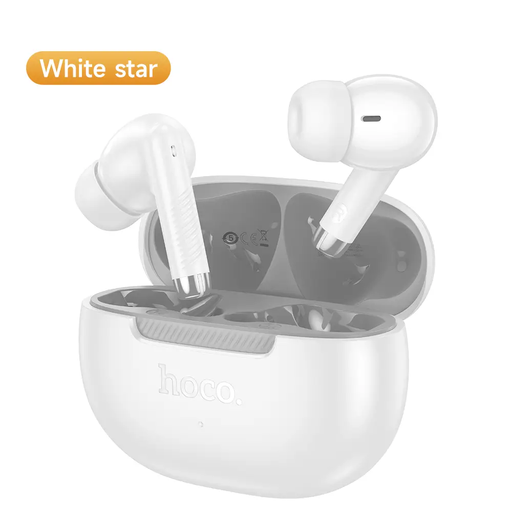
Why This Fits Their Persona: A straightforward option for everyday listening, commuting and hands-free calls without adding a large headset to a work bag.
The listing specifies Bluetooth 5.4, a built-in microphone and up to 7 hours of continuous playback, rather than only quoting case capacity.
Bluetooth 5.4; ergonomic in-ear design; compact charging case; total weight listed as 46.5g.
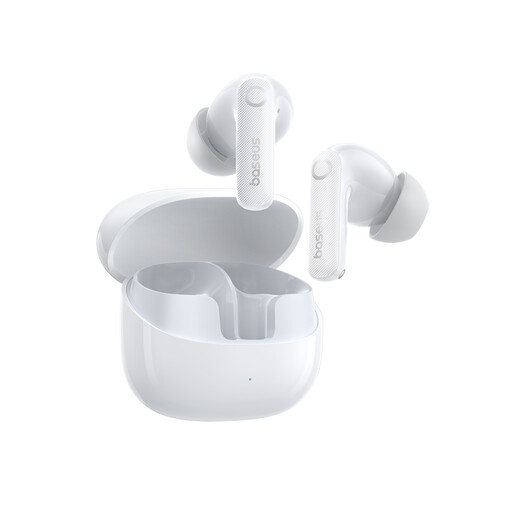
Why This Fits Their Persona: Suits listeners who want adjustable audio features, extended battery capacity and a specification-led in-ear design for regular travel or work.
The listing separates approximately 11 hours of earbud use at 50% volume from the stated case-supported total, helping set clearer expectations.
Bluetooth 5.4; SBC, AAC and LDAC support; adaptive hybrid ANC; six-microphone calling; IP55 splash protection.
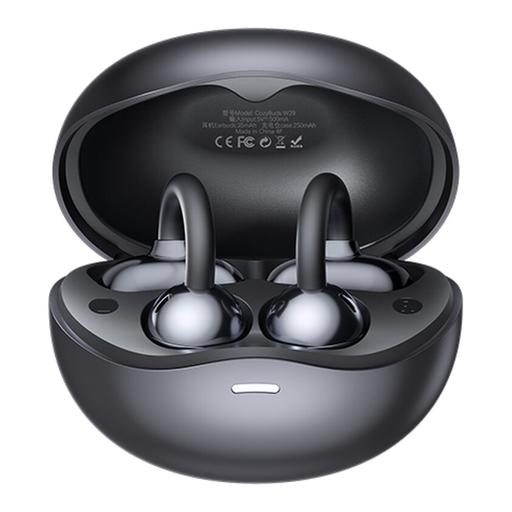
Why This Fits Their Persona: The open-ear clip-on format is designed for walking, commuting and exercise when awareness of surrounding sounds is important.
The clip-on structure avoids relying on a deep in-ear seal, while the open design makes the intended outdoor use clear.
Bluetooth 5.4; up to 6.5 hours per charge; touch controls; listed call-noise matching feature.
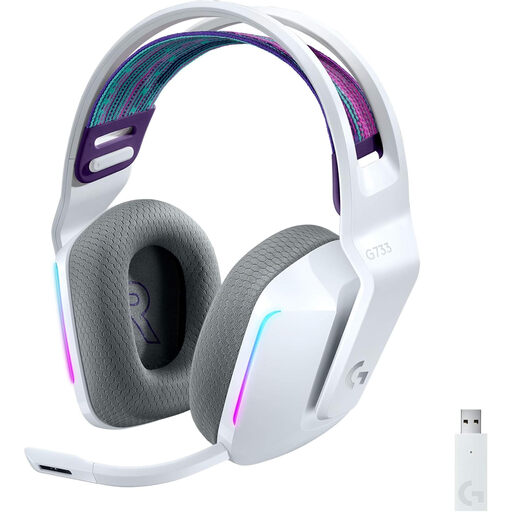
Why This Fits Their Persona: A full-size option for PC, PlayStation and docked Nintendo Switch users who prioritise a boom microphone, longer sessions and low-latency wireless audio.
The stated battery figures distinguish up to 29 hours without lighting from up to 20 hours with standard lighting, while compatibility details identify the required USB receiver.
LIGHTSPEED wireless range up to 20m; 278g weight; detachable microphone; USB-C charging; listed PlayStation and Switch compatibility.
We have compiled a complete, real-time list of products that fully satisfy these strict selection criteria and UK safety regulations.
Charge the earbuds, open the charging case and place them into pairing mode. On an iPhone or Android phone, open Bluetooth settings and select the product name. If the earbuds have previously connected to another device, disconnect them there or reset the pairing process according to the supplied instructions.
Battery capacity gradually reduces with charging cycles, while physical wear depends on storage, moisture and cleaning. Keeping the charging case away from excessive heat, cleaning the contact points and avoiding high humidity can help maintain reliable operation. Check the retailer’s warranty and returns information before purchase.
They can be useful for train journeys, flights, shared offices and other environments with consistent background noise. They may add cost and can reduce battery life when active. If you mainly listen in quiet rooms, comfortable fit and dependable call performance may be more useful priorities.