
24/7 Customer Support

Free returns

Same-day & Next-day Delivery

Quality Guaranteed

Unlock Your Welcome Offers: FREE Delivery | Up to 80% OFF | Free 30-day JoyPlus trial
Download the APP
Wireless earbuds can make commuting, office calls, studying and exercise more convenient, but product listings often make comparison difficult. Battery figures may refer to the charging case rather than the earbuds, “waterproof” may only mean resistance to sweat, and noise cancellation can vary significantly between models.
Before buying Bluetooth earbuds, check the following common pitfalls.
A listing advertising 40 or 55 hours usually combines the earbuds with their charging case. The more useful figure is single-charge listening time. If you regularly travel, work away from sockets or attend long online meetings, compare both figures.
Also check charging time and the port used. USB-C charging is practical because the same cable may already power your phone, tablet or laptop.
ANC earbuds use microphones and processing to reduce external sound, but performance depends on the ear-tip seal, fit and surrounding noise. Active noise cancellation may be useful on trains or aircraft, while call noise reduction is a separate feature designed to make your voice clearer to another person.
Do not assume that “ENC”, “AI call noise reduction” and “ANC” perform the same task. Look for a clear description of whether the feature is for listening, calls or both.
Ingress ratings have specific limits. For example, IPX4 generally indicates resistance to splashes, while IPX5-rated products are designed to resist water jets under defined test conditions. These ratings do not automatically make earbuds suitable for immersion, showers or swimming.
For running or gym use, check the stated IP rating and keep the charging case dry. A secure fit is equally important: earbuds that loosen during movement may be more frustrating than a model with a shorter battery rating.
Traditional in-ear headphones use silicone tips to create a seal, which can support bass response and passive noise reduction. They are often suitable for commuting, study and travel, but ear shape varies. Check whether several tip sizes are included.
Clip-on and open-ear earbuds sit around or outside the ear canal. They can feel less intrusive and help you remain aware of nearby sounds, which may suit walking or outdoor exercise. However, open designs may allow more ambient noise into your music and can provide less isolation on public transport.
If you need earbuds with a microphone for work or online meetings, check the number and type of microphones, but do not treat a microphone count as a guarantee of call quality. Position, wind and background noise also matter.
Features such as call noise reduction, ENC or AI-assisted call processing are intended to reduce unwanted sound around your voice. Test the fit and microphone position soon after delivery, particularly if calls are a major reason for buying.
Bluetooth 5.3 and Bluetooth 5.4 are current connectivity versions listed across many affordable models. They can support stable pairing and efficient operation, but your phone and software also affect the experience.
Look for:
Translation earbuds usually rely on a compatible app and an internet-connected phone, so confirm the supported languages and software before purchase. This feature should be treated as a convenience rather than a substitute for professional interpreting.
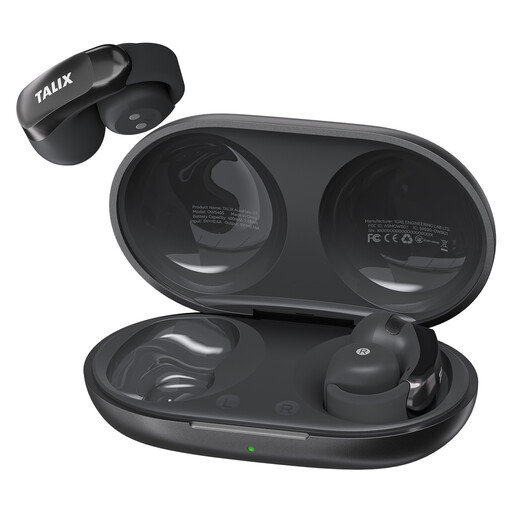
Why This Fits Their Persona: The clip-on shape suits shoppers who want an affordable everyday pair for commuting, office calls, exercise and casual listening without a conventional in-ear seal.
The listing separates seven hours of playback from the 28-hour case-assisted figure and states an IPX4 rating rather than suggesting immersion protection.
Each earbud weighs 5.2g; Bluetooth 5.3, four microphones, fast charging and a silicone earhook are specified.
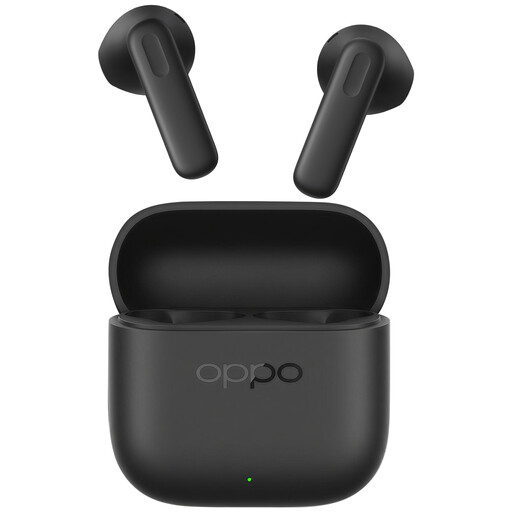
Why This Fits Their Persona: A sensible choice for listeners prioritising a familiar in-ear format, USB-C charging and straightforward controls for music, calls and video.
Its specifications identify the 3.7V lithium battery, USB-C input and 45mAh earbud capacity, making the charging arrangement easier to assess.
Bluetooth 5.4, a dynamic driver, touch controls and a compact USB-C charging case are listed.
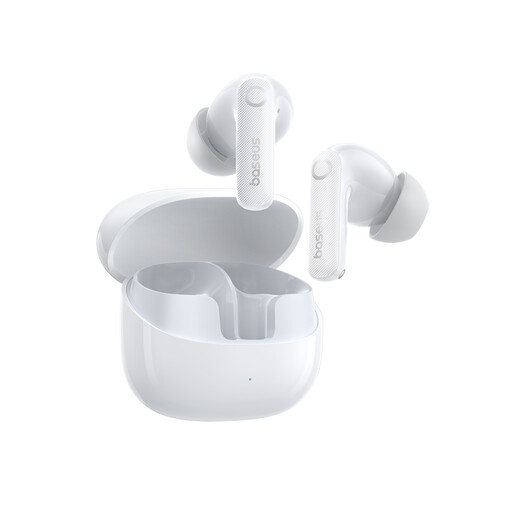
Why This Fits Their Persona: Designed for frequent commuters, travellers and people who want extended listening with active noise cancellation and a defined call feature.
The product information gives separate figures of approximately 11 hours at 50% volume per charge and 55 hours with the case, while identifying IP55 as splash protection only.
Adaptive hybrid ANC is specified at up to -50dB; Bluetooth 5.4, LDAC, AAC, USB-C and six microphones are included in the listed features.
We have compiled a complete, real-time list of products that fully satisfy these strict selection criteria and UK safety regulations.
Charge the earbuds and case, open the case, then select the model name in your phone’s Bluetooth settings. If pairing fails, remove the earbuds from the phone’s saved Bluetooth list, place them back in the case and repeat the process. Keep the phone within the stated communication range during setup.
Battery capacity gradually reduces with repeated charging. Actual lifespan depends on charging habits, volume, heat, moisture and physical handling. Store earbuds in their case, keep charging contacts clean and avoid leaving lithium-battery products in hot cars or direct sunlight.
Many models include built-in microphones, but call results vary with fit, microphone placement, wind and software processing. For regular meetings, choose earbuds with clearly stated call noise reduction, check device compatibility and test them in a quiet room before relying on them for important conversations. Keep listening volume moderate and take breaks during long sessions.