
24/7 Customer Support

Free returns

Same-day & Next-day Delivery

Quality Guaranteed

Unlock Your Welcome Offers: FREE Delivery | Up to 80% OFF | Free 30-day JoyPlus trial
Download the APP
Choosing wireless headphones and earbuds involves more than comparing prices or counting advertised features. The right option depends on how you listen, where you use it and whether the specifications match your devices.
A commuter may prioritise compact wireless earbuds and reliable call quality, while a remote worker may need comfortable headphones with microphone. Gamers often need low latency, whereas students may value long battery life and easy USB-C charging.
Battery figures may refer to total listening time with a charging case, rather than the runtime of the earbuds themselves. Other variables, including volume, active noise cancellation and call use, can reduce actual playback time.
Check whether the manufacturer states:
Active noise cancellation (ANC) uses microphones and electronic processing to reduce certain external sounds. It can be useful on trains or aeroplanes, but performance varies with fit and the type of noise. Passive isolation from well-fitted ear cushions or ear tips is a separate feature.
Products described as having call noise reduction or ENC microphones may improve voice pickup, but this does not necessarily mean they provide music-listening ANC.
Bluetooth 5.3, 5.4 or later can support improvements in connectivity and power management, but the version alone does not determine audio quality. Codec support, driver design, tuning and the phone or laptop being used also matter.
For a straightforward setup, confirm that the headphones support the Bluetooth profiles required by your device. If you use a desktop computer, games console or older tablet, check whether a USB adaptor or 3.5 mm connection is needed.
Look for an adjustable headband, suitably padded contact points and a secure fit. For exercise, check the stated water-resistance rating rather than assuming that every pair of sports earbuds is suitable for heavy rain.
For work meetings, online learning and phone calls, check whether the product has:
A boom mic positioned near the mouth may offer a more predictable setup than small microphones placed on true wireless earbuds, but convenience and portability are usually lower.
USB-C headphones and charging cases are convenient because many UK households already use USB-C cables. However, a USB-C socket does not automatically mean that the headphones support USB audio; it may only be used for charging.
For wired models, a detachable 3.5 mm cable can make replacement easier. Check impedance and device compatibility if you plan to use headphones with a laptop, phone adaptor or gaming controller.
Look for clearly stated standards such as UKCA, CE or RoHS where supplied. These relate to regulatory compliance and materials requirements; they do not guarantee a particular sound signature or level of comfort. An IP rating describes resistance to dust or water under specified conditions, not complete protection in every situation.
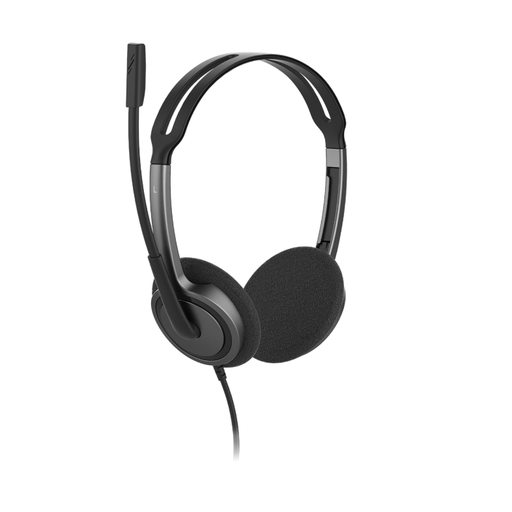
Why This Fits Their Persona: A practical choice for home working, schoolwork and everyday calls where a simple wired connection is preferred.
It does not depend on Bluetooth pairing or battery charging, and its 3.5 mm plug supports plug-and-play use.
72.5 g listed weight, adjustable headband, 270° rotating noise-cancelling microphone and 1.8 m cable.
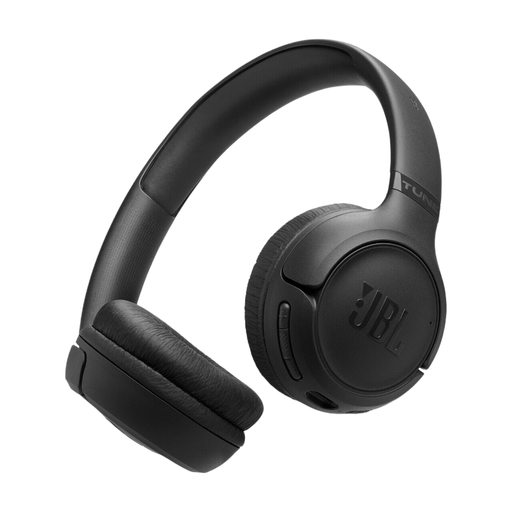
Why This Fits Their Persona: Suits listeners who want foldable Bluetooth headphones for music, podcasts and calls without moving to a larger over-ear design.
The listing states a rechargeable battery, USB-C charging, foldable construction and a defined quick-charge function.
33 mm drivers, multipoint connection and a listed maximum playtime of up to 76 hours.
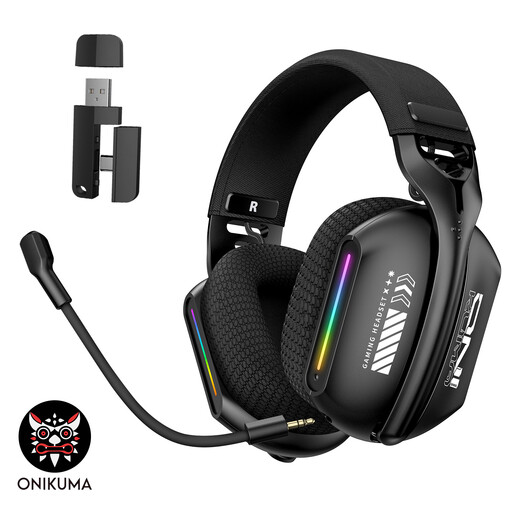
Why This Fits Their Persona: Designed for PC and laptop gamers who need flexible connection options for gaming, music and voice chat.
It offers Bluetooth 5.3, 2.4 GHz wireless and wired modes, reducing dependence on one connection method.
The headset includes a flexible 360° microphone, memory-foam cushions and Type-C charging.

Why This Fits Their Persona: The open-ear format can suit walking, commuting and workouts where awareness of surrounding sound is useful.
Its open-ear construction avoids the assumption that every active listener needs sealed in-ear earphones.
Bluetooth 5.4, multipoint connection, adjustable ear hooks, IP55 rating and up to 40 hours with the case.
We have compiled a complete, real-time list of products that fully satisfy these strict selection criteria and UK safety regulations.
Yes, provided the headphones support the relevant Bluetooth calling profile and your device selects the correct microphone input. For regular meetings, choose a model with a clearly positioned microphone, call controls or stated ENC support. Test microphone permissions in Windows, macOS, Android or iOS before an important call.
Service life depends on battery ageing, physical wear, charging habits and build quality. Ear pads, cables and charging ports are common wear points. A wired headset avoids battery replacement concerns, while wireless models with a case or USB-C charging can be more convenient for daily use. Keep the device dry, avoid extreme heat and follow the supplied charging instructions.
Wireless earbuds require electricity for regular charging, although the cost is generally modest. The more important long-term consideration is battery condition and whether the charging case remains available. Wired headphones with microphone do not need charging, but some phones and laptops may require a compatible adaptor. Always compare the complete setup rather than the headset price alone.