
24/7 Customer Support

Free returns

Same-day & Next-day Delivery

Quality Guaranteed

Unlock Your Welcome Offers: FREE Delivery | Up to 80% OFF | Free 30-day JoyPlus trial
Download the APP
A wireless lavalier microphone can make speech clearer and filming more flexible, but choosing the wrong system often leads to frustrating compatibility problems, short recording sessions or disappointing outdoor audio. This guide focuses on the practical details that matter to UK content creators, vloggers, online teachers, interviewers and live streamers.
A receiver with a USB-C connector is suitable for many modern Android phones, tablets, laptops and newer iPhones. However, device ports differ. A USB-C wireless microphone may not connect directly to an older iPhone with a Lightning port, and some cameras require a different receiver connection altogether.
Before ordering, check:
“Wireless microphone for iPhone and Android” does not automatically mean universal compatibility. Confirm the exact connector and supported devices listed for the model.
A stated range such as 100 metres generally refers to open-space use with a clear line of sight. Walls, people, metal structures, Wi-Fi equipment and other sources of electromagnetic interference can reduce the working distance.
For most UK indoor interviews, classrooms and home studios, stable connection at a shorter distance is more relevant than a large headline figure. Outdoor vloggers and filmmakers should still keep the transmitter and receiver within a sensible line of sight wherever possible.
A noise-cancelling microphone can reduce certain background sounds, but it cannot remove every train, traffic or wind noise problem. Strong processing may also alter the natural character of speech. A clip-on microphone works more consistently when positioned near the upper chest, secured to prevent clothing rub and protected from direct wind.
Look for a supplied windscreen or furry wind protection if you regularly film outdoors. Also check whether noise reduction can be adjusted or switched off for quieter indoor recordings.
For mobile content, a USB-C wireless microphone is a practical option for compatible phones, tablets and computers. Some systems use a plug-in receiver, while others offer direct Bluetooth connection. A receiver-based system can be useful when you want the transmitter and phone to connect automatically without relying on a phone’s Bluetooth settings.
If you record with a dedicated camera, verify that the package includes a suitable camera receiver or audio output. A product marketed mainly as a wireless lapel microphone for phones may not connect directly to a camera.
Check both the transmitter’s individual operating time and the total figure supplied by the charging case. A rechargeable wireless microphone may quote a combined case figure that is considerably longer than one uninterrupted transmitter session.
For short social clips, several hours may be sufficient. For a full-day event, online teaching or live streaming, consider:
The hohem system listed below provides up to 7.5 hours per transmitter and up to 20 hours with its charging case. DJI Mic Mini 2 listings specify up to 48 hours with the case, subject to usage conditions.
A dual wireless microphone kit is useful for interviews, two-person podcasts and street content. It can also provide flexibility when one person is speaking on camera and another is monitoring or presenting.
A single transmitter is usually simpler and more compact for solo vlogging, voiceovers and online lessons. Avoid paying for two transmitters if your regular format only involves one speaker.
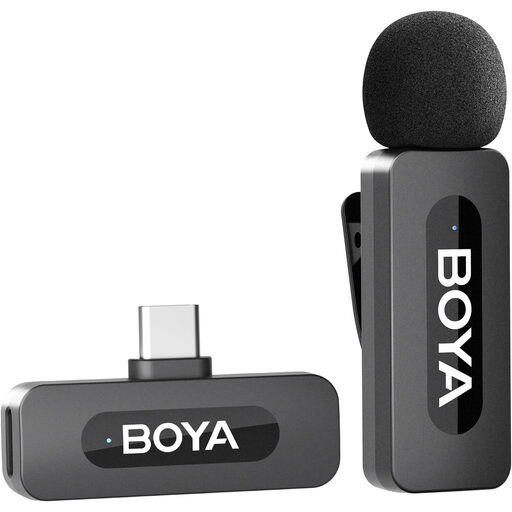
Why This Fits Their Persona: A straightforward single-transmitter and receiver set for solo creators using compatible USB-C phones, including suitable Android devices and newer iPhone models.
The USB-C format makes the connection requirement clear, while one-click noise cancellation avoids the need to manage complicated settings for basic mobile recording.
Single-transmitter design; stated 9-hour battery life; USB-C connection for compatible devices.
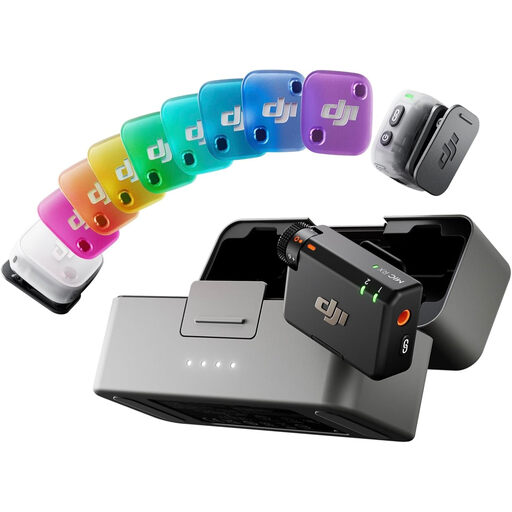
Why This Fits Their Persona: Suitable for creators who want two transmitters, voice tone presets and a compact system for interviews, podcasts, vlogs and extended filming days.
Its specified two-level noise cancelling and auto limiting are clearer selection criteria than relying on a vague promise of studio-quality audio.
Two transmitters; three voice tone presets; stated up to 48 hours with the charging case; direct Bluetooth connection to compatible phones.
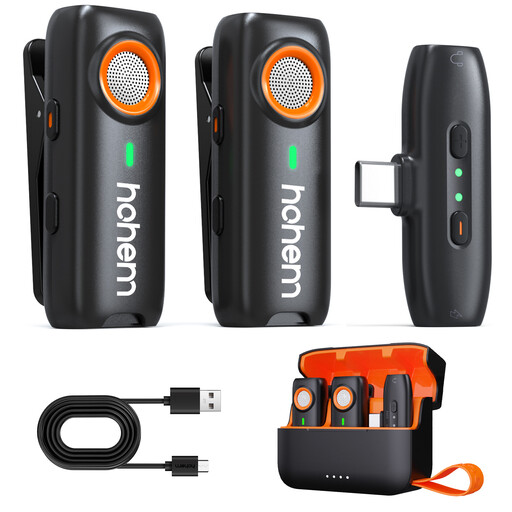
Why This Fits Their Persona: Designed for longer shoots, outdoor interviews, online teaching and creators who want local backup recording as well as wireless transmission.
The range is explicitly specified for open spaces, while three DSP noise-reduction modes let users select processing rather than accept a single fixed setting.
Up to 100 metres in open spaces; up to 20 hours with case; TF card backup recording; remote shutter function.
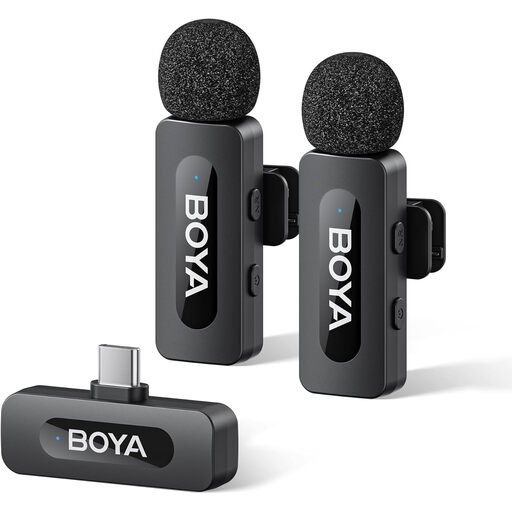
Why This Fits Their Persona: A two-transmitter USB-C kit for interviews, paired presentations, podcasts and live content involving two speakers.
The two-transmitter configuration is stated in the product format, helping prevent the common mistake of ordering a single-mic bundle for a two-person recording.
Two transmitters and one receiver; USB-C format; one-click noise cancellation; charging case included.
We have compiled a complete, real-time list of products that fully satisfy these strict selection criteria and UK safety regulations.
It can be, provided the connector and operating system are compatible. USB-C models suit compatible USB-C phones, while some systems also support direct Bluetooth connections. Check the exact phone model before purchase, particularly if your iPhone uses a different port.
Battery life varies by model, recording mode and transmission conditions. The listed products range from approximately 9 hours for a single BOYA transmitter to a stated 48 hours with the DJI charging case. Treat case figures as total system usage rather than one uninterrupted recording session.
No. Noise cancellation can reduce some ambient sound, but placement, wind protection and recording location remain important. For outdoor filming, use a windscreen, keep the microphone close to the speaker and monitor a short test recording before starting.