
24/7 Customer Support

Free returns

Same-day & Next-day Delivery

Quality Guaranteed

Unlock Your Welcome Offers: FREE Delivery | Up to 80% OFF | Free 30-day JoyPlus trial
Download the APP
A wireless mechanical gaming keyboard can make a UK gaming or work set-up tidier, more flexible and easier to customise. However, product listings often place impressive-sounding specifications ahead of the details that affect everyday use.
A keyboard may advertise RGB lighting, a large battery or a “custom” design, yet still have the wrong layout, limited software support or switches that do not suit your typing style. Before buying, focus on the practical specifications rather than appearance alone.
A tri-mode mechanical keyboard usually supports Bluetooth, 2.4GHz wireless and wired USB-C connections. These modes serve different purposes:
Check whether the keyboard includes a receiver, how it switches between modes and whether the operating system or console you use is supported. “Wireless” does not automatically mean every connection mode is suitable for every device.
A hot-swappable mechanical keyboard allows compatible switches to be replaced without soldering. That can be useful, but buyers should confirm whether the PCB accepts 3-pin, 5-pin or both switch types. Switch pullers and replacement parts also need careful handling: bent pins can damage sockets.
Similarly, terms such as gasket mount keyboard, leaf spring mount and multi-layer foam describe construction and sound or feel characteristics, not a guarantee of comfort. They are useful indicators, but the switch type, keycap profile and desk position still matter.
A 60% keyboard saves considerable space but usually removes the function row and dedicated arrow keys. A 75% mechanical keyboard keeps the arrow keys and a function row in a compact footprint, while a 96% or full-size mechanical keyboard retains more of the traditional layout.
For UK buyers, also check the actual key arrangement. Many listings use a QWERTY US layout keyboard, which may have different Enter, Shift, punctuation and symbol positions from a UK ISO keyboard. Confirm the layout before ordering, particularly if you regularly use £, @ and quotation marks.
For a wireless mechanical gaming keyboard, look for a clearly stated connection system rather than a general “wireless” label. A detachable USB-C mechanical keyboard cable is convenient for charging and wired use. If you move between a gaming PC, work laptop and tablet, Bluetooth plus 2.4GHz support can be more useful than a single wireless protocol.
Battery capacity is only one part of the picture. RGB brightness, polling behaviour and usage patterns affect how often charging is required. Treat runtime figures as product specifications under stated conditions, rather than a guaranteed result for every set-up.
Linear switches offer a smooth, uninterrupted keypress, while tactile switches provide a noticeable bump. Clicky switches create a more pronounced sound and may be unsuitable for shared offices or late-night use.
A hot-swap socket makes future changes simpler, but it does not mean every switch is automatically compatible. Check the pin format, stabiliser design and whether replacement switches are readily available. Magnetic switches are a separate system: a Hall Effect gaming keyboard uses magnetic sensing and may provide adjustable actuation or rapid-trigger functions, but these features require suitable software and compatibility.
A volume knob can be useful during games, video calls or editing work, while a small display may show selected settings. These additions should not replace checking the fundamentals:
A VIA-compatible keyboard can appeal to custom keyboard enthusiasts because it allows remapping and configuration, but confirm whether VIA is supported directly or whether the product uses separate driver software.
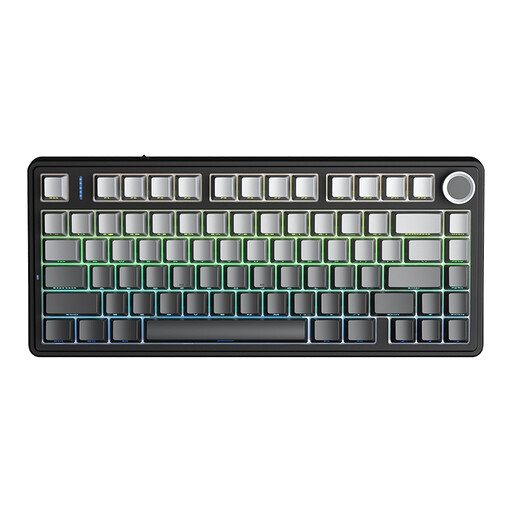
Why This Fits Their Persona: Its 75% layout offers a compact starting point for gaming, study or home-office desks, while tri-mode Bluetooth, 2.4G and wired connectivity allows a gradual move into mechanical keyboards.
The listing specifies hot-swappable support and a QWERTY US layout, helping buyers check customisation and regional key positions before purchase.
75% layout; tri-mode connection; gasket construction; RGB backlighting and hot-swappable switches.
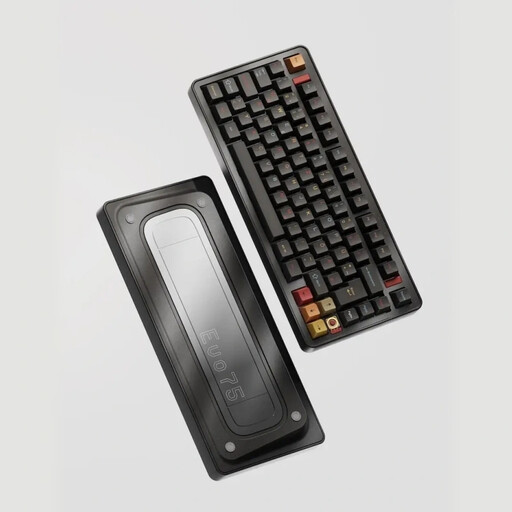
Why This Fits Their Persona: The full aluminium 75% design, leaf spring mount and VIA compatibility suit enthusiasts who want a more configurable custom mechanical keyboard for work and gaming.
The specification clearly identifies the US ANSI layout, 3-pin and 5-pin hot-swap support and its three connection modes.
8000mAh battery specification; full aluminium case; leaf spring mount; per-key RGB and VIA compatibility.
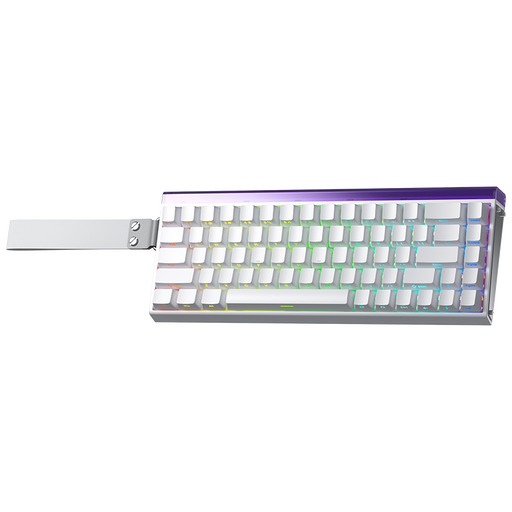
Why This Fits Their Persona: Players interested in adjustable actuation and rapid-trigger functions may prefer a compact Hall Effect design for gaming-focused use.
The product is identified as a wired, US-layout 60% keyboard, so buyers can assess its reduced key count and connection limits first.
Hall Effect magnetic switches; adjustable 0.01mm actuation specification; rapid trigger; 8K polling rate and RGB lighting.
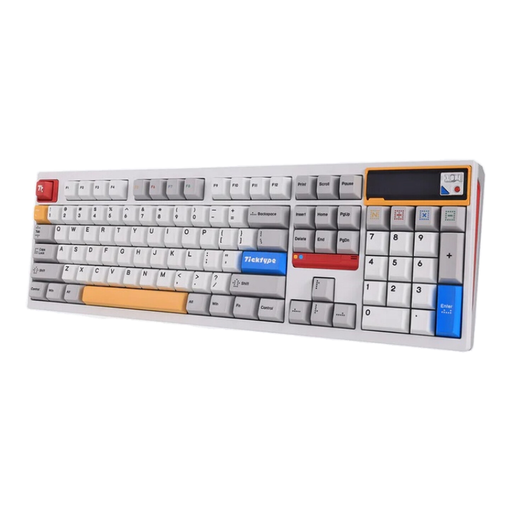
Why This Fits Their Persona: Its full-size 108-key arrangement is suited to programmers, spreadsheet users and gamers who need a number pad as well as wireless flexibility.
The 108-key US layout is stated clearly, reducing the risk of buying a compact board when dedicated navigation or number-pad keys are required.
Full aluminium construction; 108-key layout; hot-swappable design; leaf spring mount; RGB and customisable pixel screen.
We have compiled a complete, real-time list of products that fully satisfy these strict selection criteria and UK safety regulations.
A keyboard using a 2.4GHz receiver or USB-C wired connection may be more appropriate for gaming than Bluetooth, particularly where response consistency is important. Check that the receiver is included and position it close to the keyboard if your PC is under a desk.
Manufacturers often provide a rated number of keypresses, but actual service life depends on switch quality, dust, liquid exposure and usage. A hot-swappable design can extend the practical lifespan of the keyboard because individual switches can be replaced rather than changing the complete board.
RGB lighting draws additional power from a wireless keyboard battery, so it can reduce time between charges compared with using the backlight off. For a wired RGB mechanical keyboard, the effect is generally reflected in power consumption rather than charging frequency. Brightness controls and automatic lighting-off settings can help limit unnecessary use.