
24/7 Customer Support

Free returns

Same-day & Next-day Delivery

Quality Guaranteed

Unlock Your Welcome Offers: FREE Delivery | Up to 80% OFF | Free 30-day JoyPlus trial
Download the APP
A wireless mechanical gaming keyboard can make a desk feel cleaner and more flexible, but the headline specifications do not always tell the complete story. A low price may hide a limited battery, an inconvenient layout or wireless performance that does not suit gaming.
Before buying, UK shoppers should pay particular attention to three common traps:
A compact gaming keyboard can save valuable desk space, particularly for users who move a mouse with a wider sweep. However, many models in this selection use a QWERTY US layout, also described as ANSI. This can differ from a UK ISO keyboard in the position and shape of the Enter, Shift and symbol keys.
Windows and macOS can usually be configured for a US keyboard layout, but the printed legends may not match the settings used on your computer. Check:
A 75% model is often a practical compromise for gaming, study and home-office use. A 96% or full-size design is more suitable if you regularly enter numbers or use dedicated navigation keys.
A tri-mode mechanical keyboard provides three connection options: wired USB-C, Bluetooth and 2.4GHz wireless. Each has a different purpose:
Do not compare battery capacity by number alone. A larger battery may support longer use, but actual runtime depends on RGB brightness, display use, wireless mode and software settings. Confirm whether the receiver and charging cable are included, and check where the receiver is stored when the keyboard is transported.
A hot-swappable keyboard allows compatible switches to be changed without soldering. This is useful if your preference changes from linear to tactile switches, or if a switch eventually needs replacing. Check whether the PCB supports 3-pin and 5-pin switches, and turn the keyboard off before making changes. Switch pins should be straight; forcing a bent switch into a socket can damage the board.
A gasket-mounted keyboard uses flexible material between parts of the plate and case. It may provide a softer or more flexible typing feel, but the result also depends on plate material, foam layers, stabilisers and keycap profile. These features should be treated as construction details rather than guarantees of a particular sound or comfort level.
A knob or screen can add convenience, such as adjusting volume or displaying information, but they also add components to compare. Decide whether these features are useful for your gaming, streaming or editing setup.
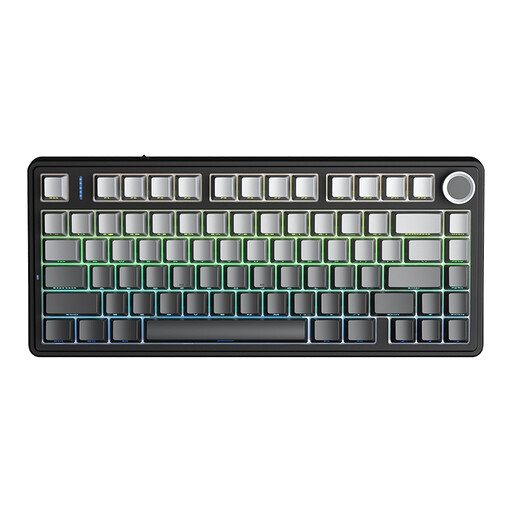
Why This Fits Their Persona: Its 75% format suits students, first-time enthusiasts and home-office users who want a compact desk setup with flexible connectivity.
The listing specifies Bluetooth, 2.4G and wired modes, plus hot-swappable RGB construction rather than relying on lighting alone as its main feature.
75% layout; tri-mode connectivity; hot-swappable switches; QWERTY US layout.
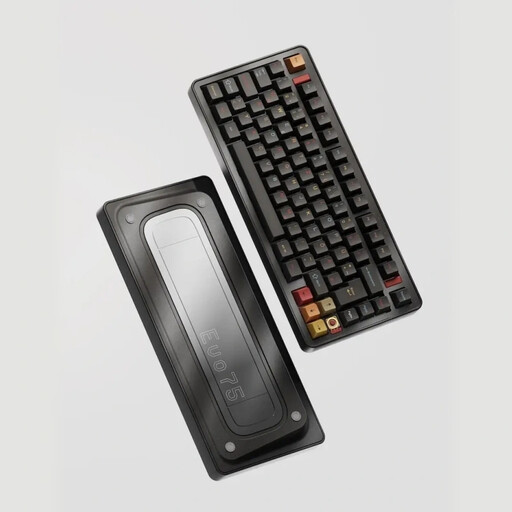
Why This Fits Their Persona: Suitable for enthusiasts who want a custom mechanical keyboard with an aluminium case, software control and a flexible typing design.
The specification lists 3-pin and 5-pin hot-swap support, VIA compatibility and separate connection modes, making the customisation options easier to verify.
75% ANSI layout; leaf spring mount; 8,000mAh battery; per-key RGB and software controls.

Why This Fits Their Persona: A full-size option for users who need a number pad for office work, data entry, content creation and gaming.
Its specification identifies a full-size 108-key layout, hot-swap support and tri-mode operation, so buyers can check function against desk requirements.
108 keys; full aluminium construction; 8,000mAh battery; customisable pixel screen.

Why This Fits Their Persona: A compact choice for streamers and gamers who want a screen and knob without moving to a full-size board.
The listed TFT display, control knob, hot-swap switches and five-layer padding give buyers specific construction and usability details to compare.
75% layout; tri-mode connectivity; TFT display; mechanical knob; hot-swappable switches.
We have compiled a complete, real-time list of products that fully satisfy these strict selection criteria and UK safety regulations.
For gaming, pair the keyboard through its 2.4GHz receiver where available, and keep the receiver positioned away from sources of interference. Use Bluetooth when portability matters more than the lowest possible connection delay. Charge with the supplied USB-C cable and follow the manufacturer’s instructions for the built-in lithium battery.
To maintain a hot-swappable board, disconnect it before changing switches. Keep liquids away from the case, clean with a soft, dry cloth and avoid disassembling the battery or internal electronics. Store small receivers, keycaps and switch tools away from young children.
It can be, provided the model offers a stable 2.4GHz connection and the receiver is positioned correctly. Wired USB-C remains an alternative for users who prefer a direct connection or need to charge during use.
For many users, yes. It normally includes the function row, arrow keys and several navigation keys while removing the number pad. If your work involves frequent numeric entry, consider a 96% or full-size keyboard instead.
RGB lighting uses additional power, particularly at high brightness. The effect on electricity costs is usually modest, but it can reduce battery runtime between charges. Lower brightness or turning the lighting off can extend wireless use.