
24/7 Customer Support

Free returns

Same-day & Next-day Delivery

Quality Guaranteed

Unlock Your Welcome Offers: FREE Delivery | Up to 80% OFF | Free 30-day JoyPlus trial
Download the APP
A wireless microphone can make smartphone videos, livestreams and interviews sound considerably cleaner than a built-in phone microphone. However, a compact transmitter alone does not guarantee reliable audio. Compatibility, wireless connection type, battery claims and microphone placement all affect the result.
The following guide from the Joybuy Product Recommendation Officer focuses on practical specifications rather than advertising language, helping UK buyers avoid unsuitable equipment and choose a microphone that fits their recording routine.
“USB-C” describes the connector, not universal compatibility. A receiver may work with a USB-C Android phone, tablet, computer or newer iPhone, but some devices restrict external audio input or require permission changes.
Before buying, check:
A USB-C wireless microphone is usually convenient for current smartphones, but compatibility should still be confirmed against the specific device.
A noise-cancelling microphone may reduce some surrounding sounds, but it cannot remove every train announcement, busy café conversation or strong gust of wind. Aggressive processing can also affect the natural character of speech.
A clip-on wireless lavalier microphone should sit close to the speaker’s mouth without rubbing against clothing. For outdoor filming, a furry wind muff is useful. Indoors, reducing echo with curtains, rugs or soft furnishings may make a greater difference than changing the microphone.
Battery specifications often refer to a maximum operating time under stated conditions. Actual use can vary with noise cancellation, wireless distance, charging habits and the number of transmitters in use.
Check whether the quoted figure applies to:
A charging case is practical for mobile creators, but it adds another battery that must be charged before a filming day.
For a phone, a plug-and-play receiver can be simpler than pairing Bluetooth manually. Dedicated 2.4 GHz systems commonly use a transmitter and receiver, while some Bluetooth models can connect directly to compatible phones, PCs or tablets.
For two-person interviews, select a kit with two transmitters or dual microphones. A one-transmitter system is more compact and may suit solo vlogging, but it cannot capture two speakers independently without additional equipment.
A receiver with a headphone output allows you to monitor sound before or during recording. This can reveal clothing rustle, low volume or connection problems that may otherwise be discovered during editing.
For spoken content, also look for:
Features such as 32-bit float recording can provide more flexibility when recovering levels in compatible workflows, but they do not correct poor microphone positioning or heavy background noise.
A USB/XLR microphone is generally a desktop option rather than a clothing-mounted wireless unit. USB is convenient for a PC, while XLR connects to an audio interface, mixer or recorder. Check whether an XLR cable is included; some kits require you to purchase one separately.
Dynamic, cardioid or unidirectional microphones can help focus on a nearby voice in a home recording space. They normally work best when positioned at a consistent distance. A boom arm can improve positioning and keep the microphone away from desk vibrations.
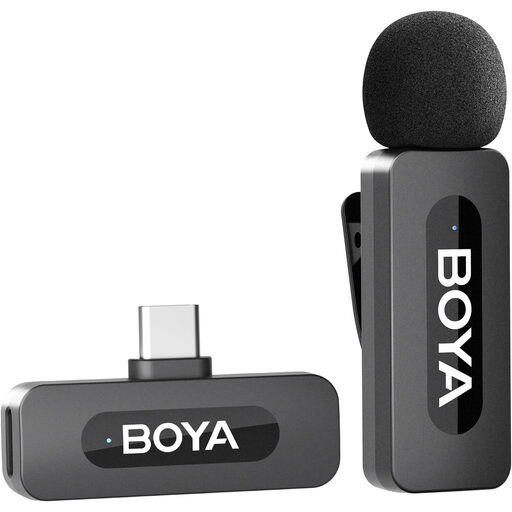
Why This Fits Their Persona: This one-transmitter and one-receiver kit is suited to solo smartphone filming, short tutorials and straightforward voice recording with compatible USB-C devices.
The product listing specifies USB-C compatibility, one-click noise cancellation and up to 9 hours of battery life, making the main connection and runtime details easier to assess before purchase.
USB-C receiver; one transmitter design; stated 9-hour battery life.
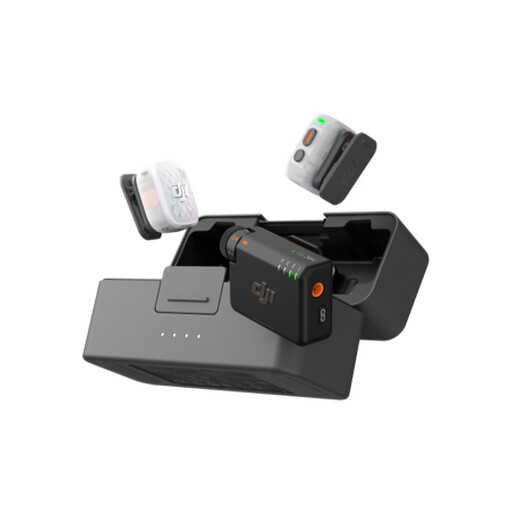
Why This Fits Their Persona: Two transmitters suit interviews, co-hosted podcasts, two-person vlogs and livestreams where each speaker needs a nearby microphone.
The listing identifies two-level noise cancelling, auto limiting, internal recording and a charging case, so buyers can compare processing and backup features rather than judging by size alone.
Two transmitters; 32-bit float internal recording; stated up to 40 hours with the charging case.

Why This Fits Their Persona: A desktop microphone with boom arm is more suitable for gaming, voice-over work, podcasting and home recording than walking around with a transmitter.
The supplied specification lists both USB-C and XLR connections, a cardioid pattern, headphone monitoring and a boom arm. Note that an XLR cable is not included.
USB and XLR connectivity; 130 dB maximum SPL specification; mute and headphone controls in USB mode.
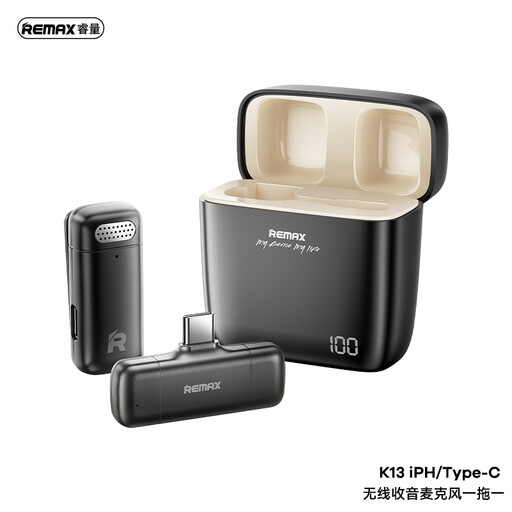
Why This Fits Their Persona: This portable kit is aimed at vloggers, journalists and interviewers using compatible USB-C phones, tablets or cameras outside the home.
The receiver includes a 3.5 mm headphone jack for monitoring, while the supplied furry wind muff addresses one common outdoor recording problem.
USB-C plug-and-play receiver; 2.4 GHz wireless transmission; included furry wind muff and monitoring output.
We have compiled a complete, real-time list of products that fully satisfy these strict selection criteria and UK safety regulations.
It can be, provided the phone supports the receiver’s connection type. USB-C models are suitable for compatible USB-C devices, but check operating-system permissions and whether the phone accepts external audio. A receiver designed for USB-C may not connect directly to an older Lightning iPhone without an appropriate, compatible adapter.
Battery runtime varies by model and usage. The products above list figures ranging from several hours to up to 40 or 48 hours when a charging case is included. Battery capacity can decline over time, so store the system dry, avoid extreme temperatures and follow the manufacturer’s charging instructions.
Not always. A desktop USB or USB/XLR microphone can be more suitable if you stream from one fixed position. A wireless lavalier microphone is more practical when you move, demonstrate products or interview someone away from your desk. Choose according to distance, device compatibility and whether you need one or two speakers.