
24/7 Customer Support

Free returns

Same-day & Next-day Delivery

Quality Guaranteed

Unlock Your Welcome Offers: FREE Delivery | Up to 80% OFF | Free 30-day JoyPlus trial
Download the APP
Navigating the market for a new wireless mouse can feel overwhelming. With endless specifications and marketing claims, it's easy to end up with a device that's either overkill for your needs or simply uncomfortable to use. Many find themselves paying a premium for features they never use or, worse, buying a mouse that causes discomfort after just a few weeks.
As the Joybuy Product Recommendation Officer, my role is to help you sidestep these common issues. This guide will focus on the practical factors that matter, helping you find a reliable PC or laptop mouse without falling for the hype. Let's look at the most frequent pitfalls and how to avoid them.
To make a smart purchase, focus on a few key specifications that directly impact your daily use. Understanding these will ensure you get a mouse that works for you, not against you.
The way your mouse connects to your device is fundamental. There is no single "correct" choice; it depends entirely on your primary use case.
DPI measures how sensitive your mouse is to movement. A higher DPI means the cursor moves further on the screen for a small physical movement of the mouse.
Comfort is not a luxury; it's a core feature. The shape and weight of your mouse can significantly affect your productivity and long-term wrist health.
Based on these practical criteria, here are a few options tailored to different user needs.

Why This Fits Their Persona: For anyone spending eight hours a day at a desk, wrist comfort is paramount. This vertical mouse is specifically designed to promote a natural "handshake" grip, which helps reduce the forearm twisting and pressure common with standard mice.
It directly counters the "ignoring ergonomics" pitfall. Instead of a generic shape, its entire design is focused on preventing strain, making it a practical investment in long-term comfort.
Dual-mode connectivity (Bluetooth or 2.4GHz) offers versatility, and the soft-touch surface with a thumb rest enhances grip and comfort.
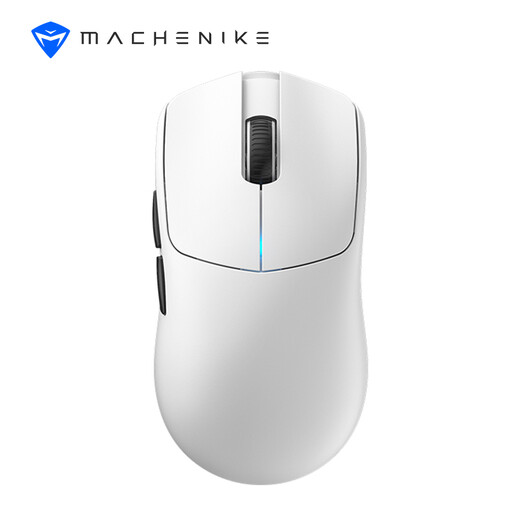
Why This Fits Their Persona: This mouse is built for speed and precision. With a high-end PAW3395 sensor, an extremely high polling rate and an ultra-lightweight 49g design, it provides the responsiveness needed for competitive gaming where every millisecond counts.
It solves the "connectivity mismatch" by offering tri-mode functionality. You can use the ultra-low latency 2.4G connection for gaming, then switch to Bluetooth for casual use with a laptop, all without compromise.
The 49g hole-free lightweight body reduces fatigue during long gaming sessions, and the 700mAh battery provides over 100 hours of runtime.
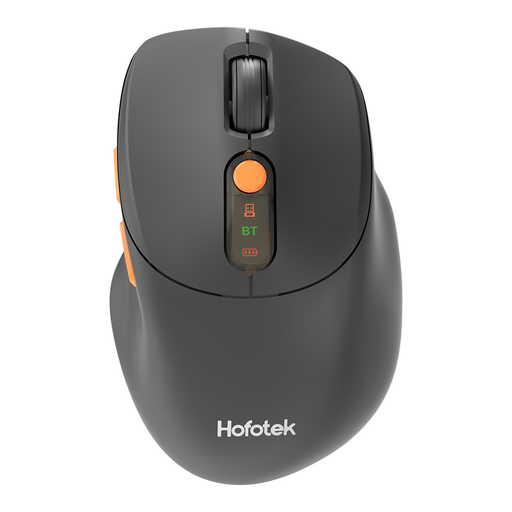
Why This Fits Their Persona: This mouse is perfect for shared workspaces, libraries or late-night work at home. Its silent click mechanism eliminates distracting noise without sacrificing tactile feedback. The ability to connect to three devices is a huge plus for multitasking professionals.
It avoids the "gaming tax" by focusing on practical office features. There's no RGB or extreme DPI; instead, you get silent clicks, multi-device pairing and a sensible DPI range up to 4000 for productivity.
The ultra-lightweight 62g design makes it highly portable, and its dual-mode connectivity ensures it works with nearly any PC, Mac or tablet.
We have compiled a complete, real-time list of products that fully satisfy these strict selection criteria and UK safety regulations.
1. How long does a rechargeable wireless mouse battery last? Battery life varies significantly based on usage, model and features like RGB lighting. A typical rechargeable mouse for office work can last anywhere from 70 to over 100 hours on a single charge. Gaming mice with high polling rates and lighting may last closer to 30-50 hours. Many models can be used in wired mode while charging, so you're never left without a working mouse.
2. Do I need to install special software for my wireless mouse? For basic functionality, most wireless mice are plug-and-play and do not require any software. You can simply plug in the 2.4GHz receiver or pair via Bluetooth, and it will work immediately. However, for advanced features like programming buttons, adjusting DPI steps or customising RGB lighting on a gaming mouse, you will often need to install the manufacturer's specific software.
3. Is a Bluetooth or 2.4GHz mouse better for a laptop? This depends on your priorities. A Bluetooth mouse is often more convenient for a mouse for laptop as it doesn't require a USB dongle, which is useful if your laptop has limited ports. A 2.4GHz mouse provides a more stable, lower-latency connection, which is better for tasks requiring high precision, like gaming or design work. A dual-mode or tri-mode mouse offers the best of both worlds.