Planners working across locations
Teachers preparing lessons in classrooms, offices and at home who need a mouse that does not depend on a nearby wall socket or permanently occupy a laptop port.


Choose between a Bluetooth mouse with a replaceable AA battery and one that charges by USB: the former avoids planned charging, while the latter avoids managing spare batteries. If laptop ports are scarce, check Bluetooth compatibility before buying, and choose a shape that fits longer planning sessions rather than prioritising portability alone.
Teachers preparing lessons in classrooms, offices and at home who need a mouse that does not depend on a nearby wall socket or permanently occupy a laptop port.
Anyone moving between a school laptop, home computer or compatible tablet who needs to check pairing and device-switching options before choosing a mouse.
People spending extended periods on documents, slides and learning platforms who need to consider hand fit as well as where the mouse sits on the desk.
Choose it when: You can occasionally use a suitable USB power source and would rather not keep spare AA batteries.
Allow for: Charging still needs a compatible cable and power source, even when the stated time between charges is long.
Choose it when: Charging access is unreliable and carrying a spare battery is easier than planning USB top-ups.
Allow for: You will need to replace and recycle batteries instead of recharging the mouse.
| Concern | What to check | Who this matters to |
|---|---|---|
| Power between interruptions | Check the battery type and stated runtime. For a rechargeable model, confirm that a suitable USB charging source will be available. | When sockets are scarce, I want to finish planning without having to stop unexpectedly for power; around 42% of consumers put charging independence first. |
| Ports and device switching | Confirm Bluetooth compatibility with each intended device, or check the receiver type against the ports you can spare. | If I move between teaching devices, I need a connection that works with each one without tying up a needed port. Around 25% of consumers make port and device flexibility their primary concern. |
| Fit for longer sessions | Check the exact size and handedness variant. Make sure your desk lets you keep the mouse within easy reach. | During a long stretch of editing slides or resources, I need a shape and position that suit my hand; for around 33% of consumers, fit is the leading consideration. |
Wireless describes the connection, not how the mouse is powered. A rechargeable model still needs a top-up; an AA-powered model eventually needs another battery.
Decide whether access to a wall socket, a USB charging source or a spare battery is the harder part of your routine.
That choice also determines whether you need to keep a compatible charging cable or replacement AA battery close by.
A 2.4 GHz receiver occupies a physical port. Bluetooth can leave that port free when the computer supports the mouse's connection.
Check your laptop or tablet's Bluetooth support and available ports, including whether a receiver would need an adaptor.
A mouse that is easy to carry may not suit every hand during extended lesson planning. Desk position matters alongside the mouse's shape.
Check the manufacturer's sizing guidance where available. The Health and Safety Executive advises keeping the mouse within easy reach so you can use it with a straight wrist.
GOV.UK advises that unwanted batteries and electrical products should not go in household rubbish.
Use an appropriate battery collection point for detachable batteries and an electrical-product recycling route for the mouse.
Its relevant range includes USB-rechargeable Bluetooth mice and AA-powered models with different hand-size options.
The HP 710 is a rechargeable option for people considering Bluetooth alongside a 2.4 GHz receiver.
Its relevant compact mice include models with different charging arrangements, so the model number matters.
These mice offer rechargeable and AA-powered approaches to lesson planning with limited sockets. Compare each model's connection, charging or battery routine, and shape against the devices and workspace you use.
 No image available
Consider this model if Bluetooth pairing would help preserve a laptop port during lesson planning. Check that you can charge it from a suitable USB source and that its shape fits your hand.
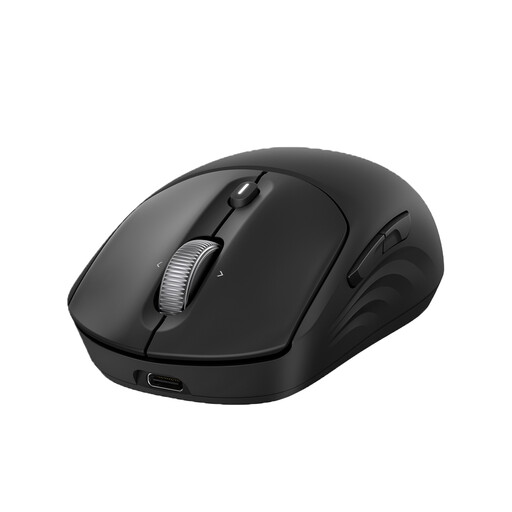 No image available
This is a rechargeable choice if occasional USB charging fits your routine. Before relying on it across teaching devices, check compatibility with each one and where you will charge it.
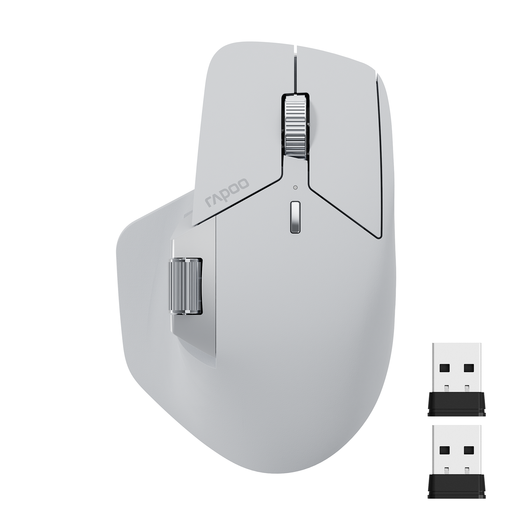 No image available
Consider it if a rechargeable Bluetooth mouse suits your lesson-planning setup. Confirm its exact shape and dimensions before choosing it for longer sessions, and check which charging accessories you would need.
 No image available
An AA-powered option if you would rather replace a battery than plan charging. Its name specifies Bluetooth and 2.4 GHz connection modes, six buttons and an adjustable sensor up to 1600 DPI; check device compatibility and whether the vertical grip suits your hand.
 No image available
This AA-powered option may suit you if avoiding planned charging takes priority. The name specifies Bluetooth and 2.4G connection modes, quiet clicks and adjustable DPI; check your device's connection options and how often you would expect to replace its battery.
It can help if you have occasional access to a suitable USB power source, but it does not eliminate charging. Logitech rates the MX Anywhere 3S for up to 70 days on a full charge; check whether your usual laptop, hub or other USB source can support your charging routine.
Choose Bluetooth when your device supports the mouse's connection and you need to keep a USB port free; a receiver is worth considering when Bluetooth is unavailable or restricted on that device. HP says its 710 offers Bluetooth and a 2.4 GHz dongle, while Logitech lists Bluetooth or Logi Bolt connectivity for the Signature M650. Check the exact receiver and host ports before ordering.
Not for every hand: check the exact size and shape rather than assuming portability means comfortable extended use. Logitech recommends different Signature M650 variants by hand size and handedness, and the Health and Safety Executive advises keeping the mouse within easy reach so you can use it with a straight wrist.
Use an appropriate recycling route rather than putting unwanted batteries or electrical products in household rubbish, as GOV.UK advises. Detachable batteries can go to a suitable battery collection point; check your local electrical-product recycling options for the mouse.